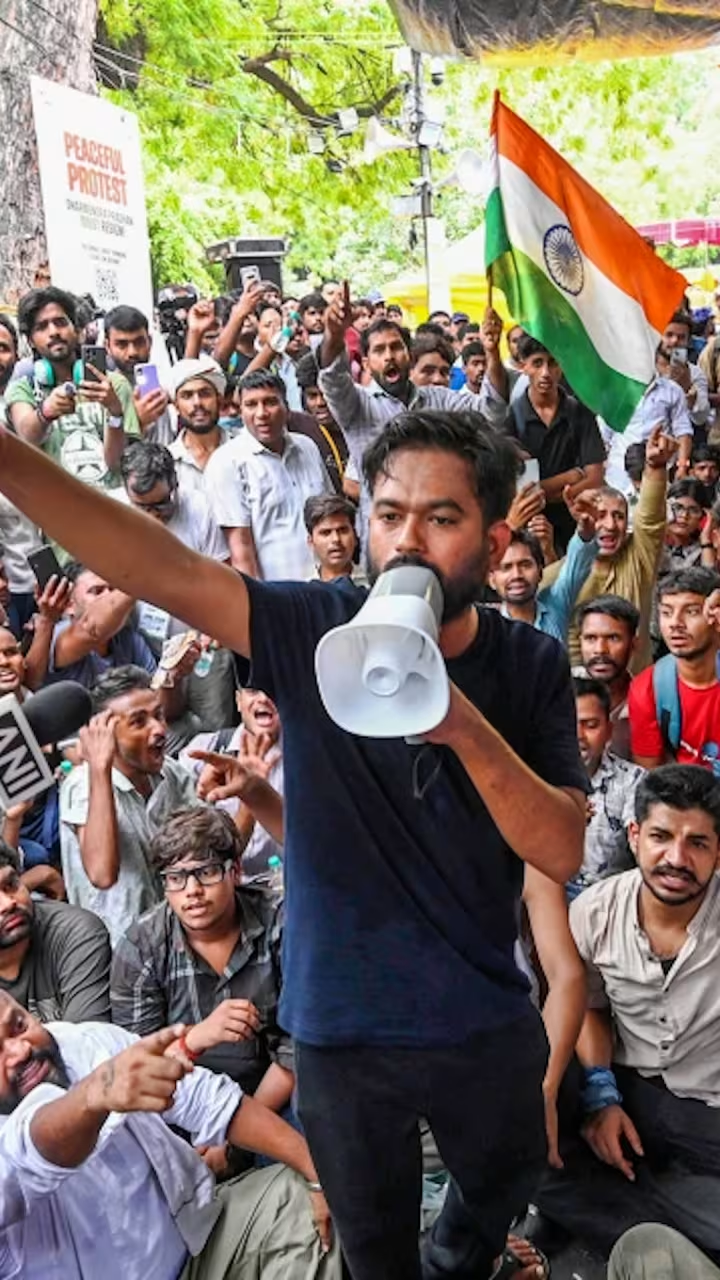
India’s viral Cockroach Janta Party called off its nationwide protests on Saturday after the country’s education minister resigned and the government agreed to a number of the activist movement’s demands.
Subscribe to read this story ad-free
Get unlimited access to ad-free articles and exclusive content.

Dharmendra Pradhan announced his resignation on X after talks with the CJP, which has demanded major reforms after the handling of an alleged exam paper leak triggered one of India’s biggest displays of public dissent in recent years, including one activist’s 26-day hunger strike.
“I hold deep respect for the aspirations, sentiments, and rightful expectations of the youth of this country,” Pradhan wrote on X. “Realising the dreams of India’s young generation has been the moral resolve of our political and social life.”
Ministers JP Nadda and Jitendra Singh later told a press conference all police cases against protesters would be dropped and the government will pay compensation to the families of students who died by suicide after the alleged paper leaks, according to Reuters news agency. The government will also consider the CJP’s proposals for reforms to exams, the group said.
The CJP, a viral movement that began as an online parody of Prime Minister Narendra Modi’s ruling Bharatiya Janata Party (BJP), confirmed it had called off its protests because all of its major demands “have been accepted by the government.”
“Cockroaches won. Democracy won!” it said on X.
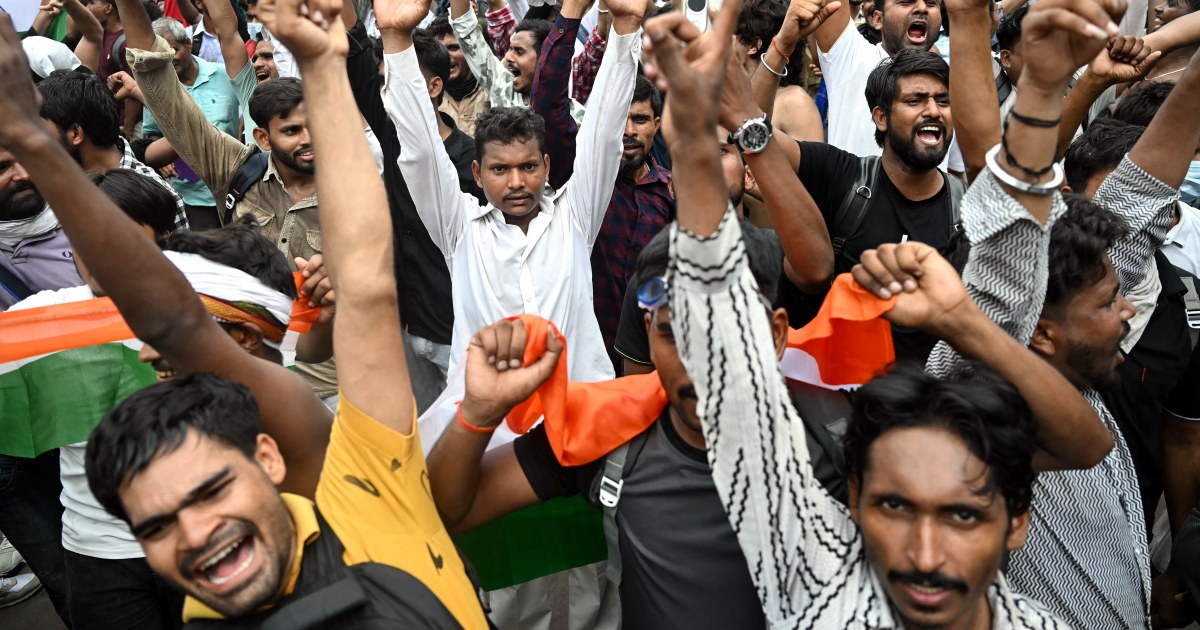
In New Delhi, crowds of students and activists were celebrating in the streets following the announcement, many of them waving Indian flags.
The scandal has been growing since May, when online leaks disrupted the NEET undergraduate exam, the fiercely competitive gateway to India’s medical schools.

Anger among India’s young people has exploded onto the streets in recent weeks, with protests spreading from New Delhi to other cities around the country, including Mumbai, Hyderabad, Bengaluru and Ahmedabad. Authorities have struggled to contain the growing protests, with police deploying tear gas and batons against the vast crowds close to the country’s Parliament building in New Delhi earlier this week.
The CJP, named after a remark from India’s Chief Justice Surya Kant comparing unemployed young people to “cockroaches,” became the center of what has been one of the biggest challenges to Modi in his 12 years in power.
As well as the minister’s resignation, protesters’ demands included compensation for the families of students who died by suicide after the exam paper leaks, and accountability over police suppression of their protests.
“Remember, do not mess with cockroaches,” it posted Saturday.

FORSUBSCRIBERS
What’s behind India’s Gen Z ‘cockroach’ movement
01:37
On Thursday night, Modi offered his first public comments in a video posted to Instagram. “I know the paper leak is not a trivial matter,” he said, announcing fast-track courts to prosecute cases involving examination paper leaks, while defending his government’s handling of the scandal.
But protesters said his response fell short of their demands for accountability and hundreds of people returned to the streets of New Delhi on Friday even as authorities shut 18 stations across the city’s metro network, disrupting a vital mode of transportation for its 23 million residents.
A 26-day hunger strike by activist Sonam Wangchuk had further galvanized the protests this week, after police forcefully admitted him to a hospital last weekend. He said in a post on X Friday that he ended his fast after appeals from dozens of members of Parliament and following “a long negotiation on various conditions and in view of possible violence in the country.”
Wangchuk on Saturday called Pradhan’s resignation “a victory of peace, patience & perseverance.”
“Congratulations CJP, Gen Z of the nation and thank you all citizens for shedding fear and the fear of fear and rising up from every corner of the nation,” he posted on X.
About the Author