KFF polling has long shown that many U.S. families struggle to afford health care and how costs shape decisions about whether and when to seek care. In the past year, worries about costs have intensified, with the cost of health care topping the public’s list of economic anxieties. Even adults with health insurance report difficulty affording health care, and many say they have health care debt. These concerns have implications for people’s access to care, health and well-being, and financial security.
While previous KFF polling has examined the public’s experiences with health care costs, sample size limitations have made it difficult to examine the experiences of adults with serious or complex health conditions. The KFF Survey of Health Access and Caregiving helps fill this gap with a large, nationally representative sample of 25,873 adults, including 16,677 who say they have received treatment for at least one health condition in the past year. The survey’s large sample size makes it possible to examine the experiences of adults with specific conditions including cancer, lung disease, diabetes, cardiovascular disease, and mental health conditions, while also allowing for analysis by other demographics like age and insurance coverage.
Key Takeaways
- While the high cost of health care is felt by many adults, those with multiple or complex health conditions are especially burdened. For example, a third (36%) of adults ages 18-64 with three or more health conditions say they had problems paying or were unable to pay medical bills in the past year, higher than the one in five (20%) without ongoing health conditions. Substantial shares of adults ages 18-64 with multiple health conditions also say they skipped or delayed getting health care due to cost (36%) or did not take their medication as prescribed (25%) in the past year due to the cost. Skipping or delaying health care has serious implications, with about a quarter (27%) of those with multiple conditions saying their health got worse as a result. Similarly high shares of adults with serious health conditions like cardiovascular disease, cancer, or a mental health condition report financial and access challenges. For example, four in ten (42%) adults ages 18-64 with a mental health condition say they skipped or delayed a health care appointment due to the cost and a similar share (37%) of those with cardiovascular disease say they had problems paying medical bills in the past year.
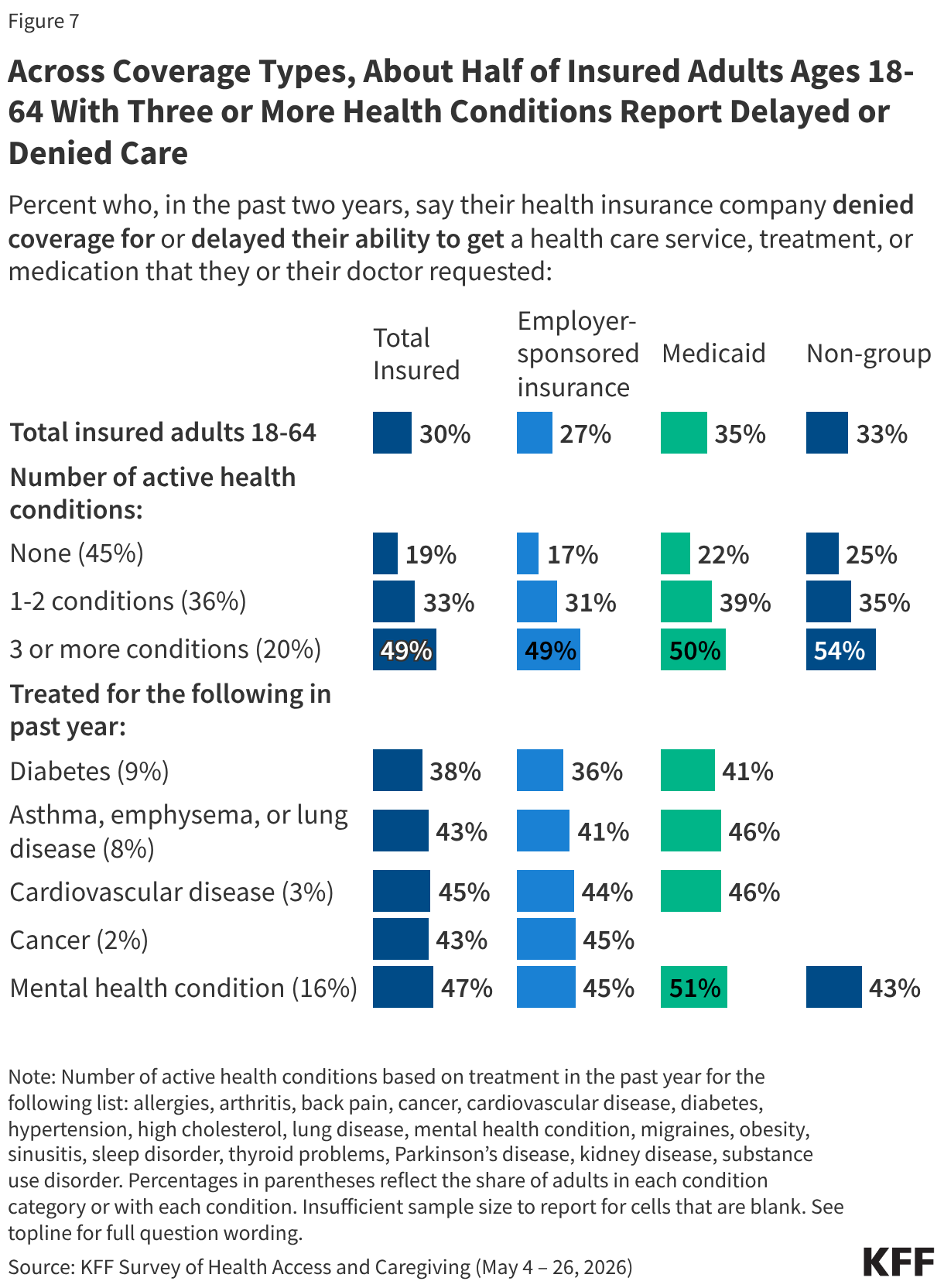
- Beyond challenges with access and cost, many insured adults with multiple or complex health conditions also face issues getting their insurance to cover care and treatments they need. About half (49%) of insured adults ages 18-64 with three or more health conditions say their insurance company has denied or delayed a health care service in the past two years, rising to 47% among those with a mental health condition and 43% among those with asthma, emphysema, or lung disease. These issues are common across health insurance types, with many insured adults with multiple or serious health conditions saying they have experienced a denial or delay for a service, treatment, or medication they or their doctor requested in the past two years.
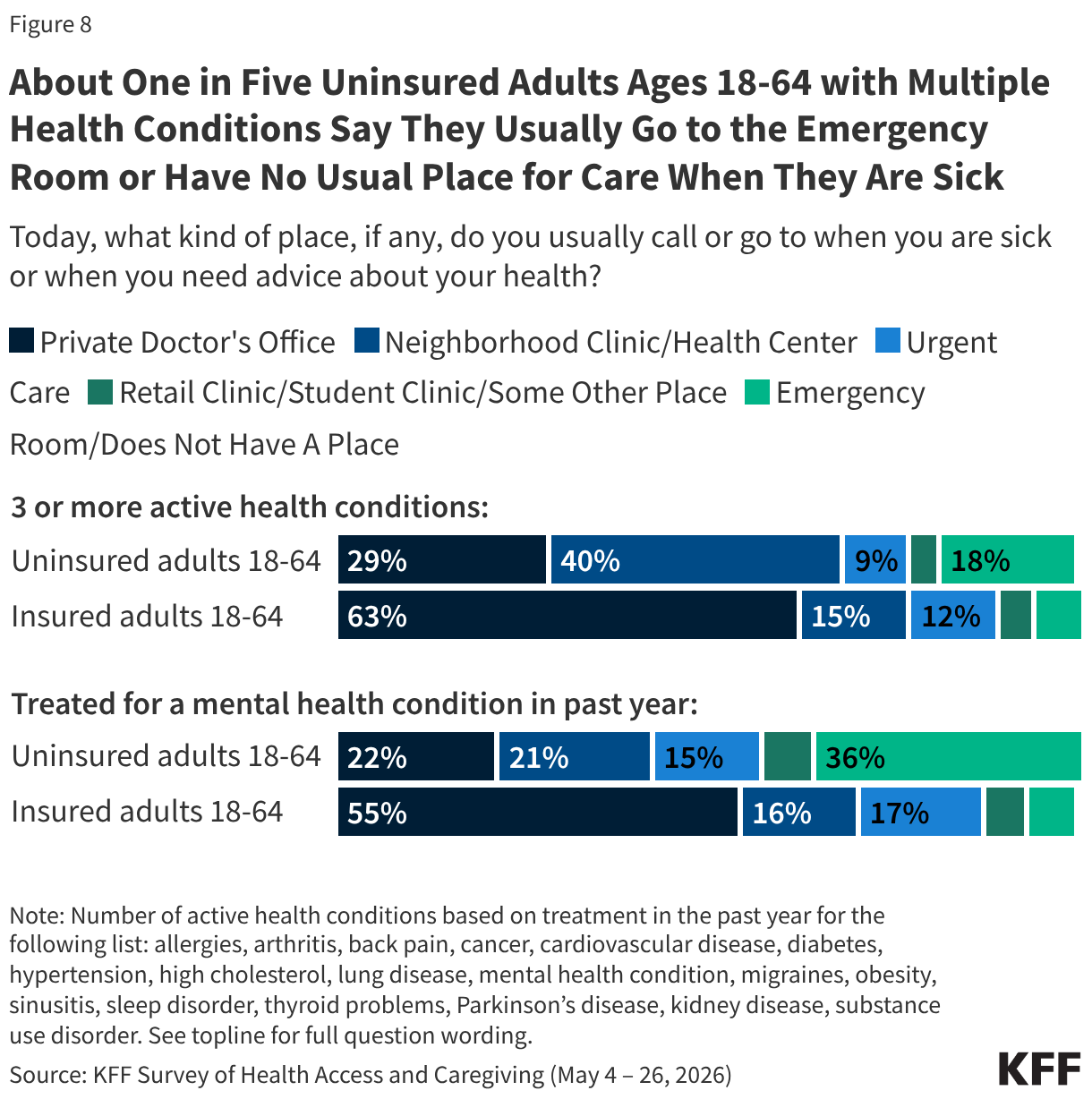
- Challenges accessing and paying for health care are especially acute among the uninsured population who are being treated for multiple health conditions. While concerns about costs are widespread, about seven in ten (72%) uninsured adults with multiple health conditions say they have had problems paying medical bills in the past year, and half (50%) have had to cut back on household expenses as a result. In addition, uninsured adults with multiple health conditions are about twice as likely as their insured counterparts to say they skipped or delayed care (68% vs. 35%) or did not take their medications as prescribed (51% vs. 24%) in the past year because of the cost. These challenges are compounded by a lack of access to care, with about one in five (18%) uninsured adults with multiple health conditions saying they do not have a usual source of care other than an emergency room.
- Despite some insulation from costs and high rates of Medicare coverage, about a quarter of adults 65 and older with multiple or complex health conditions have experienced an insurance delay or denial for a service or drug they needed in the past two years. In addition, one in five or more older adults with multiple health conditions and complex health conditions say they have skipped or delayed health care in the past year for any reason, including the cost or not being able to get an appointment. Overall, about one in ten older adults with multiple conditions say their health got worse after skipping or postponing needed care.
- Adults with mental health conditions face some of the greatest challenges accessing and affording health care. Six in ten adults ages 18-64 with mental health conditions say they skipped or delayed care in the past year (59%) and about half (47%) of insured adults with a mental health condition report experiencing delays or denials by their insurance company in the past two years. One-quarter of adults ages 18-64 with a mental health condition report skipping or not taking their medication as prescribed in the past year because they couldn’t afford it, which may have serious consequences for those who rely on medication to manage their mental health. While mental health conditions disproportionately affect younger adults, those ages 65 and older with a mental health condition also face some challenges despite the prevalence of Medicare coverage, with three in ten (30%) of this group saying they skipped or delayed health care for any reason in the past year and one in seven (14%) saying their health got worse as a result.
- Substantial shares of adults undergoing cancer treatment report experiencing insurance delays and denials. Among those who have received treatment or medication for cancer in the past year, 43% of adults ages 18-64 and 21% of those ages 65 and older say their insurance has denied coverage of or delayed their ability to get a health care service, treatment, or medication their doctor prescribed in the past year. Given the complicated nature of cancer treatment, these delays and denials may have serious health implications for this group. In fact, about one in five (18%) adults ages 18-64 with cancer say their health got worse as a result of skipping or delaying care in the past year.
Groups Examined in This Report
Researchers take various approaches to define and measure health conditions among the U.S. population. In this report, we examine the experiences of those who say they have received medical treatment or taken prescription medication in the past 12 months for 5 serious or complex health conditions:
- Diabetes
- Asthma, emphysema, or lung disease
- Cardiovascular or heart disease
- Cancer; or
- A mental health condition
We also look at adults who are managing multiple health conditions, defined as those who have been treated or taken medication for 3 or more from a list of 18 different health conditions in the past year.1
Throughout this report, we make comparisons to adults who say have not received medical treatment or taken prescription medication for any of these 18 health conditions in the past year. While this group may have interactions with the health care system throughout the year for things like routine care and acute illnesses, they are a group that is relatively healthy in comparison to those with multiple complex conditions. For more details on the demographic characteristics of adults in each of these groups, see the Appendix.
Managing Care for Multiple or Complex Health Conditions Among Adults 18-64
This section examines the unique challenges faced by adults ages 18-64 who are managing complex health conditions. (The experiences of adults ages 65 and over, who are largely covered by Medicare, are examined in a separate section below.) About one in five adults ages 18-64 (18%) are managing three or more health conditions, while about one in six (15%) have been treated for a mental health condition in the past year, about one in ten have been treated for diabetes (9%), or asthma, emphysema, or lung disease (8%), and fewer say they have been treated for cardiovascular disease (3%) or cancer (2%).
Access To Care Among Adults 18-64 With Multiple or Complex Health Conditions
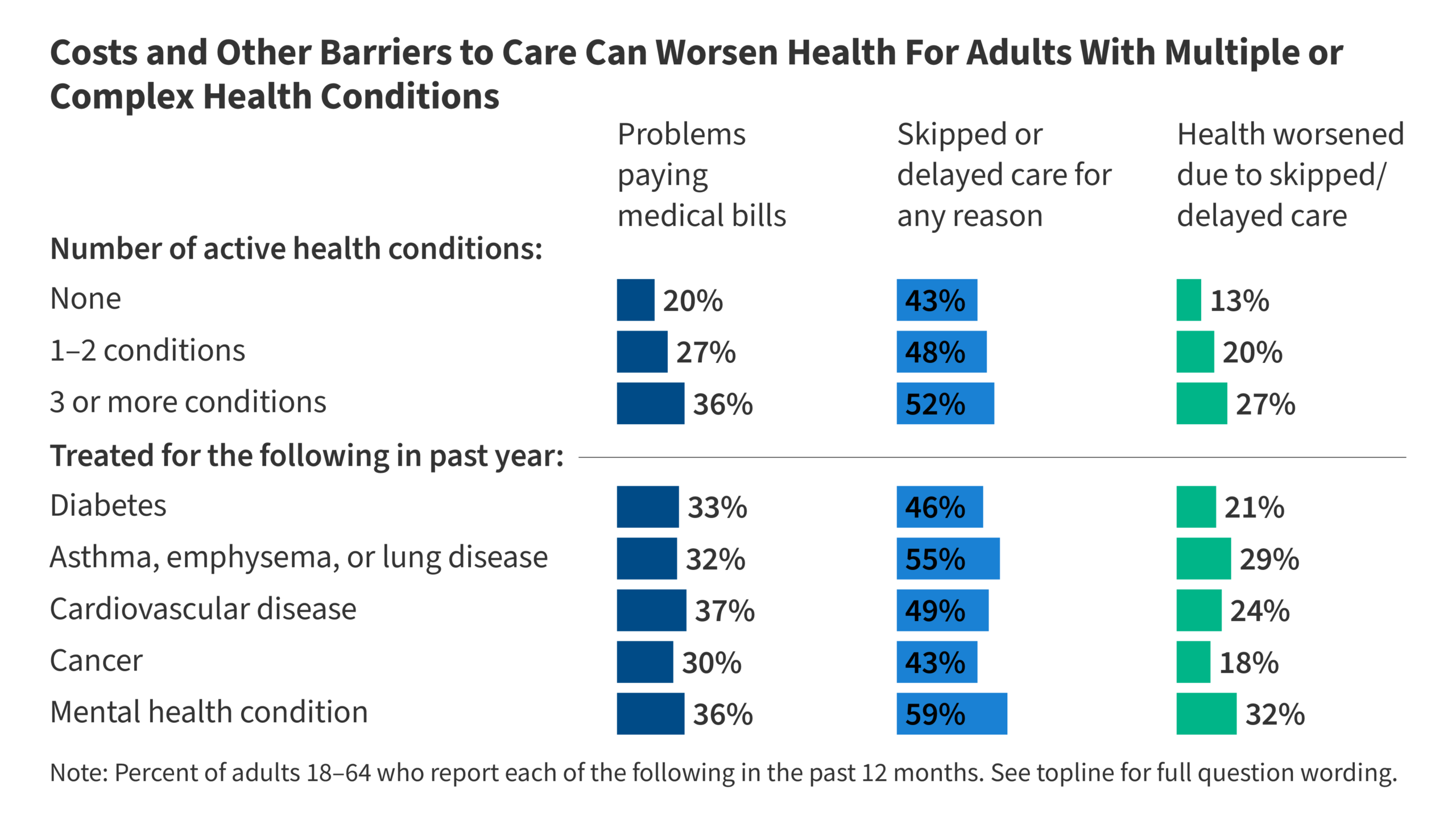
About half (52%) of adults ages 18-64 with three or more health conditions and similar shares of those who have been treated for complex health conditions like lung disease and cardiovascular disease in the past year report they did not get the health care they needed in the past year, rising to about six in ten (59%) for those with a mental health condition. Among those ages 18-64 with three or more health conditions, more than a third (36%) say they skipped or delayed getting care due to the cost, a quarter (25%) couldn’t find a provider with available appointments, and about three in ten (28%) skipped or delayed care for some other reason.
Across adults ages 18-64 with complex health conditions, costs are the most prevalent reason cited for skipping or delaying health care. Those who have been treated for a mental health condition are especially likely to say they’ve not gotten the care they needed in the past year, with about six in ten (59%) saying they’ve skipped or delayed care for any reason, including four in ten (42%) who said it was due to cost. About half of adults with lung disease (55%) or cardiovascular disease (49%) also say they missed care for any of these reasons in the past year, as do 46% of those with diabetes and 43% of those with cancer.
Notably, a substantial share (43%) of adults with no active health conditions from a list of 18 common conditions report skipping or delaying care in the past year. This may reflect skipping or delaying routine check-ups or screenings or care for acute illnesses or injuries.
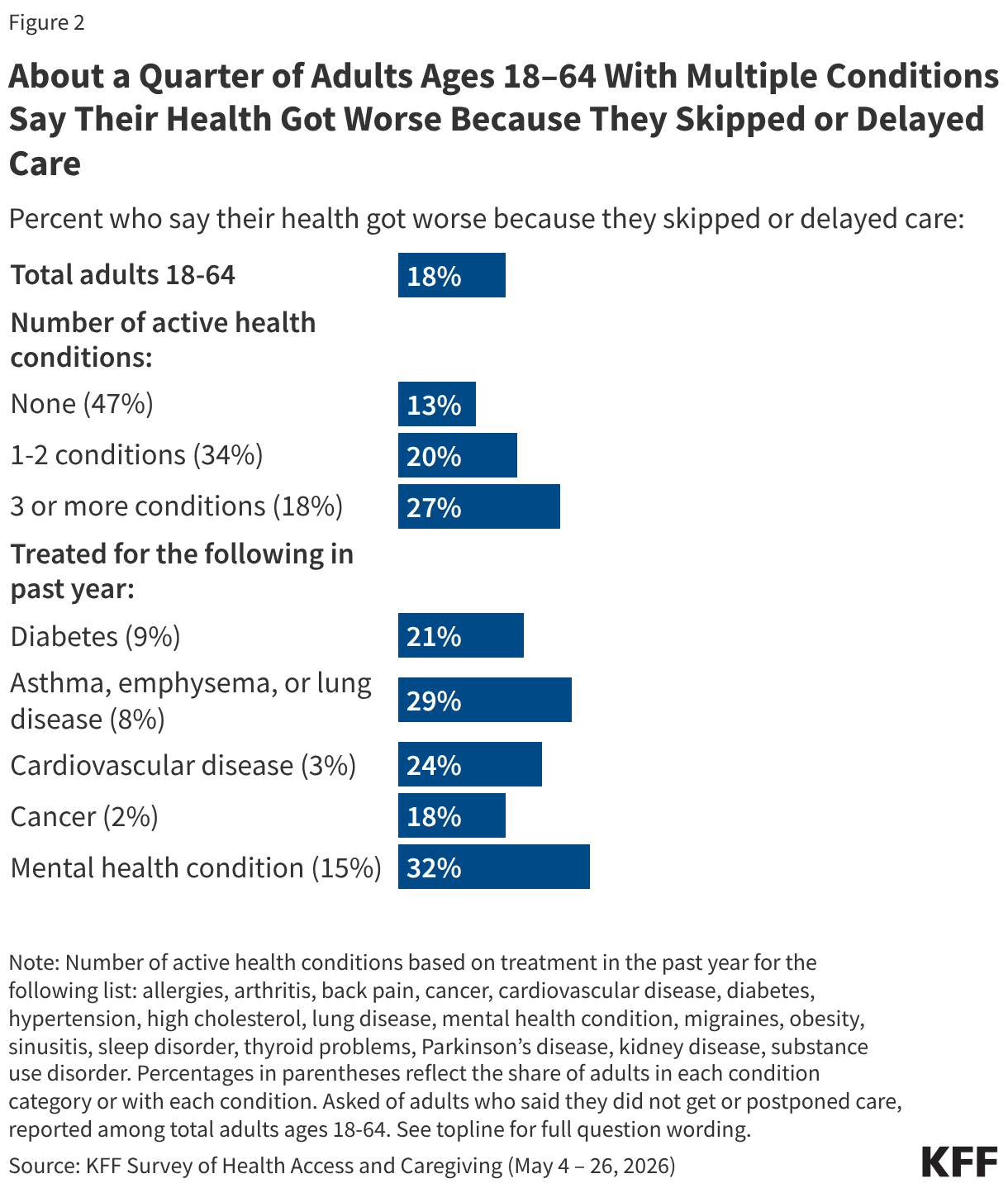
Skipping care results in health consequences for many adults ages 18-64 with serious or multiple health conditions. About three in ten adults ages 18-64 with a mental health condition (32%) or asthma, emphysema, or lung disease (29%) say they skipped or delayed care in the past year and their health got worse as a result. About three in ten (27%) of those managing three or more health conditions also say this, about twice as many as those with no active health condition who report such an outcome (13%). Delays in care also led to worsening health for about a quarter of those with cardiovascular disease (24%) and one in five of those with diabetes (21%), or cancer (18%). Research has shown how postponing or going without needed health care can exacerbate health problems and take more time and resources to treat, which is particularly crucial for adults with complex or multiple health conditions.
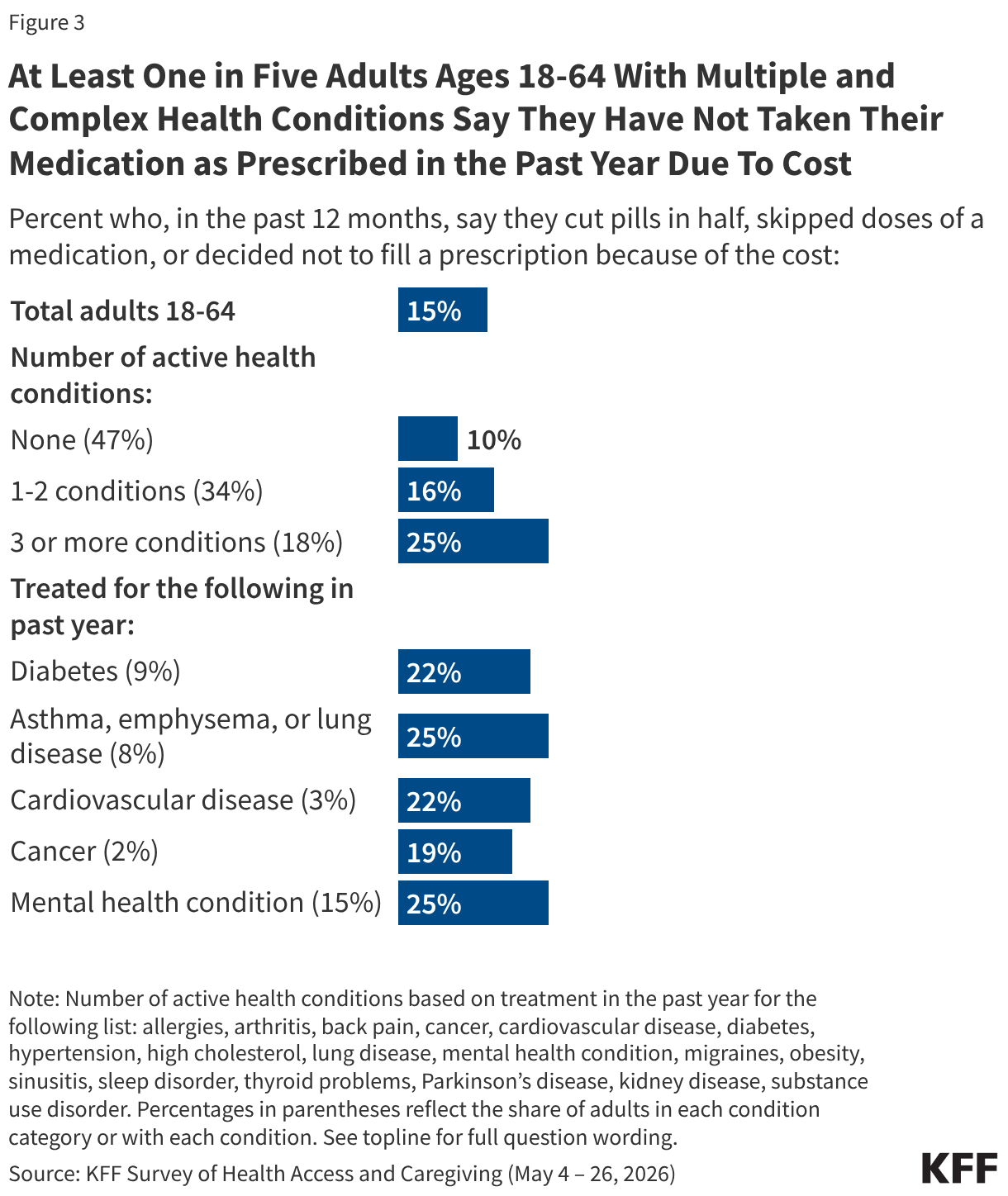
About one in five or more adults ages 18-64 with multiple or complex health conditions also report not taking their medication as prescribed because they can’t afford the cost. One-quarter of adults with multiple health conditions (25%), lung disease (25%), or a mental health condition (25%) say they have cut pills in half, skipped doses, or decided not to fill a prescription in the past year because they could not afford it. About one in five adults who have diabetes (22%), cardiovascular disease (22%), or cancer (19%) also say they have not taken their medication as prescribed due to the cost. In contrast, about half as many adults without a health condition (10%) say they have not taken medication as prescribed due to the cost in the past year.
The Financial Burden of Managing Care for Multiple or Complex Health Conditions Among Adults Ages 18-64
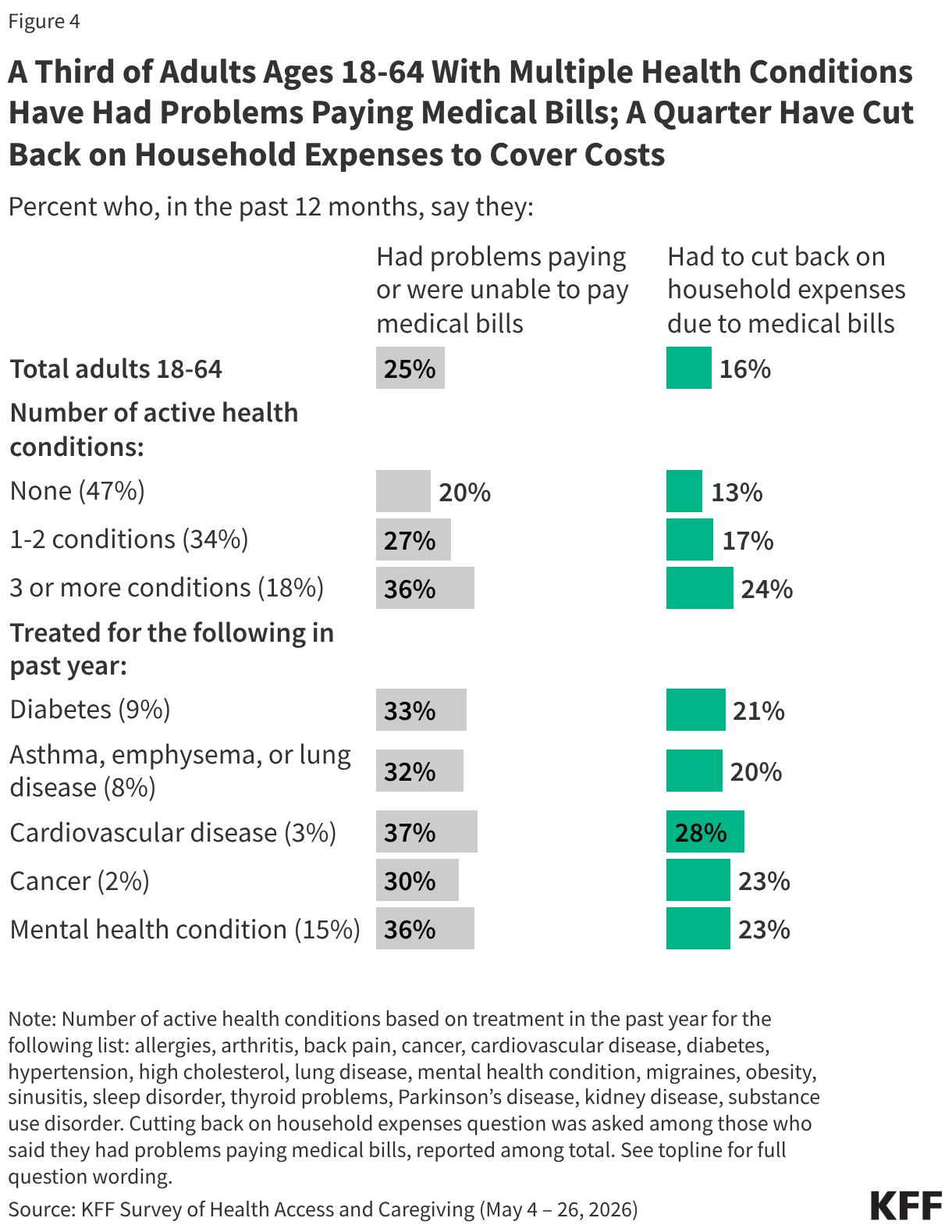
The high cost of managing care is a burden for adults ages 18-64 with multiple health conditions, with about a third (36%) of those with three or more conditions saying they have had problems paying medical bills in the past year, and about a quarter (24%) saying they cut back on household expenses as a result. These shares are nearly double the shares reported by adults without complex conditions, among whom one in five (20%) say they had problems paying medical bills and about one in eight (13%) cut back on household expenses as a result.
Among those ages 18-64 with specific health conditions, at least three in ten of those with cardiovascular disease (37%), a mental health condition (36%), diabetes (33%), lung disease (32%), and cancer (30%) report problems paying medical bills. At least one in five across these groups say they have had to cut back on household expenses like food, clothing, or basic household items to pay for health care costs, ranging from 20% of those with asthma, emphysema, or lung disease to 28% of those with cardiovascular disease.
Many Adults Ages 18-64 With Multiple or Complex Health Conditions Experience Insurance Delays and Denials
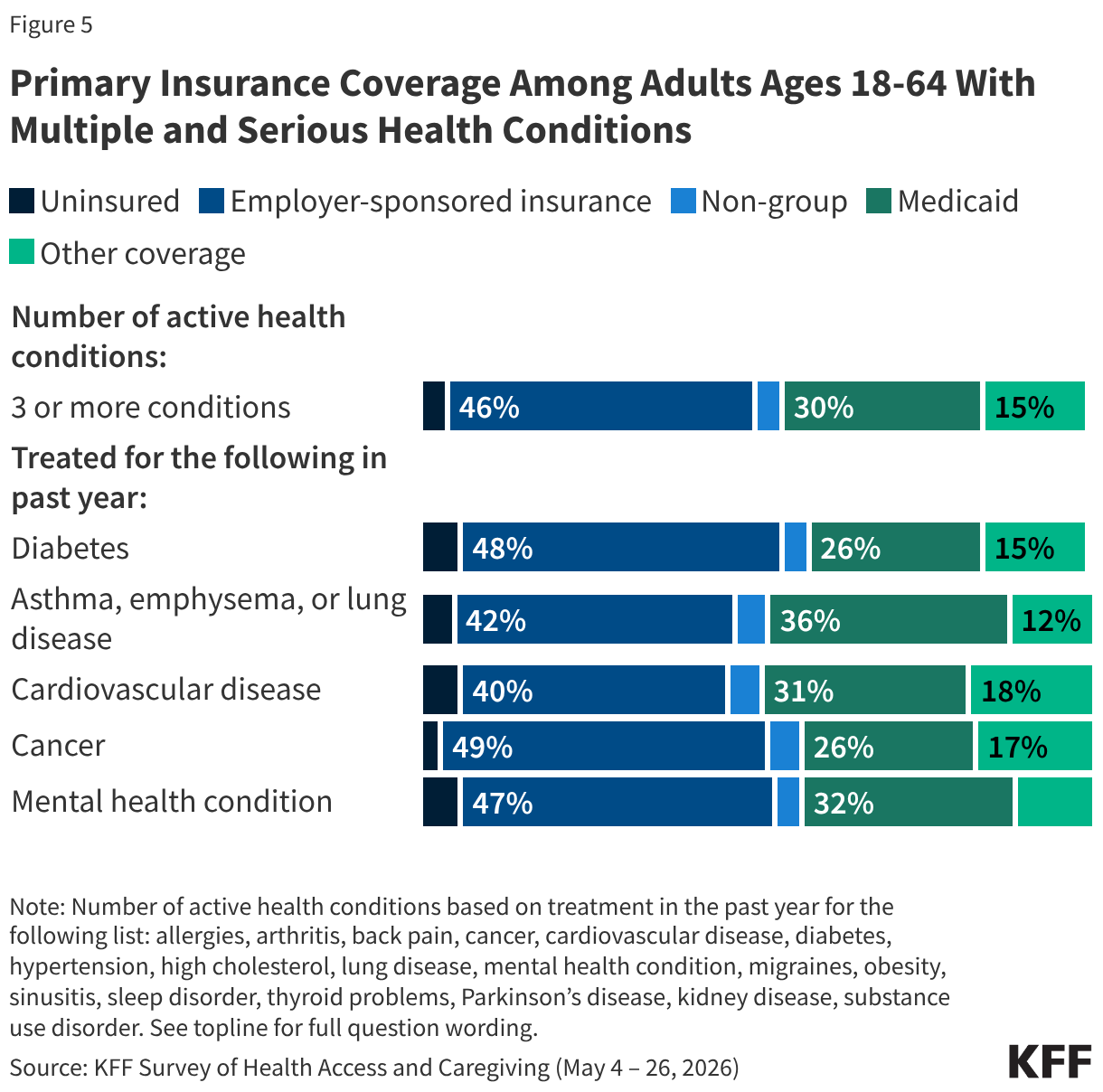
Navigating health insurance coverage is another challenge those with multiple or complex health conditions face. Most adults ages 18-64 with multiple health conditions have health insurance, with nearly half covered through an employer (46%), three in ten (30%) through Medicaid, one in six (15%) through some other form of insurance, and 4% through non-group insurance. Fewer than one in ten (4%) are uninsured. Among those with specific conditions, uninsured rates are also low, ranging from 3% among adults ages 18-64 with cancer to 6% among those with diabetes, cardiovascular disease, or a mental health condition. These rates are lower than the uninsured rate among the overall population ages 18-64, which may reflect the fact that many uninsured adults live with conditions that have never been diagnosed because they are less likely to see a health professional regularly.
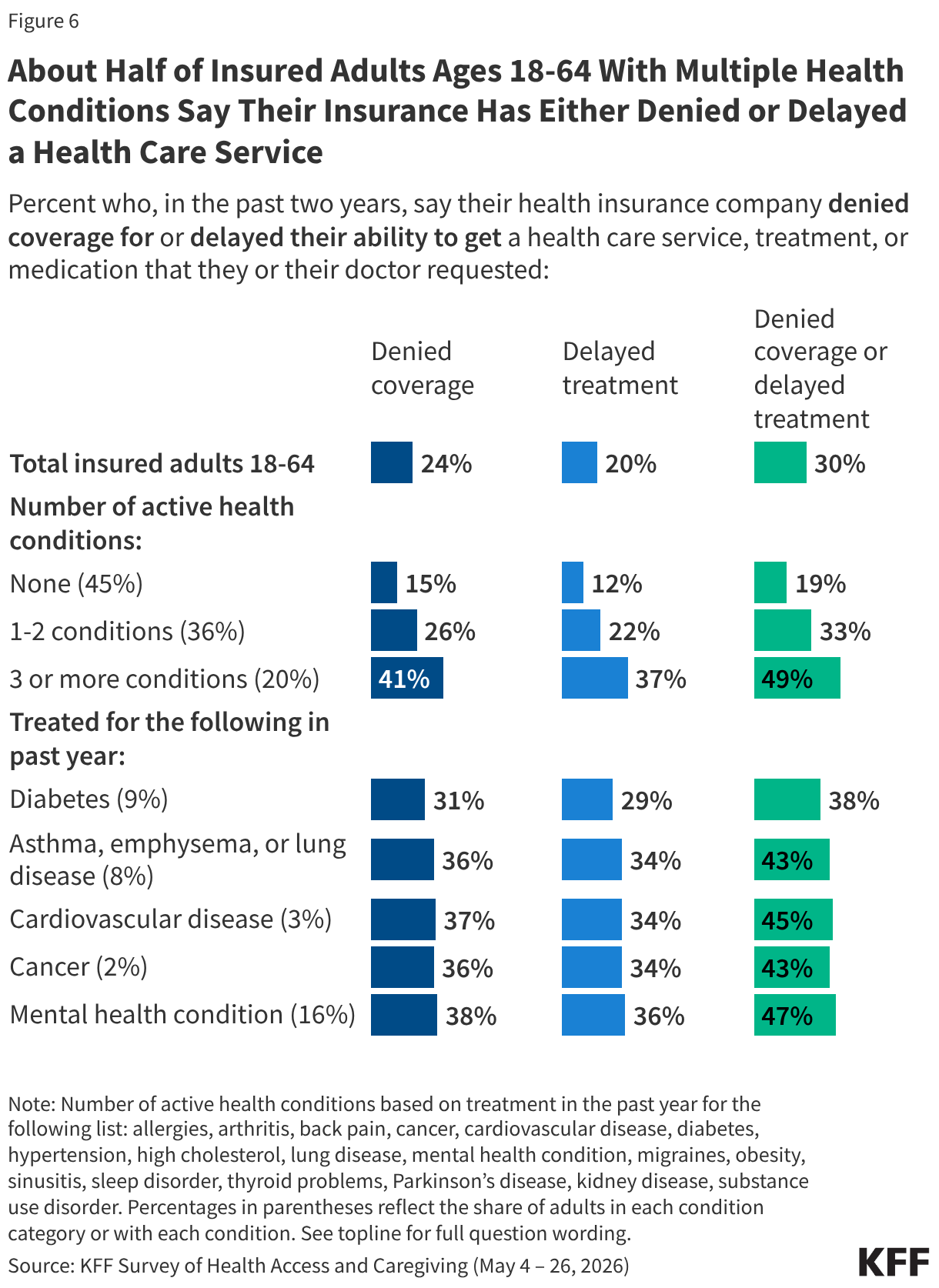
About half (49%) of insured adults ages 18-64 with multiple conditions say their insurance company has either denied coverage or delayed their ability to get a service, treatment, or medication their doctor prescribed in the past two years. About four in ten (41%) insured adults ages 18-64 with multiple health conditions say their insurance company denied coverage for a treatment they needed and nearly four in ten (37%) say their insurance company delayed their ability to get treatment. These shares are more than double those reported by insured adults ages 18-64 without serious conditions. Close to half of insured adults ages 18-64 with a mental health condition (47%) or cardiovascular disease (45%) report experiencing insurance delays or denials in the past two years, while roughly four in ten of those with cancer (43%), lung disease (43%) and diabetes (38%) say the same.
These reported insurance delays and denials may reflect a range of care and services, including services that are subject to prior authorization, prescription drugs that are not included in a plan’s formulary, or services like acupuncture, infertility treatment, and hearing aids that are not covered by all insurance plans.
These issues navigating insurance abound across adults ages 18-64 with multiple or complex conditions, regardless of the source of their health coverage. Similar shares of adults ages 18-64 with multiple or complex conditions have experienced delays or denials in the past two years from their health insurance across coverage types. For example, among adults 18-64 with multiple health conditions, about half of those with an employer-sponsored plan (49%) and Medicaid (50%) report experiencing a delay or denial, while 54% of adults ages 18-64 with non-group insurance say the same. Across adults ages 18-64 with specific health conditions such as diabetes and cardiovascular disease, there is a similar pattern, with similar shares of adults reporting problems with their insurance company regardless of the source of their coverage.
Navigating Multiple or Complex Health Conditions While Uninsured
KFF polling has long shown how a lack of health insurance coverage can exacerbate challenges with health care costs and access to care. In this section, we explore these challenges with access and paying for health care among adults ages 18-64 who are uninsured, who make up about 10% of the adult population ages 18-64. Among the uninsured population under age 65, most (69%) adults say they have not been treated for any health condition in the past year, while about a quarter (23%) have been treated for 1-2 conditions, and about one in ten (8%) have been treated for three or more conditions.
Due to sample size limitations, data in this section are shown only among adults ages 18-64 who say they have been treated for multiple conditions in the past year (8% of all uninsured adults ages 18-64) and among those who received treatment for a mental health condition in the past year (10% of all uninsured adults ages 18-64). Sample sizes for uninsured adults ages 18-64 being treated for other serious health conditions (diabetes, lung disease, cardiovascular disease, and cancer) are too small to report. Notably, this analysis does not include uninsured adults who may be living with these conditions but have never been diagnosed because of lack of access to health care providers and services.
About one in five (18%) uninsured adults ages 18-64 with multiple health conditions say they do not have a usual source of care other than an emergency room, three times as many as their insured counterparts (6%). While about three in ten uninsured adults with multiple health conditions say they go to a private doctor’s office, most, about four in ten (40%), say they usually go to a neighborhood clinic or health center when they are sick or need advice about their health. This is in contrast to adults with multiple health conditions who have insurance, who are most likely to say they visit a private doctor’s office (63%), and fewer (15%) say they usually visit a neighborhood clinic or health center. Adults who are uninsured and being treated for a mental health condition are particularly likely to say they do not have a usual source of care, with about a third (36%) saying this compared to 6% of their insured counterparts.
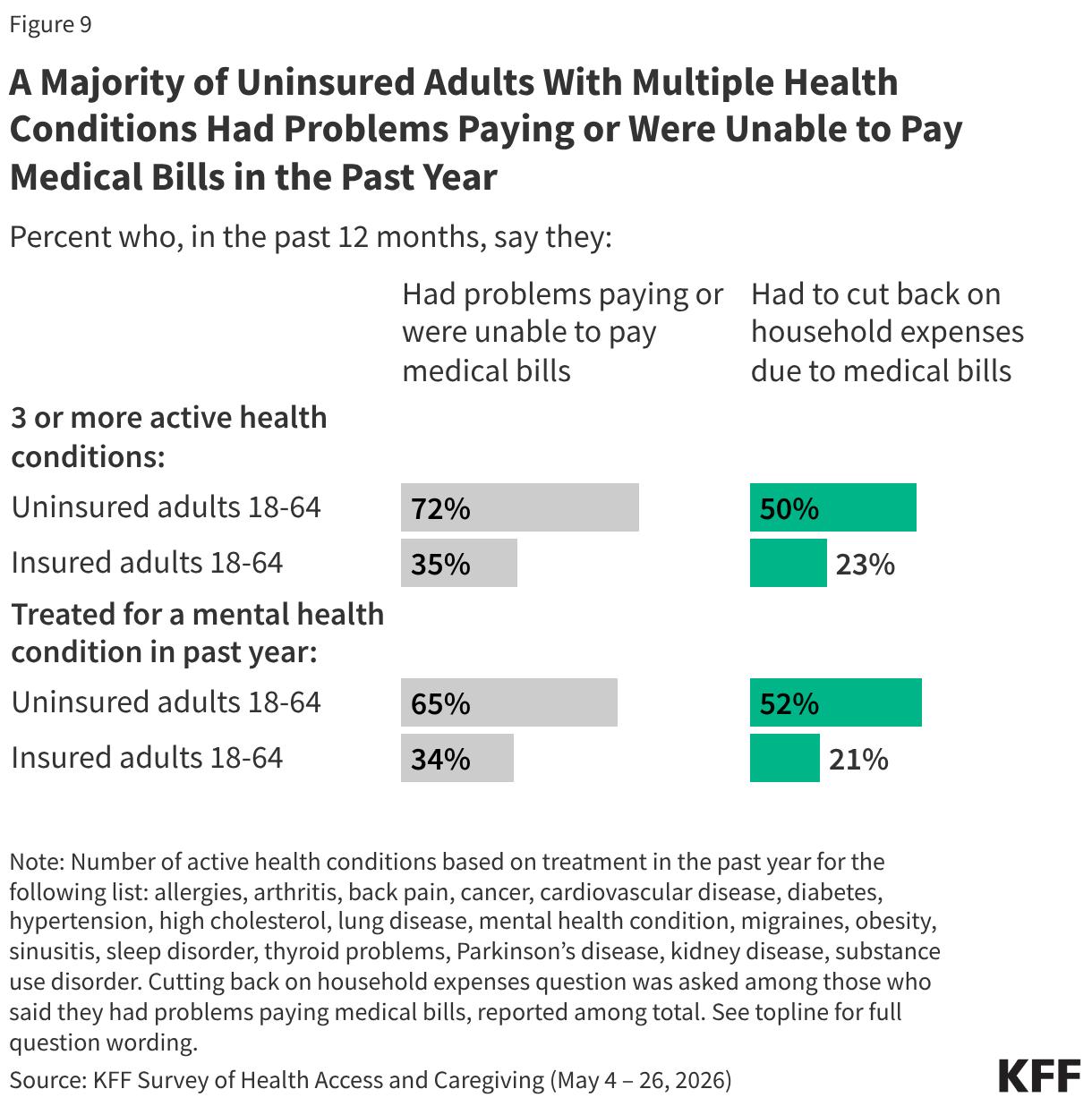
Uninsured adults with multiple health conditions are especially vulnerable to the high cost of health care. About seven in ten (72%) uninsured adults with multiple conditions say they had problems paying medical bills in the past year and half (50%) said they had to cut back on household expenses as a result. This is much higher than their insured counterparts, of whom about a third (35%) and one in five (23%) respectively said they did this in the past year. These real-life impacts of high health care costs are also felt by uninsured adults with a mental health condition, of whom two-thirds (65%) say they had problems paying or were unable to pay medical bills in the past year, and about half (52%) who said they had to cut back on household expenses due to health care costs.
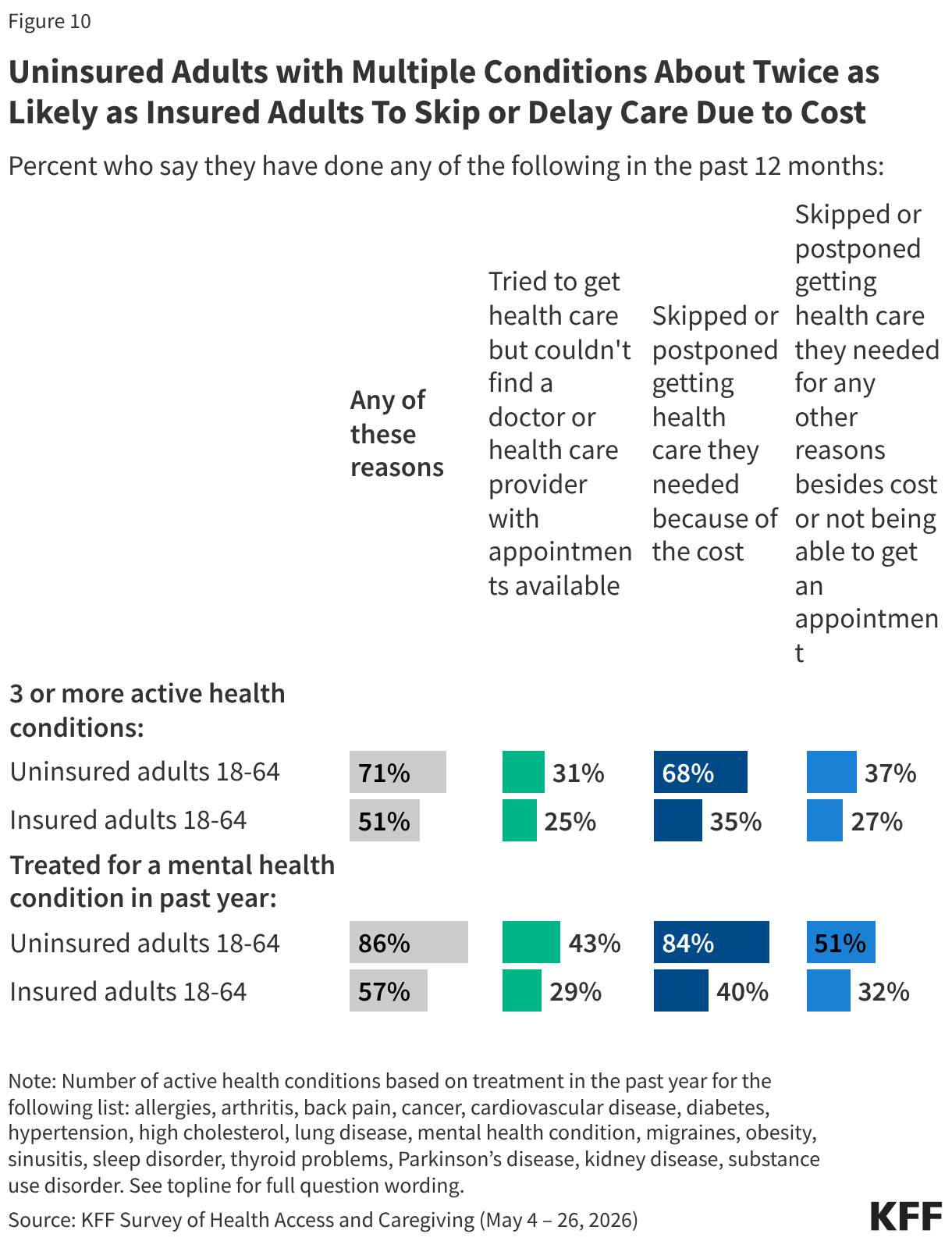
While concerns about health care costs are widespread, uninsured adults ages 18-64 with multiple conditions are more than about twice as likely as insured adults to say they skipped care in the past year because of the cost (68% vs. 35%). This share rises to more than eight in ten (84%) among uninsured adults ages 18-64 with a mental health condition who say they skipped or delayed care due to cost, also about twice as many as their insured counterparts (40%). Fewer uninsured adults with multiple conditions say they skipped care due to not being able to get an appointment (31%) or due to other reasons (37%). In contrast, uninsured adults with a mental health condition are much more likely to say they couldn’t get an appointment than those who have insurance (43% vs. 29%).
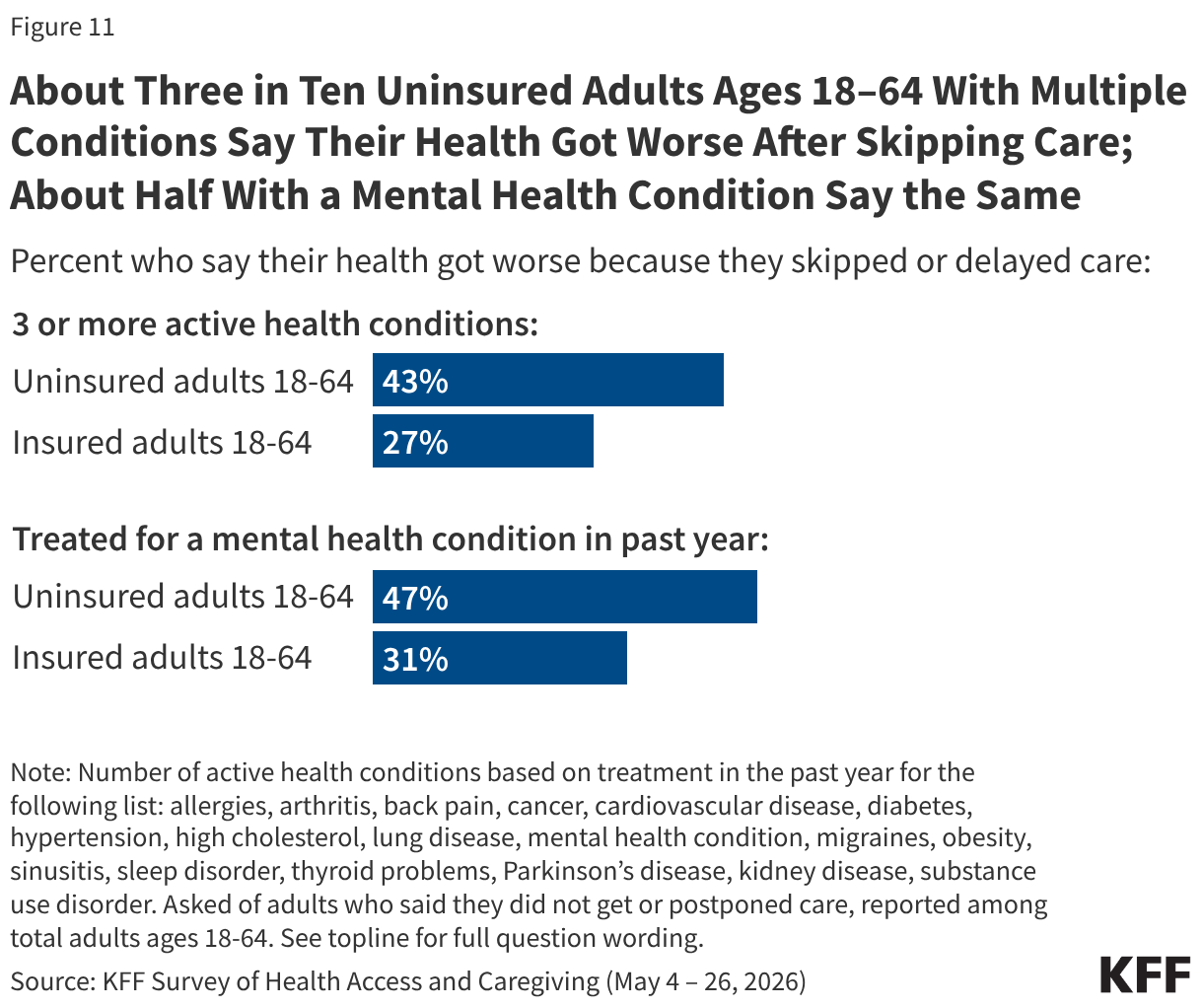
Skipping or delaying care has serious consequences for uninsured adults’ health outcomes, with about four in ten (43%) with multiple conditions and about half (47%) with a mental health condition saying their health got worse. This is higher than the share of insured adults who say the same (27% among those with multiple conditions, 31% among those with a mental health condition). Not getting needed care may be particularly fraught for uninsured adults, since health conditions can worsen over time and become more costly to treat.
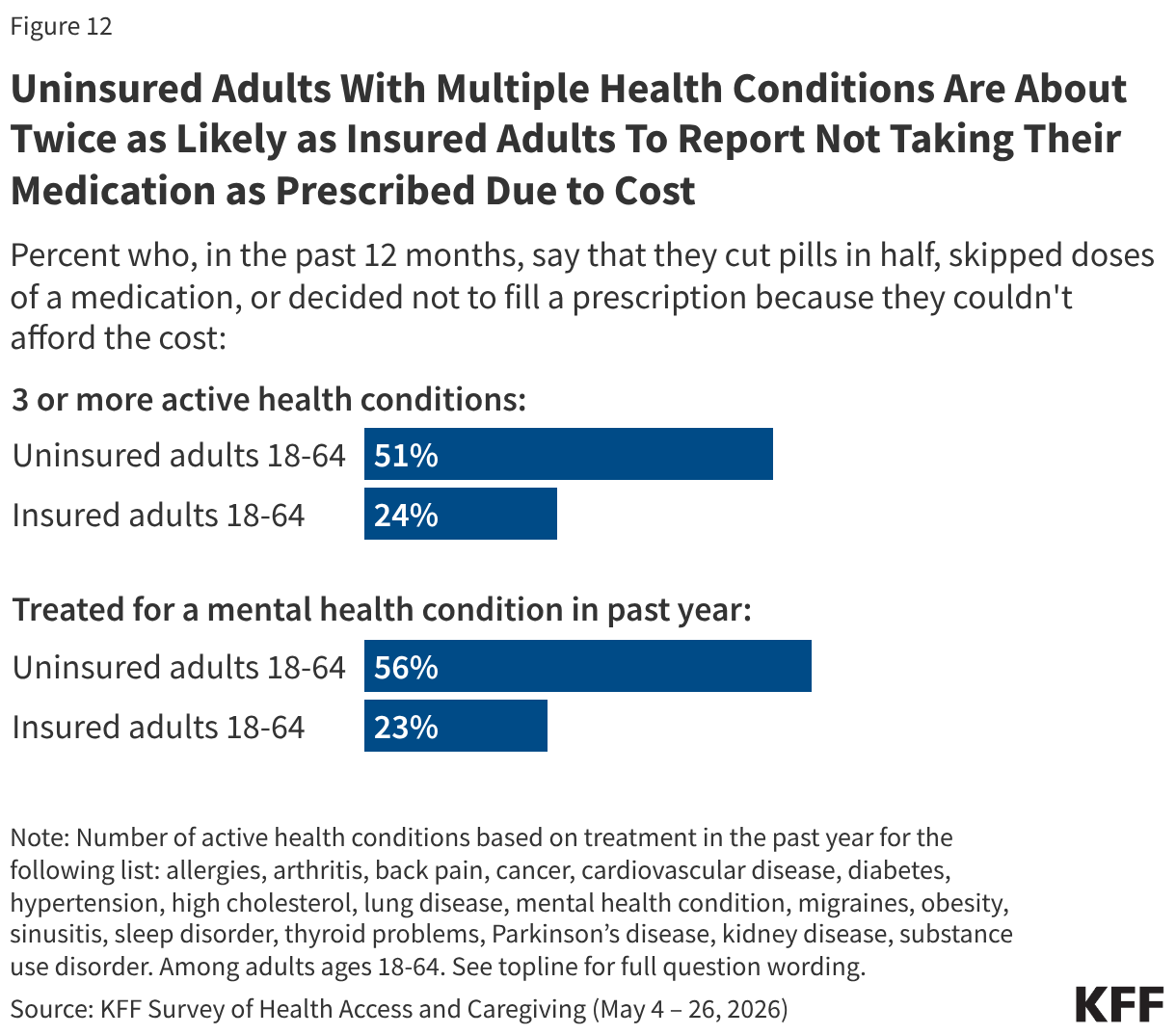
Among adults 18-64 with multiple health conditions or a mental health condition, those who lack health insurance are about twice as likely as those who are insured to say they didn’t take their medication as prescribed in the past year because they couldn’t afford the cost. About half (51%) of uninsured adults with multiple conditions say, in the past 12 months, they cut pills in half, skipped doses of a medication, or decided not to fill a prescription because of the cost, about double the share of those who are insured who said the same (24%). A majority (56%) of uninsured adults with a mental health condition say they didn’t take their medication as directed, compared to about a quarter (23%) of their insured counterparts who say this.
Managing Multiple or Complex Health Conditions Among Adults 65 And Older
Many of the health conditions examined in this report disproportionately affect older adults. At the same time, most adults ages 65 and over are covered by Medicare, which can help prevent or mitigate challenges with health care access and cost. Still, older adults with multiple or complex health conditions are not immune from cost and access problems. Many older adults have multiple health conditions: about four in ten (42%) say they have been treated for three or more conditions in the past year, while about one in five (19%) say they have been treated for diabetes, one in six (15%) have been treated for cardiovascular disease, and smaller shares report being treated for lung disease (9%), cancer (7%), or a mental health condition (6%).
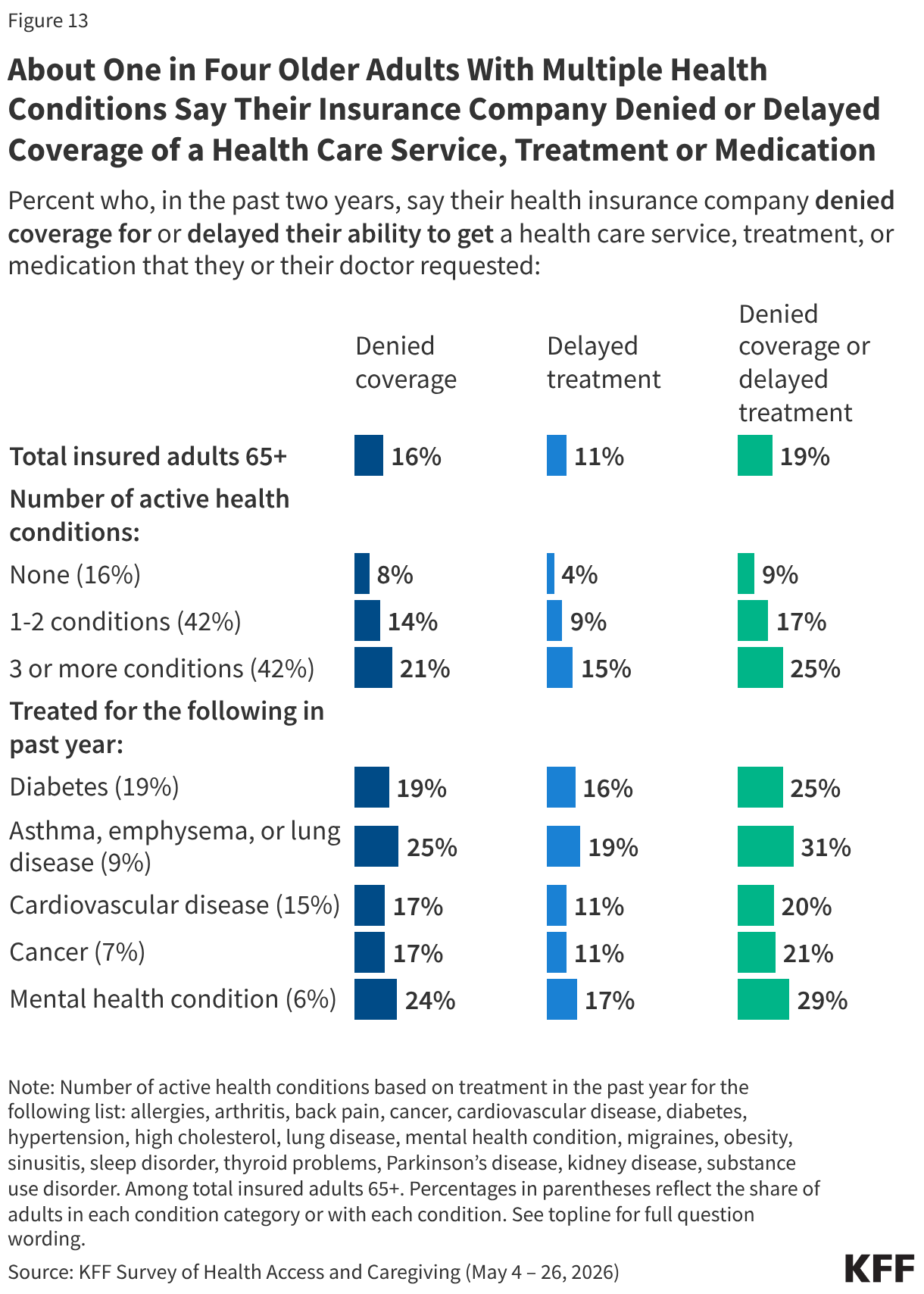
Despite high coverage rates through Medicare, a quarter (25%) of adults 65 and older with multiple health conditions say their insurance has either denied or delayed a health care service, treatment, or medication their doctor prescribed in the past two years. This share includes about one in five (21%) who say their insurance denied treatment and about one in six (15%) who say their insurance delayed treatment. The share of older adults reporting a delay or denial varies by health condition, with about three in ten of older adults with asthma, emphysema, or lung disease (31%) or a mental health condition (29%) saying this, compared to about a quarter of older adults with diabetes (25%) and about one in five among those with cancer (21%) or cardiovascular disease (20%).
While prior authorization is rarely used in traditional Medicare, it is more common in Medicare Advantage and in Medicare Part D plans that cover prescription drugs, which cover large shares of the population ages 65 and over. Further, as noted above, people reporting insurance delays and denials for services may have experienced other situations beyond those related to prior authorization (such as being prescribed a drug not included on their plan’s formulary or needing services not covered by Medicare).
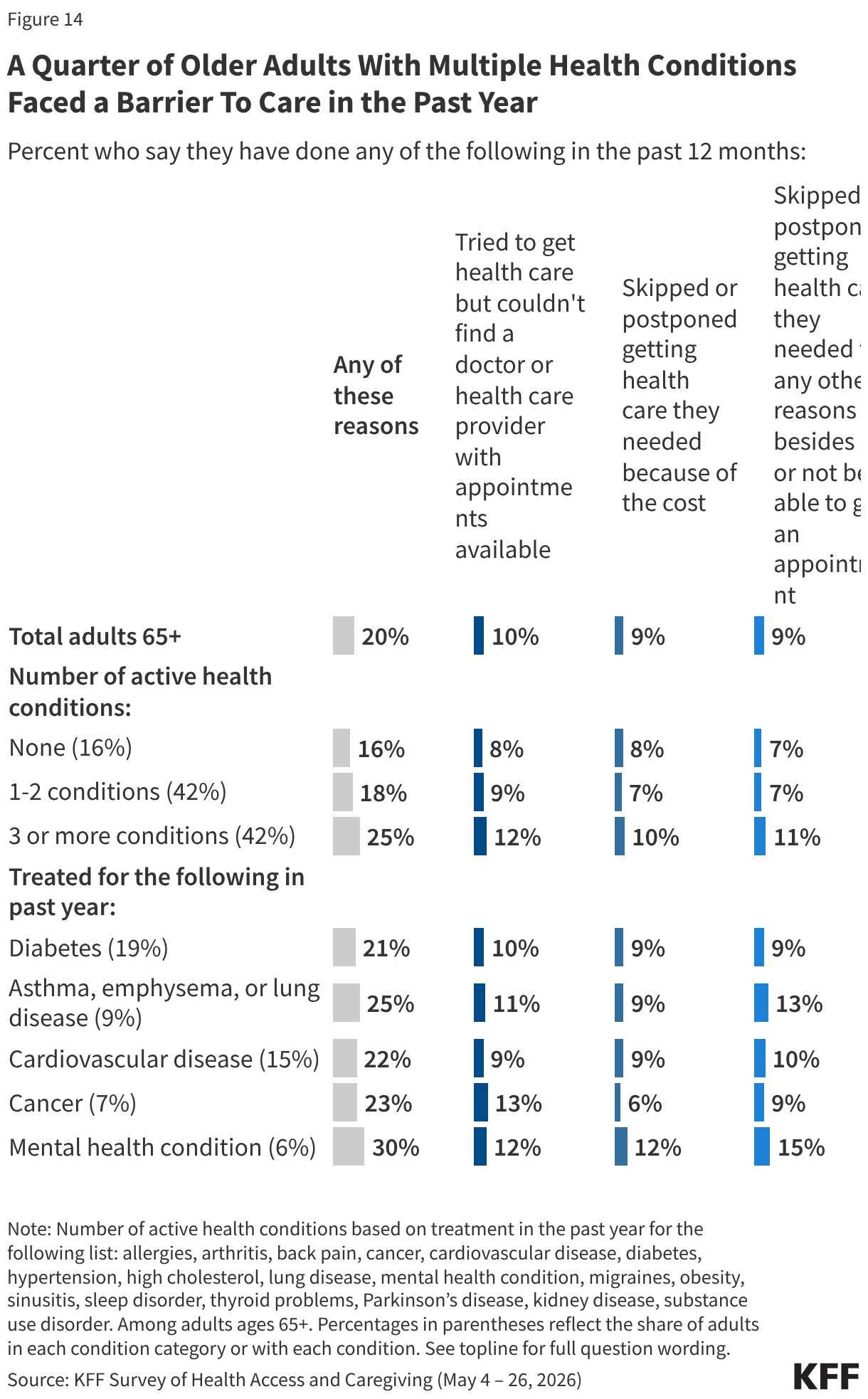
A quarter (25%) of older adults with multiple health conditions and similar shares of those with complex health conditions report not getting the health care they needed in the past year. Similar shares of older adults with multiple conditions say they skipped or delayed care due to cost (10%), because they couldn’t get an appointment (12%), or any other reason (11%). Among older adults, similar shares across complex health conditions say they did not get the care they needed, ranging from three in ten (30%) older adults with a mental health condition to about one in five (21%) with diabetes.
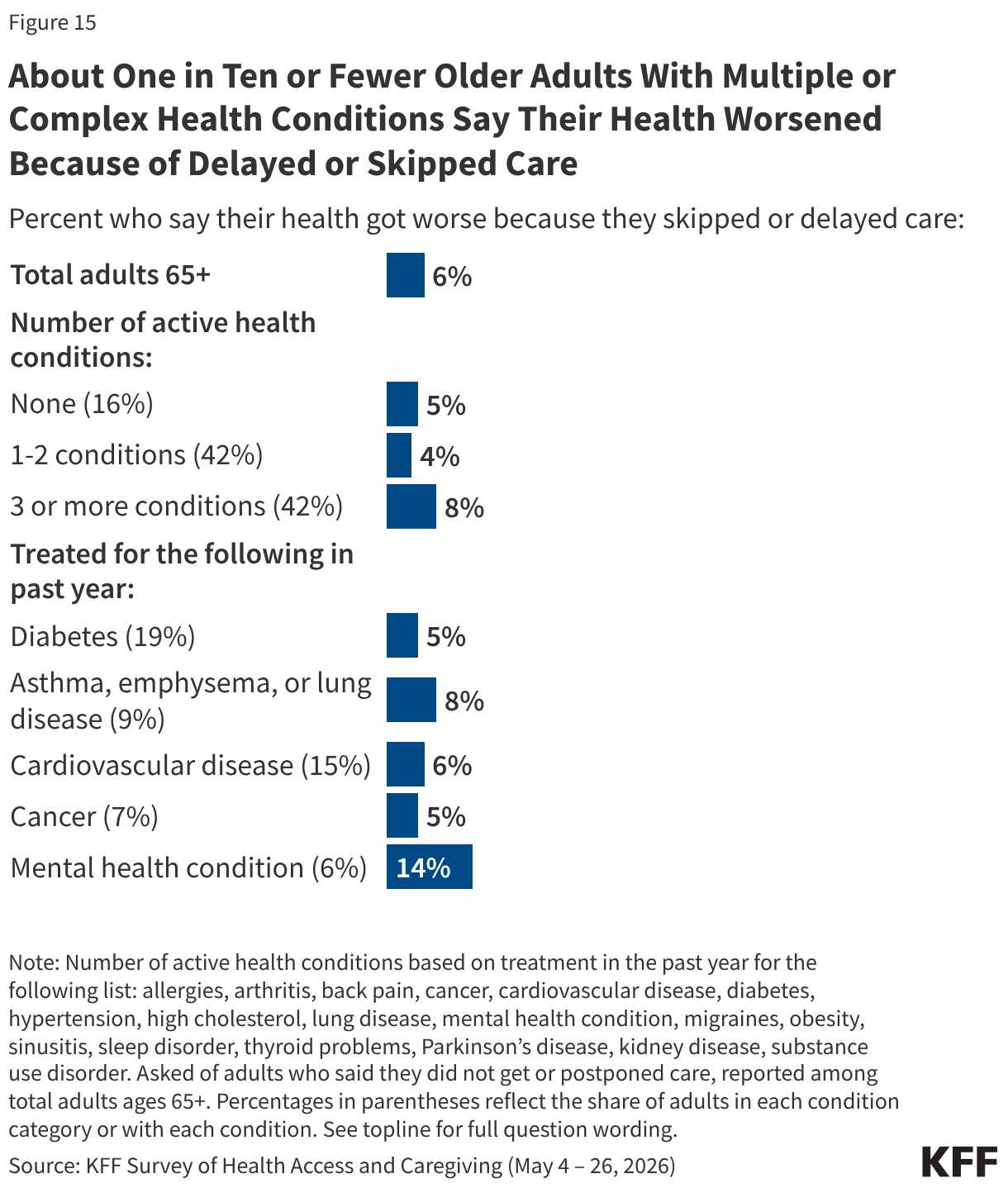
About one in ten (8%) older adults with multiple health conditions experienced worse health as a result of skipping or postponing care, rising to one in seven (14%) among those with a mental health condition. Fewer than one in ten older adults with other serious health conditions say their health got worse from skipping or delaying care, ranging from 5% among those with diabetes to 8% among those with asthma, emphysema, or lung disease.
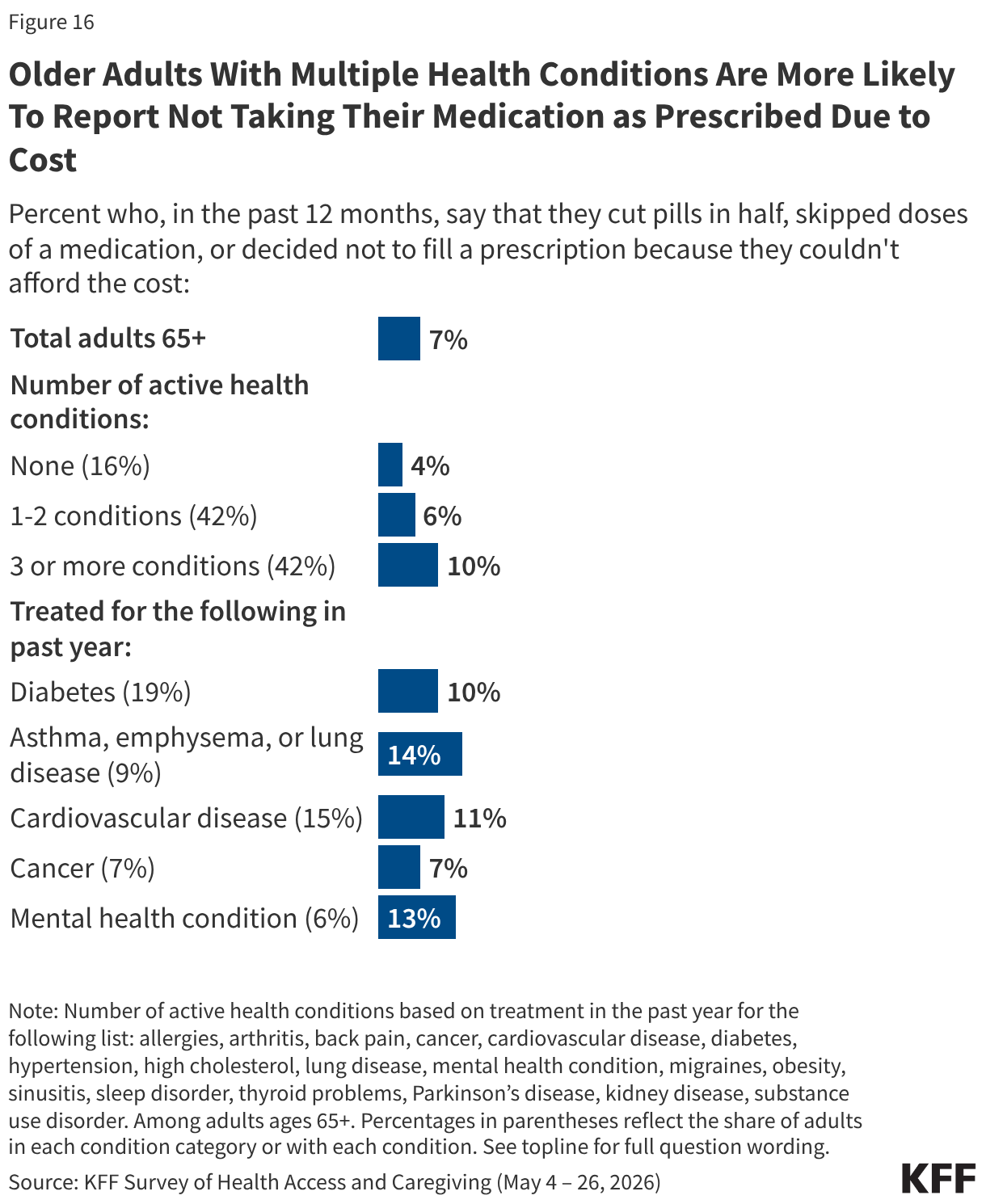
Although most older adults have prescription drug coverage through Medicare, those with multiple or certain complex conditions are more likely to say they didn’t take their medication due to cost compared to those who have no conditions (10% vs. 4%). Overall, one in ten (10%) older adults with multiple conditions say they cut pills in half, skipped doses of a medication, or decided not to fill a prescription because of the cost. This share rises to about one in seven older adults with asthma, emphysema, or lung disease (14%) or a mental health condition (13%).
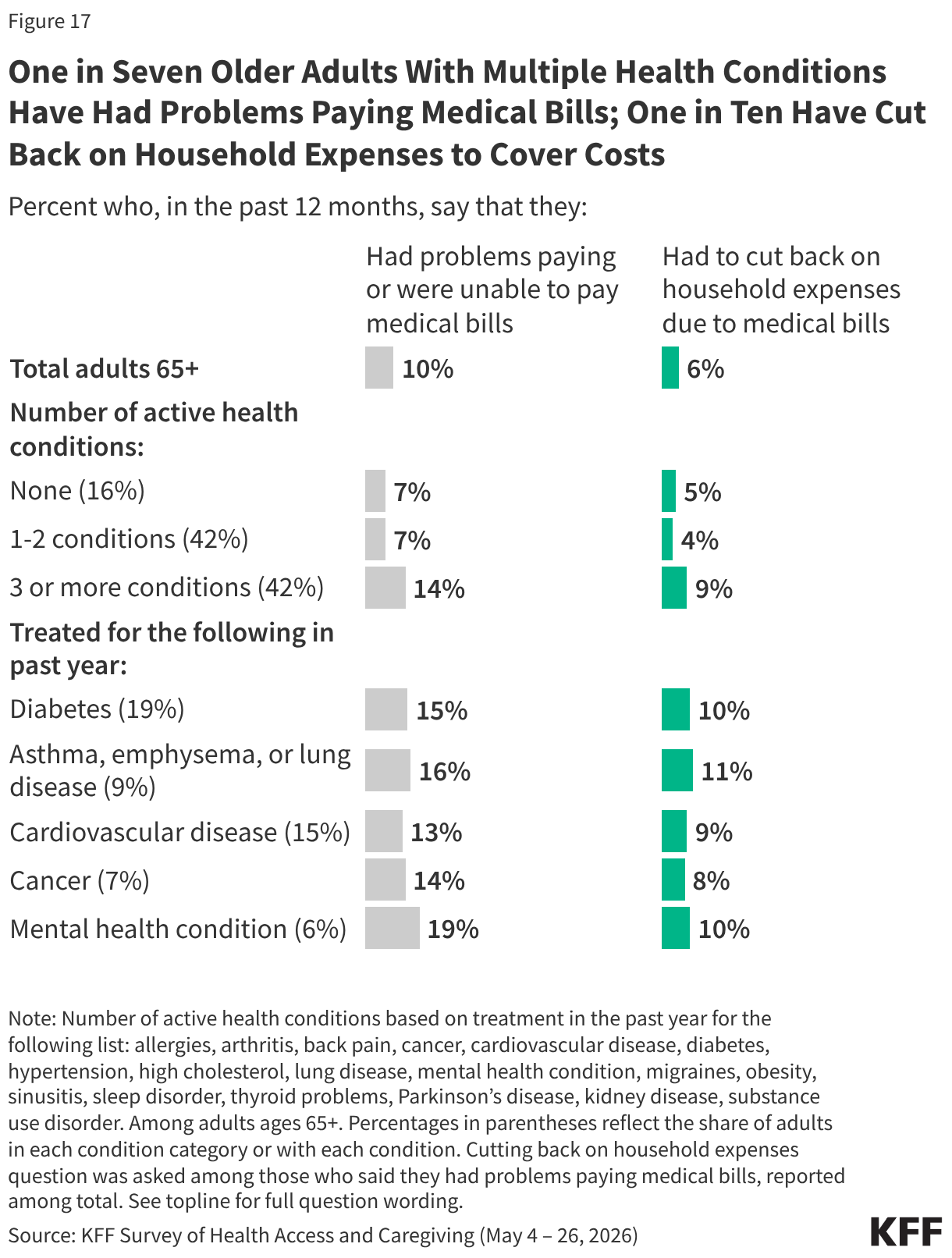
Older adults with multiple health conditions are twice as likely to say they had problems paying or were unable to pay medical bills in the past year compared to those with no health conditions (14% vs. 7%), rising to 19% among older adults with a mental health condition. About one in ten (9%) older adults also say they had to cut back on household expenses because of medical bills. Across older adults with complex health conditions, similar shares say they had to cut back on household spending as a result of medical bills.
About the Author