In among all the splashes of Alberta NDP orange and UCP blue, there was plenty of red adorning the front yards of many homes ahead of this week’s Calgary-Shaw byelection.
No, sorry, I’m not talking about Alberta Liberal Leader John Roggeveen and the 3.8 per cent vote share he snagged.
The red refers to the many Canadian flags homeowners have newly erected, and the pro-unity, anti-separatist lawn signs that have sprung up throughout Alberta.
The campaigning New Democrats sensed the kind of reception they’d get at those doors for their candidate Kyle Campbell, now the MLA-elect.
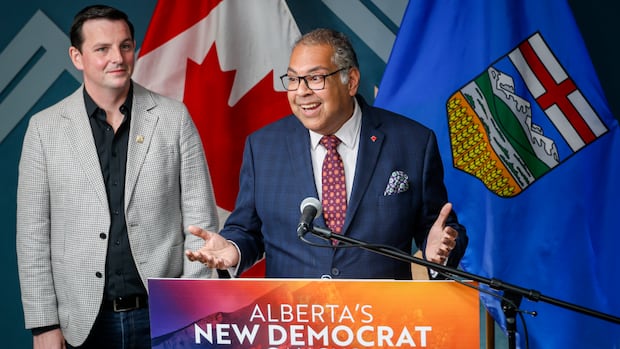
“If you were flying a Canadian flag or you had a forever Canadian sign … Yeah, we pretty much could mark you down as a supporter,” NDP Leader Naheed Nenshi told reporters on Tuesday, the day after his party’s victory in what was previously a UCP riding in Calgary’s deep suburbs.
It’s often too easy and too foolish to treat the results of a single byelection as a predictor of a general election a year away, although darned if the partisans like Nenshi won’t try.
We’re likely on firmer ground trying to discern what a byelection says about the mood heading into the referendum about Alberta separation that’s set for five weeks from now.
Polls have consistently indicated that Albertans, especially in big cities, resoundingly support the “stay” option and oppose holding a future referendum for independence.
Now, another indication, in the form of voting results. At least in Calgary-Shaw, the public mood has turned against Premier Danielle Smith and her United Conservatives, who thrust the province deeper into the unity debate by crafting and scheduling the Oct. 19 vote.
Shaw residents converted what was a 14-percentage-point UCP victory in the last election into a nearly four-point NDP byelection win. Of the 12 Calgary ridings that Smith’s party took in 2023, Shaw had the third-widest victory margin, a fact that might bring worry to UCP cabinet ministers and backbenchers in the city.
The win in Shaw was somewhat of a surprise to the NDP, judging by, among more publicly available factors, the fact Nenshi said his party’s relatively modest win margin “exceeded my wildest expectations.”
After all, the Opposition party had long been trailing the UCP in public opinion, and Nenshi lagged behind Smith, including in the city he formerly served as mayor. Most voters may have been squarely against separation or even the debate itself, but that dissatisfaction hadn’t been washing up on United Conservative shores. Not yet at least.

Smith and her Shaw candidate Mike Derry might have said repeatedly that they endorse staying in Canada, but Campbell and Nenshi spent much of the campaign trying to remind voters how responsible the UCP government is for the referendum — and that senior organizers in the party favour separation.
How thoroughly did the New Democrats wrap their campaign identity around federalism? After Campbell’s victory speech at a southwest Calgary bar, supporters spontaneously broke into a rendition of O Canada.
After the verdict that got his backers singing, a jubilant Nenshi called the byelection an “earthquake.”
“This means that 35 days from today, we send Danielle Smith and her separatist pals packing, and within a year from now, we give Albertans the NDP government they deserve,” he said.
Sure, Alberta would have a Premier Naheed Nenshi if Shaw’s 18-point swing from UCP to NDP gets translated to the rest of the province in the fall 2027 election.
In the same way that a stunner of a federal Conservative victory in a 2024 byelection in the Toronto riding of St. Paul’s led to Prime Minister Pierre Poilievre in 2025. Or didn’t.
In mid-2024, the Pierre Poilievre Conservatives stole a federal byelection in downtown Toronto, flipping a seat that had been Liberal for three decades. One year and one prime ministerial resignation later, the Liberals took the riding by 28 percentage points, and Mark Carney secured a fourth straight Liberal government term.
Ample time to interpret message
That Toronto byelection sent a political message of sorts that ultimately led to Justin Trudeau’s resignation. There’s ample time and opportunity for Alberta’s premier to interpret the message that voters sent her in the sort of suburban seat her party can’t afford to lose in a general election.
Barring another political “earthquake” on Oct. 19, independence referendums will be a distant memory come next fall. Alberta politics could change a lot before then; heavens knows they’re prone to turbulence.
Smith could pivot her agenda farther away from the independence question. She could give her Opposition less room to cast her as an agent of disunity, and themselves as the exclusive guardians of Alberta’s place within Canada.
It’s also possible United Conservative members give their federalist leader new marching orders on that same matter, and urge her at a November convention to get in line with many party activists and take a more pro-separatist stance.
The future could also be determined by what Calgary-Shaw and other ridings look like in the next election. Alberta’s electoral boundaries are getting revised by an unorthodox UCP-led advisory panel, with the prospect that the cities’ suburban ridings are spliced with more UCP-friendly rural areas.
The October referendum seems to have left its striking imprint in one riding. The boundary revisions will be but one of many factors that will colour in the map when all Albertans get to vote next year.
About the Author