
The two technologies work in tandem.
You get in the car, turn it on, and your phone just connects to your entertainment system. Wireless Android Auto launches automatically on the dashboard and you’re good to go. No cable. No fumbling to plug anything in. You don’t even have to dig out your phone from your bag or pockets. But here’s something most drivers don’t realize: the “wireless” experience of Android Auto actually requires running two separate connections at the same time: Bluetooth and Wi-Fi.
Why both? That’s a good question and the short answer is that neither technology can do the job alone.
Can you run Android Auto without Bluetooth?
Bluetooth handles two specific jobs when it comes to wireless Android Auto: the initial handshake between phone and car and hands-free calling. The handshake is what kicks off the whole process. Bluetooth, as a technology, is energy-efficient and low-power, so your phone can scan for your car’s system in the background, pair the two, and exchange the credentials needed to launch a Wi-Fi connection. The only thing you have to do is to turn on your car.
Handling hands-free calls is Bluetooth’s second job in your car. Android Auto routes audio through your car’s speakers using the Hands-Free Protocol. If you disable Bluetooth during your drive for any reason, it simply kills the connection. For these two reasons, you can’t run wireless Android Auto without Bluetooth.
As mentioned, Bluetooth also launches a Wi-Fi connection. So, why does Android Auto turn on Wi-Fi? Because Bluetooth tops out at around 2-3 Mbps of data throughput. That’s enough for audio alone, but definitely not enough to stream a high-resolution map interface, audio and touch inputs.
Why does wireless Android Auto need Wi-Fi?
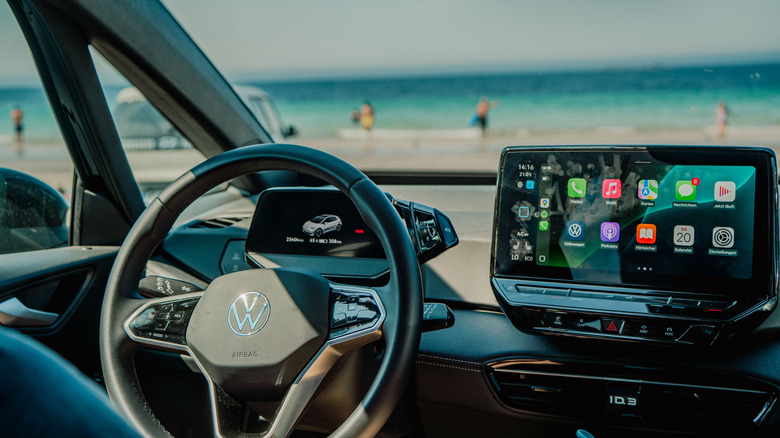
Once the Bluetooth handshake is complete and your device is paired to your car, your phone connects to a local, peer-to-peer 5GHz Wi-Fi Direct network. This is where the magic happens. Wi-Fi Direct provides the bandwidth needed to handle everything else from the user interface to high-quality audio from your streaming services, and the sensor data (GPS details, odometer, touch inputs on the screen, voice commands, ambient light, etc).
Google’s Android Auto developer documentation clearly states that the 5Ghz Wi-Fi requirement is strict because standard Bluetooth lacks the bandwidth for continuous video projection. That’s also why older phone models without 5GHz Wi-Fi support simply can’t run wireless Android Auto.
What happens if your car doesn’t have wireless Android Auto?
Many vehicles (mine included) only support wired Android Auto. Thankfully, there are plenty of dongles available to purchase, such as the Carlinkit, AAWireless, and the Motorola MA1. These bridge the gap by using the same Bluetooth and Wi-Fi logic, just with an extra layer.
You plug this tiny dongle into your car’s USB port and it mimics a wired smartphone. The dongle then pairs with your phone over Bluetooth, establishing a data connection. Your phone then drops the Bluetooth data link and connects to the dongle over 5GHz Wi-Fi Direct before translating that Wi-Fi stream into the USB signal. As far as your car knows, you’re working with a standard wired connection. It’s an easy fix that won’t cost you a fortune.
What are the disadvantages of wireless Android Auto?
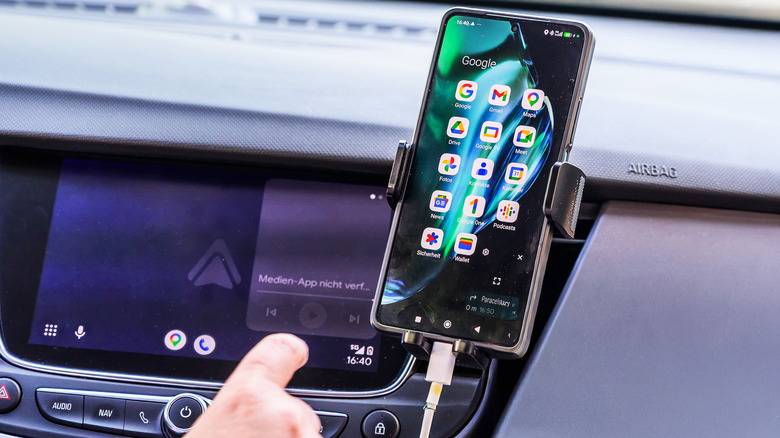
Using wireless Android Auto is certainly convenient, but there are some downsides. First of all, both Bluetooth and Wi-Fi must stay on as turning off either of them breaks the connection. Maintaining an active 5GHz Wi-Fi connection on top of GPS and Bluetooth can definitely drain your device’s battery. On top of that, if you’re using a dongle, it can add a connection delay. You’ll also need to have a phone with 5G capabilities that is running Android 11 or newer.
Ultimately, wireless Android Auto works so smoothly because Bluetooth and Wi-Fi each handle the part of the job they’re best suited for. When you know what happens behind the scenes, it may sound complicated, but the result is worth it.
About the Author