Vancouver city council has kicked a public hearing on a proposed artificial intelligence data centre until after the October municipal election.
A city hall meeting on Thursday evening was scheduled to include a public hearing about rezoning the land at 111 E. 5th Ave. for one of the two new data centres planned for Vancouver.
The Coalition of Progressive Electors, better known as COPE, had been preparing members to attend the meeting and oppose the centre.
But earlier this week, after an influx of public input, Vancouver city council postponed the hearing until at least next fall.
“We’re taking this as a win,” said Solomon Yi-Kieran, a COPE city council candidate. “I think of this as an instance of people power and public pressure being able to influence the decisions of the government.”
Yi-Kieran’s party has been organizing around a growing swell in anti-AI sentiment. They said the hearing delay means Vancouver residents will have more chances to weigh in on the data centre — and promises to make AI infrastructure an election issue come fall.
Meanwhile, Kris Krüg, a Vancouver-based photographer and executive director of a tech industry network called the BC + AI Ecosystem Association, said the flood of public input signals that communities are increasingly demanding a voice in how artificial intelligence is adopted.
“AI has stopped being just software; it’s actually heavy industry now,” he said. “It uses public water, electricity, land and all of our shared infrastructure. That means, you know, we as the public deserve a real chance to bargain, not just a comment box on a website somewhere.”
Developer Westbank Corp. has applied to build a 26-megawatt data centre in Vancouver’s Mount Pleasant neighbourhood, at 111 E. 5th Ave. and 2060 Quebec St. The application includes plans to build a café on the ground floor.
It’s one of two data centre projects announced for the city in May. Once it’s built, Telus would operate both as part of its new “AI Factory,” which aims to ensure that the infrastructure that enables artificial intelligence exists within Canada.
Telus previously told The Tyee the data centres have taken extensive measures to reduce their impact on residents and the environment.
But the announcement has been met with significant backlash as some residents say that despite Telus’s efforts, they are still concerned about the data centres’ water usage, power usage, noise pollution, heat generation and impact on jobs.
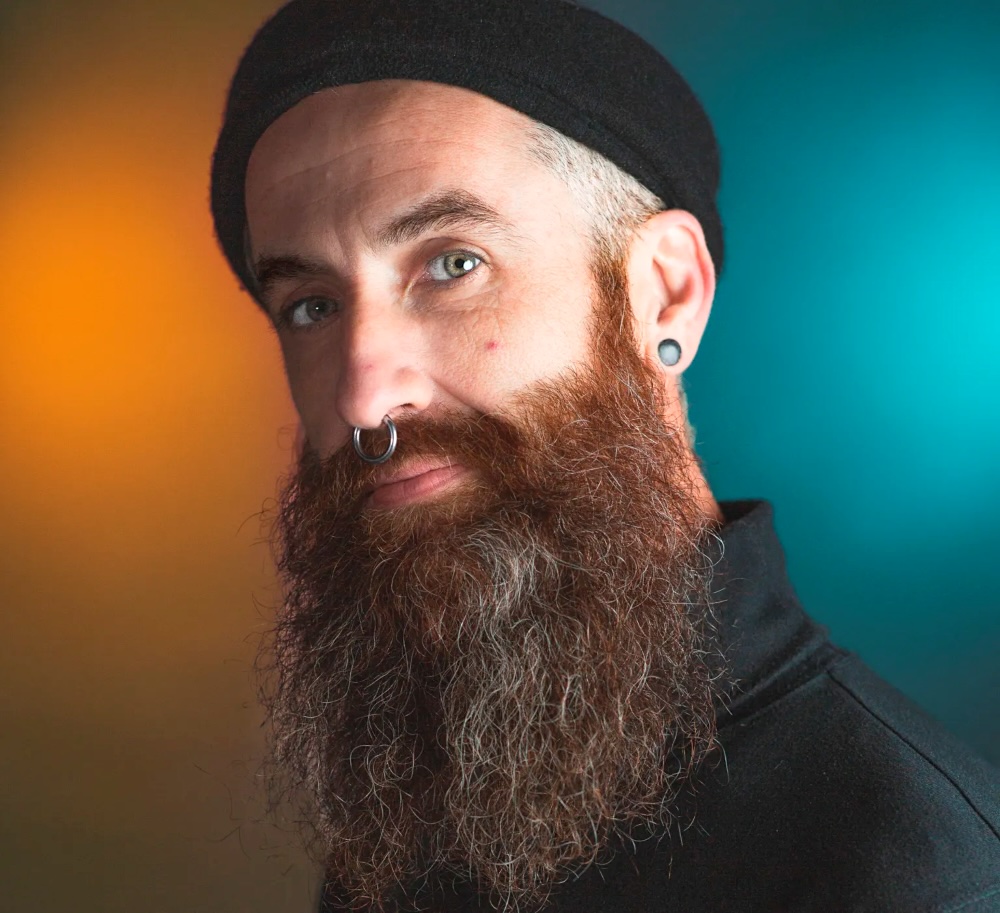
Photo submitted.
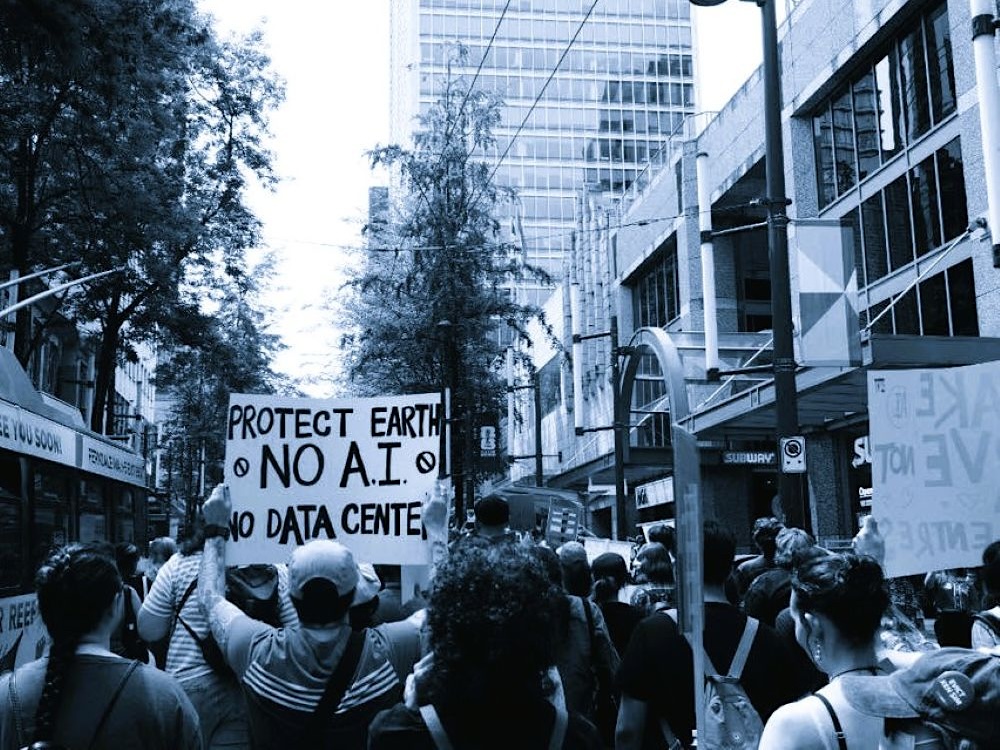
Over the past two months, hundreds of Vancouver residents have rallied against the projects. A third rally is scheduled for this Sunday.
Both COPE and the BC Green Party have called for a moratorium on data centre construction until the impacts are better understood.
Earlier in July, Vancouver Coun. Lucy Maloney also tried to create a regulatory framework that would require the city to assess the impacts of AI data centres. Council ultimately voted down her motion.
According to a Vancouver city council report on the project, the city does not need to hold a public hearing on the 5th Avenue data centre.
That’s because the changes would be in line with the Vancouver Official Development Plan, an already adopted document that outlines city land-use policy.
Still, in the report staff recommend that city council hold a public hearing because of a huge influx of public input.
Staff added they had received 579 submissions from residents about the data centre, including in the form of mailed postcards, an online comment form and a Q&A. Some supported the data centre. Some expressed concerns, including impacts on energy use, noise pollution, sustainability, water consumption and political controversy.
The public hearing was scheduled for Thursday. But on Tuesday, city council voted to send the report back to staff for more public consultation — effectively kicking the hearing down the road until at least after the municipal election.
“I think this solves the issue that we’re trying to solve, and that’s that it gives council time to do council business,” said ABC Coun. Brian Montague, who moved to bump the report. It was seconded by COPE Coun. Sean Orr.
Yi-Kieran said the delay means the rezoning will be handled by the new council that’s elected in October.
“It also means that in this election, municipal parties are going to have to make their stances on these AI data centres really clear,” Yi-Kieran said. “It’s something that people are going to be thinking about when they go to the ballot box.”
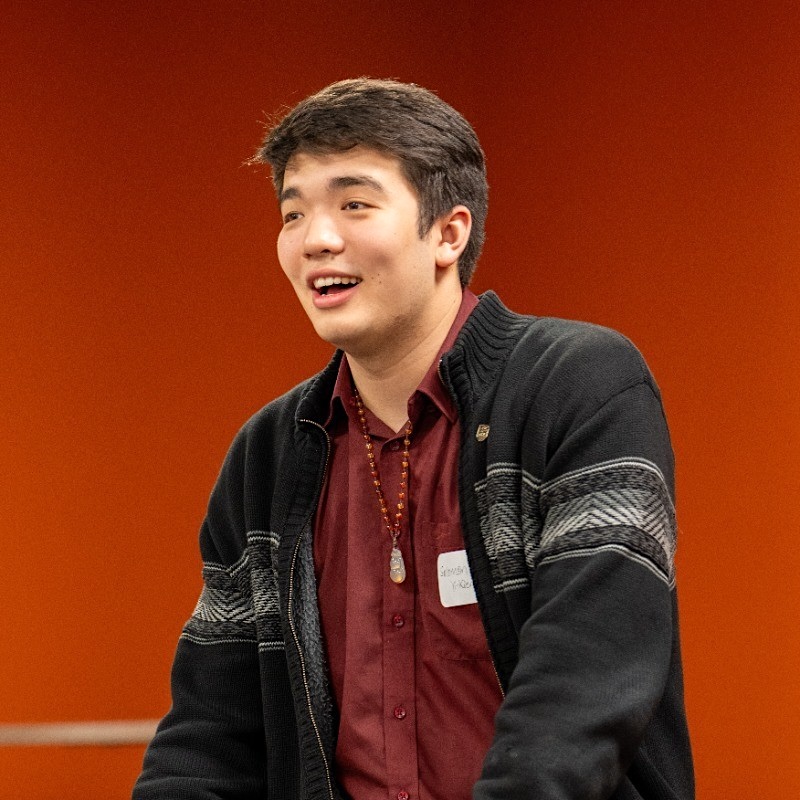
Photo via LinkedIn.
The election comes as British Columbians grow increasingly aware of artificial intelligence. A Simon Fraser University survey of 1,000 B.C. residents this year shows 54 per cent of respondents reported they have heard or read “a great deal” or “a lot” about AI, up from 17 per cent of respondents in a similar survey conducted in 2024.
Six in 10 say they have used some form of AI, and 79 per cent say they are “more concerned than excited” about AI in daily life — up seven points from two years prior. Meanwhile, 65 per cent of respondents reported that the potential risks of AI outweighed the potential benefits, which is up from 56 per cent in 2024.
Krüg said the survey shows British Columbians are paying more attention to the benefits and impacts of artificial intelligence. He added the backlash partly shows that people want to have a say in what happens in their communities.
“We’re not stupid, we’re not naive or afraid of the future,” Krüg said. “We’re just asking to be included. Consultation isn’t real if it happens with no impact on how the project gets done or if it gets done at all. That’s just theatre.”
Krüg said he’s not against the data centres. He uses artificial intelligence tools and said he believes Canada does need AI infrastructure and capacity. But he said people who do oppose the centres have valid concerns.
“We want this to be done in a clean and green and just way that’s inclusive and represents our values,” he said. “We don’t have to import the ways of doing this from the tech bros of Silicon Valley.”
Part of the issue is how the data centres were announced, Krüg said. Although the federal government has not yet announced any terms to finance the projects, Artificial Intelligence Minister Evan Solomon shared the stage with Telus CEO Darren Entwistle last May to announce the project plans.
It’s part of the federal government’s push to have more Canadians adopt the tech and build AI infrastructure that Ottawa can control — sovereign AI, in government-speak.
But Krüg said that so far, while that push has included commitments to back tech companies such as Telus, it has lacked clear communication about how the data centres might bring value to communities.
“It’s not an anti-AI story; it’s an anti-blank-cheque story,” he said. “We’re not asking to be onboarded into the future. We want to play a role in writing it and authoring it.” ![[Tyee]](https://thetyee.ca/design-article.thetyee.ca/ui/img/yellowblob.png)
About the Author