In 2023, medication abortion, a two-drug regimen using mifepristone and misoprostol that is FDA-approved to terminate pregnancies up to 10 weeks in the U.S., accounted for 65% of all abortions. This share has increased since the FDA removed the in-person dispensing requirements in 2021, making medication abortion via telehealth, mail, and pharmacies more accessible.
Medication abortion can be billed using three separate procedure codes, and often all three codes are billed at the same time. There are codes for two pharmaceuticals—mifepristone (HCPCS S0190) and misoprostol (HCPCS S0191)—as well as a global medication abortion code (HCPCS S0199) that includes all affiliated services and supplies (e.g., patient counseling, office visits, confirmation of pregnancy by HCG, ultrasound to confirm duration of pregnancy, ultrasound to confirm completion of abortion).
States typically take two approaches to reimburse for medication abortion services: (1) a bundled payment using the global medication abortion code plus the medications (billed either through medical services or pharmacy billing channels); or (2) payment for separate services, like office visits and ultrasounds, plus the medications.
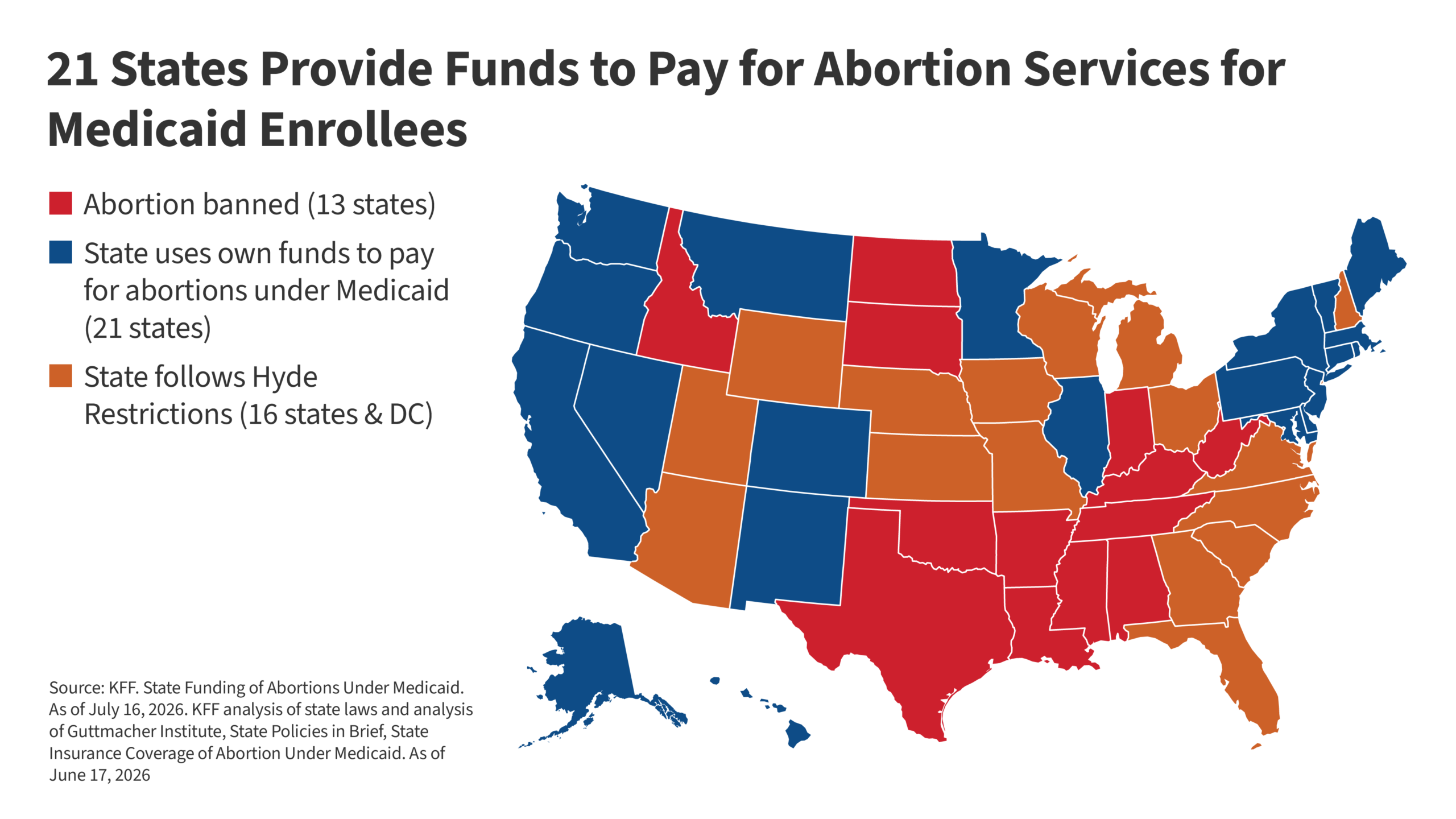
Twenty out of 21 states that use state funds to pay for abortion services for Medicaid enrollees list reimbursement rates for at least one of the three medication abortion codes, with 16 listing rates for the global medication abortion code, 13 listing rates for mifepristone, and 12 listing rates for misoprostol. The one state not accounted for is New York; while they do not reimburse for the global medication code, on their publicly available fee schedule they reimburse at the “cost” of the drugs to abortion providers for both mifepristone and misoprostol. The median Medicaid reimbursement rate for the global medication abortion code is $514, ranging from a low of $81 in Rhode Island to a high of $825 in Washington (Figure 2). The median reimbursement rate for mifepristone is $81, ranging from a low of $43 in Washington to a high of $128 in New Jersey. The median reimbursement rate for misoprostol is $2, which ranges from less than $1 in Washington to $22 in Illinois. When the median amounts for all three medication abortion codes are summed together, the median reimbursement rate for medication abortion is $597. However, the range of summed codes across states is quite large, from $162 in Rhode Island to $869 in Washington.
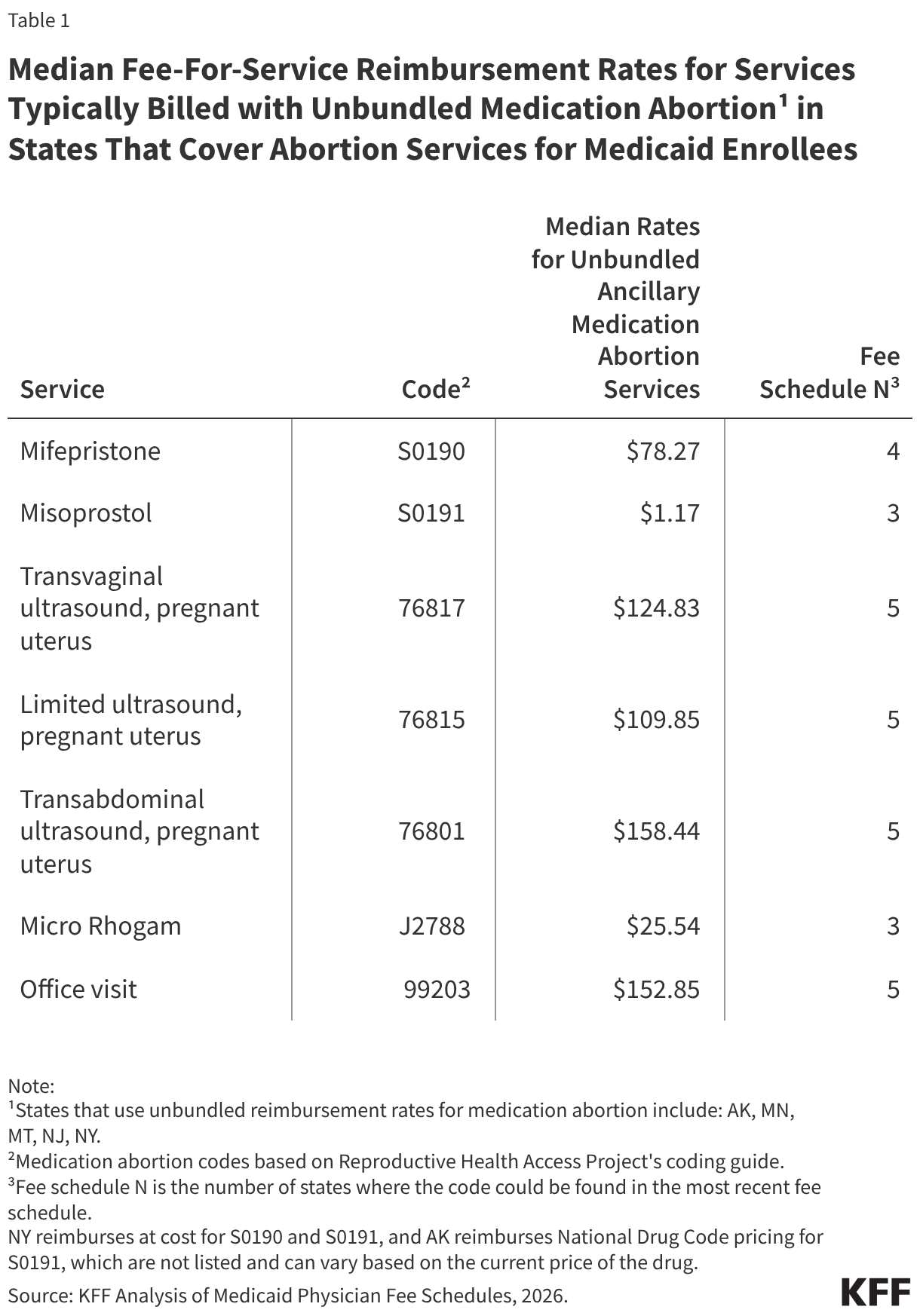
For the five states that do not use the bundled, global code for medication abortion, the sum of the rates for mifepristone and misoprostol alone range from $44 in Minnesota1 to $131 in New Jersey. In these states, providers may bill separately for ancillary services, which could potentially add hundreds of dollars to the amount reimbursed (Table 1).
The medication abortion reimbursement rates reported in this brief apply to services provided in outpatient clinics or physicians’ offices and do not specifically address reimbursement rates for telehealth medication abortion for either bricks-and-mortar or online-only providers. Telehealth has become an increasingly common mode of medication abortion provision; in 2025, approximately 28% of all abortions were medication abortions provided through telehealth, representing a 27% overall increase from 2024. Although research on Medicaid reimbursement rates for telehealth medication abortion is limited, a 2024 report from the National Health Law Program found that, across six states (Illinois, Minnesota, New Mexico, New York, Rhode Island, and Washington), there was overall payment parity for synchronous video telehealth service delivery under Medicaid compared to in-person medication abortion service delivery. However, many of these states adopted temporary telehealth payment parity policies in response to the COVID-19 public health emergency, and some of those policies have not yet been made permanent, limiting the generalizability of these findings.
While most states that use their own funds to pay for abortion services for Medicaid enrollees list reimbursement rates for medication abortion, only half of the states that follow Hyde restrictions list reimbursement rates for medication abortion, and median reimbursement in these states is substantially lower (see Appendix Table 1). Beyond the issue of failing to publish reimbursement rates for medication abortion, a 2025 U.S. Government Accountability Office (GAO) report found that 14 states participating in the Medicaid Drug Rebate Program (MDRP) were not complying with federal requirements to cover FDA-approved medication abortion drugs, even in circumstances permitted under the Hyde Amendment, such as rape, incest, or life-endangerment. The GAO reported these instances of noncompliance to the Centers for Medicare and Medicaid Services (CMS) in late 2025.
About the Author