With his deep brown eyes, wide grin, and almost comically chiseled body, Jae Young Joon is the platonic ideal of a hunky male influencer. On Instagram, where he has more than 320,000 followers, he regularly posts himself trying on sheet masks at home, enjoying soju and karaoke with his friends, or posing in front of the Ferris wheel at Coachella. Occasionally, he’ll promote his music, including his recent LP Pressure Release, which features a BDSM-inspired album cover, his back muscles rippling underneath a harness and chains.
It’s an impressive online presence, and Jae’s fans eat it up: his comments are filled with fire and heart-eye emoji and people praising his music. It’s not until you go back to his profile and look at his bio, which says “Human mind. AI generated,” that you realize Jae isn’t real. His friends aren’t real. His music career isn’t real. Even his trip to Coachella isn’t real.
Jae is the brainchild of Luc Thierry, a soft-spoken Canadian man in his early thirties who has been growing Jae’s account for the past few months. Even though he discloses that Jae is AI-generated on his profile, he says most of his followers ignore it or choose to pretend otherwise.
“When I see people responding in a way that it is real, I’m hoping that they understand it’s not real and that they’re choosing to role-play or to accept that it’s a fantasy, the same way you’d form a parasocial relationship with a character from a video game or a TV show,” Thierry tells me. “And I understand this is not exactly the same, but I feel like my job as the creator behind it is to indulge in that and allow them to feel like they’re part of it.”
Thierry is part of a cadre of creators making content primarily for a gay male audience—though Thierry says he has been surprised to find that the majority of Jae’s audience is female. The creators are on a group chat together. They regularly like and comment on each other’s posts, frequently collaborating with each other to grow their audiences.
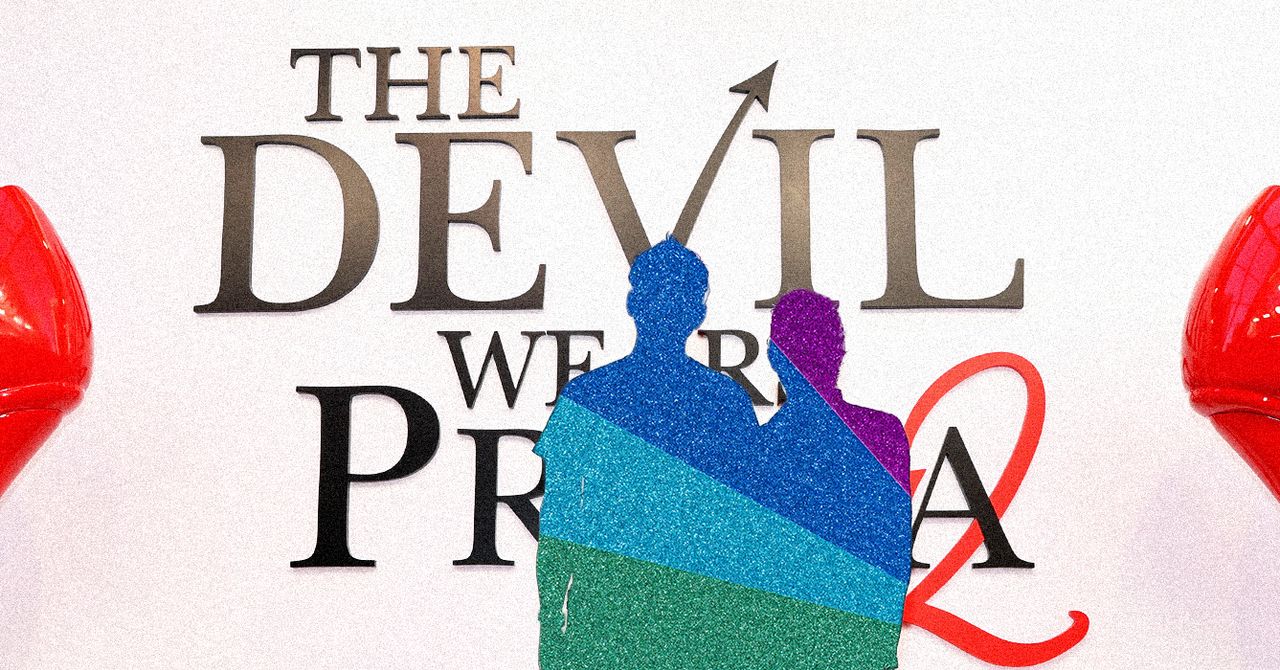
Earlier this week, two of the characters, “Santos Walker” and “Caleb Ellis,” went viral after “appearing” on the red carpet for the premiere of The Devil Wears Prada 2. “I’m gagging. Scrolling through Instagram and I came across a whole group of AI models/accounts,” the writer and editor Mikelle Street wrote.
Santos and Caleb’s red carpet appearance sparked backlash online, with some assuming that the post was sponcon for 20th Century Studios, the film’s distributor. This wasn’t actually the case; WIRED has confirmed that the creator of the “Santos” account made the image without the studio’s involvement, intending the post to serve as the online equivalent of crashing the red carpet. The creator even crafted an elaborate narrative for the post, imagining a rich movie producer had ushered Santos and Caleb to Hollywood on a private jet. (20th Century Studios did not respond to a request for comment.)
Even though the post was not sponcon, it triggered a discussion online about whether AI-generated influencers like Santos and his ilk were deceiving their audiences or setting a dangerous precedent for the future of branded content.
“We currently have human influencers,” one person wrote on X. “So, the next step is CREATING fake, 100% controllable influencers FROM SCRATCH for the sole purpose of marketing films, shows, products etc.?” Others mocked Santos’ and Caleb’s followers and those ogling their comically bulky frames, sparking discourse about how AI models propagate unrealistic body standards in the gay community.
About the Author