If cynicism is the enemy of romance, then 2026 has been a long, dry year for those in the market for a meet cute. The fun, flingy sparks of a no-strings-attached situationship have been hard to find, much less anything more serious.
In a recent investigation of why contemporary dating seems so challenging, Atlantic staff writer Faith Hill declared we’re living through a “romance slump.”
Hill’s August 2026 feature suggests this period is defined by a widely felt, under-discussed phenomenon in which younger people are failing to connect with romantic partners. In her essay, she suggested the slump reflects broader societal trends that are changing the face of what it means to live in a community.
Technological advances have facilitated a culture of surveillance, hyper-connectivity and social isolation. Uneven social and economic progress means that people are struggling to gain a foothold in a career pathway and secure affordable housing. Adding the insecurity of dating on top of all that can be daunting, if not downright painful.
Complicated and increasingly strained gender relations, propelled by the rise of the manosphere, mean some people are moving through their young adulthood with unrealistic expectations about prospective partners.
A similar sense of stuck-ness seems to have crept into university classrooms, where, historically, like-minded peers met and paired off.
In an interview last summer with journalist Sarah Ferguson for the Australian Broadcasting Corporation’s current affairs program 7.30, novelist and New York University creative writing professor Ocean Vuong shared how he has observed his students recoiling from the idea of trying too hard. This is a common occurrence, he said, but especially troubling because it’s antithetical to growth and learning.
“They hold back. But in fact, they are deeply hungry for sincere, earnest effort,” he said. “They don’t want to admit to each other that they’re actually trying really hard to do what they want to do.”
This culture of hesitation can be addressed by thoughtful intervention, Vuong said. If an educator sets the tone in a classroom that invites students to be sincere without being condemned for their efforts, “then you truly liberate them for their best self.”
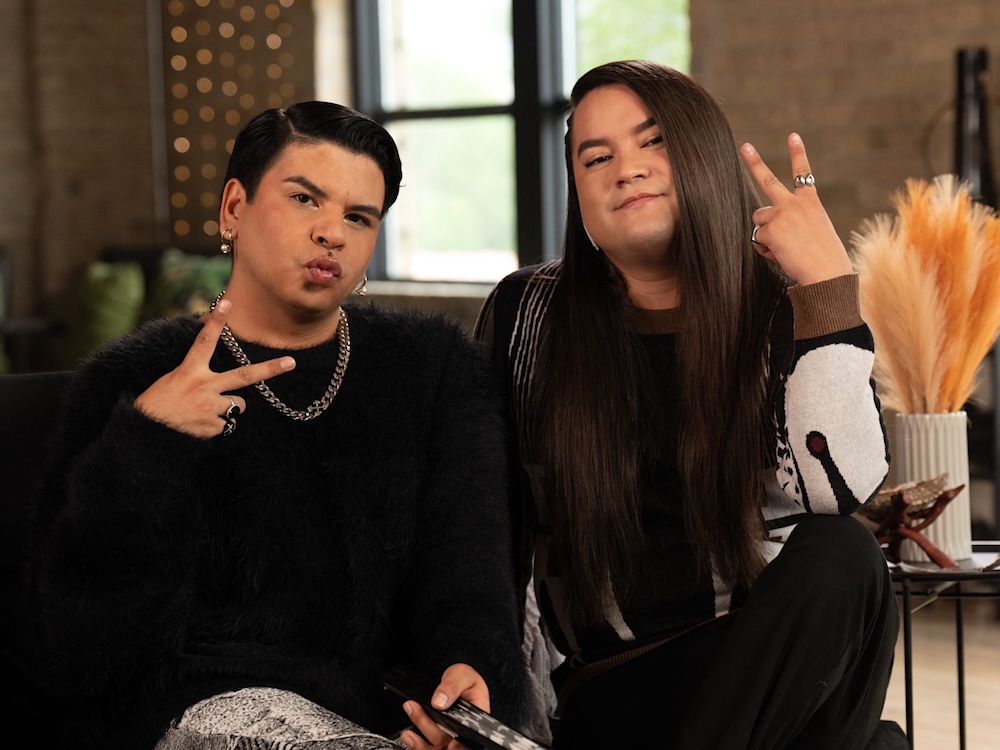
It’s with a needed and joyful spirit of liberation that friends and podcasters Scott Wabano and Kairyn Potts host Rezervations for Two.
The Indigenous reality dating show, which premiered in June on the Aboriginal Peoples Television Network, offers sweet, hopeful roses in what appears to be an ocean of solitary thorns: dating can be fun! Courtship, particularly if it takes place on a cute riverboat, should make a comeback! And most of all, people should be celebrated for putting themselves out there.
As Two-Spirit aunties matching people on blind dates, hosts Wabano and Potts are delightful, affirming and hilarious. Their presence on the show is as refreshing as its focus on process, not outcome.
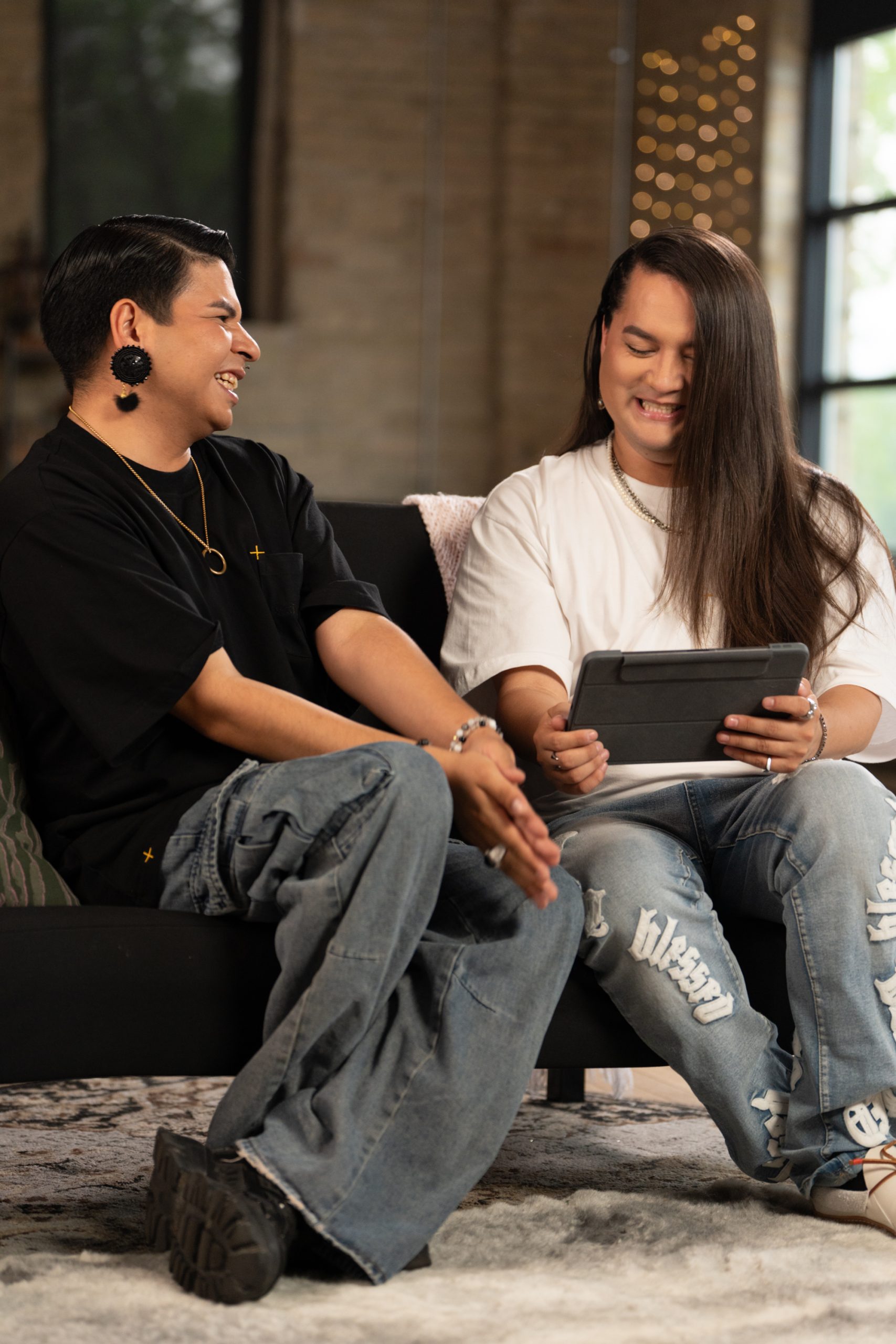
Photo via APTN.
‘Rezervations’ offers a rare gift: human decency
Rezervations for Two caught me by surprise. Like many of my millennial brethren, my daily scroll sees me marinating in a sea of hot takes and laughing at satirical sketches on what it’s like to go on a date with a guy who just purchased the Palantir chore coat or works for an AI defence company.
The show lacks the snark that characterizes a lot of entertainment right now. It is also blessedly free of the escapist rizz that burdens much reality TV programming. It’s refreshing to watch contestants behaving awkwardly because they’re nervous, and in response, treat each other with kindness.
Shot in Winnipeg, the show’s first season centres on an historic downtown meeting place called The Forks, located at the confluence of the Red and Assiniboine rivers. Across a dozen half-hour episodes, Wabano and Potts match up local contestants from a range of backgrounds. The prospective pairs meet up around The Forks for blind dates.
On one episode, audiences get to witness the first-ever date of one young woman’s life, taking place on a riverboat. On another, nearby boat, the show’s co-hosts catch up, waving silly, handmade signs encouraging her date to compliment her.
It’s clear they want their contestants to feel beautiful and cared for. Co-host Potts, who spent 23 years of his life in the child services system, is especially intentional with how he relates to the show’s younger contestants. He notes that many young Indigenous people living on reserves don’t get to the opportunity to go on dates, and it can be hard for them to meet new people.
Because many members of Winnipeg’s local Indigenous communities are connected in some way, some Rezervations contestants discover that they’re already acquainted with the person they’ve agreed to meet on a blind date. As a Vancouver resident, I found this comforting to watch. It’s nice to know that this is not the only city where multiple social circles overlap repeatedly, across decades.
Upon realizing that the blind date holds fewer surprises than they were expecting, one person is disappointed, while others are delighted. Two men make the best of their existing familiarity with a campy re-enactment of the Lady and the Tramp spaghetti-eating scene. The pair ends their date hand-in-hand.
Other meetups don’t go so well. To the show’s credit, the editors don’t edit out the awkwardness. A few minutes into a date, one person gets up and leaves because her date reminds her too much of her dad.
But amongst the more cringey moments and stilted conversations, an instant of bliss can spontaneously arise. Across a restaurant table, there’s an adorable kiss, which its recipient later describes as an “out-of-body experience.”
The confectionary appeal of Rezervations for Two doesn’t undermine the seriousness of the show’s ultimate intent, which is to celebrate Indigenous love in all forms. As contestants connect through their shared cultural backgrounds, speaking openly about their journeys with their Indigenous identity, of learning the language of their ancestors and keeping traditions like Sun Dance alive, all kinds of possibilities begin to emerge. By showing people as they are, Rezervations for Two offers alternatives to popular narratives that over-emphasize conventional markers of romantic success.
Although very few of the contestants ultimately wind up together, the show helpfully demonstrates that this is not the point. Rezervations for Two is a celebration of genuine effort and humility at a time when we may not realize how much we need them. It is a textured, deeply human dose of relief in a time of AI-generated strangeness.
Watching a season’s worth of blind dates in the show reminded me of how funny, charming and unexpectedly lovely people can be. That’s very romantic.
‘Rezervations for Two’ is now streaming on APTN. ![[Tyee]](https://thetyee.ca/design-article.thetyee.ca/ui/img/yellowblob.png)
About the Author