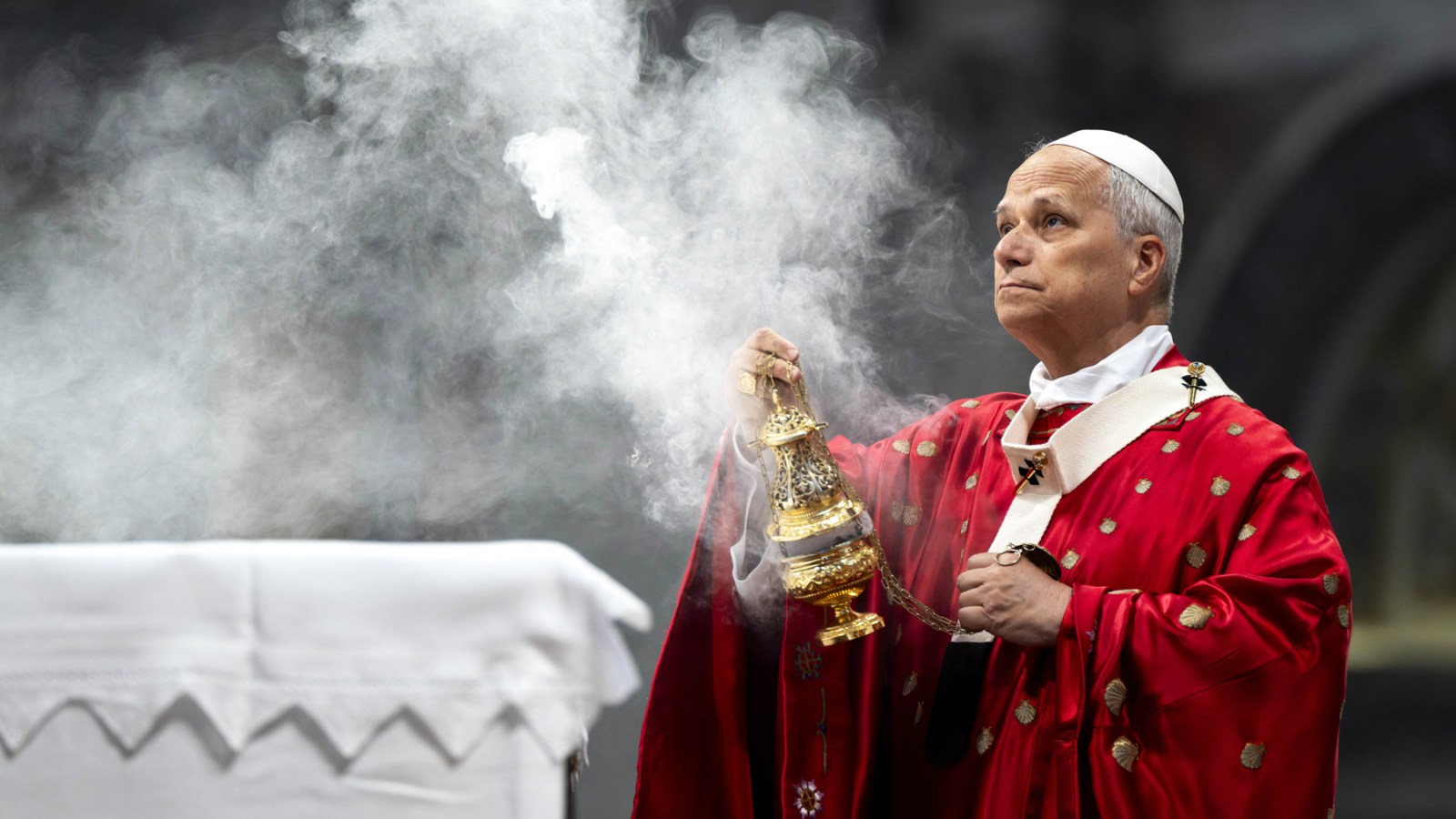
Last Monday, Pope Leo released Magnifca Humanitas, his much-anticipated first encyclical as pontiff. In it, he takes aim straight at artificial intelligence, one of the most feared and disruptive forces in our world today. In these 40-something pages, Pope Leo makes the case, plain and clear, that AI is a threat to humanity and the planet. He also makes it clear that this technology is part of a long cycle of exploitation and destruction. Therefore, if we are going to contend with it, we must ground in a framework of social justice.
While many have expressed surprise at Pope Leo’s bluntness and boldness in taking on such a polarizing issue, I am not. Don’t get me wrong, I’m pleased and, as a lifelong Catholic, I am proud. But, to me, Magnifica Humanitas is picking up where Pope Francis’ first encyclical, Laudato Si, naturally left off.
When Laudato Si was released in 2015, it, too, was lauded as a bold and welcome statement from the Vatican. In it, Pope Francis laid out a clear case for how a culture and economy of extraction, human exploitation, and blind faith in technology and finance has damaged creation. It called for an ecological conversion and illustrated that the “cry of the earth is the cry of the poor.”
In Magnifica Humanitas, Pope Leo explicitly links the ecological damage from AI to that foretold by Pope Francis. He talks about the degradation of our common resources like land and water for technological consumption, the waste and pollution from technological development, and the negative impacts of rare earth mineral mining. He calls out the hypocritical slowness to adopt environmental commitments, compared to the race to develop AI.
Pope Leo argues that if we are going to bring forth the ecological conversion and care for creation that Pope Francis called us toward, then we must take seriously the dignity of humanity. To that end, we must recognize “the human being as a creature embedded in a network of relationships with other living beings and with all of creation.”
Pope Leo also calls out the idolatry of profit and “structural sins” within capitalism and markets. He points out AI’s potential for oppression and new colonialism, the subjugation of people into data points, and the threat to our labor and creativity. In fact, he takes this so far as to link AI to the legacy of slavery and to apologize for the Church’s historic role in sanctioning the slave trade.
This apology has been a long time coming — centuries, in fact. Without the Church’s explicit blessing, perhaps best illustrated by the Doctrine of Discovery, it is hard to conceive of a world in which colonialism and slavery have shaped the world as we know it. As Pope Leo notes in his encyclical, his own namesake, Pope Leo XIII, was the first to condemn slavery in 1888. Pope Leo XIV, whose lineage includes enslaved people, rightfully took it a step further.
As one of the leaders of Taproot Earth, we work with frontline communities around the world, but especially in the Global South, toward climate solutions that put their needs and their voices first. Again and again, we have heard from frontline leaders that the road to climate repair must start with an acknowledgement and apology for the wrongs of colonialism and slavery — both of which paved the way to today’s climate crisis. Pope Leo’s acknowledgement and apology for the Church’s role in slavery builds on Pope Francis’ 2023 acknowledgement and apology for the Doctrine of the Discovery (a 15th century Church teaching that sanctified colonialism and land grabs for Christianity). I, for one, am thrilled to see that the Catholic Church is showing what it means to take critical steps toward repair.
Given the role that AI plays in the climate crisis and destabilizing and decimating the labor force, it is not only logical that the Church take a stand on it — it is what the Gospel requires us to do. That same Gospel also requires us to go beyond acknowledging the harm and toward active repair.
Pope Leo steps up to that plate with an honest and intentional call to repair: “Living out justice in the Church means … acknowledging the harm done, just reparation and taking steps to prevent it from happening again.” That calls for one thing and one thing only: reparations.
For climate reparations to take root, we must steward the common good and creation in a way that centers community and shared futures. This requires us to take a deep look at how people can move to survive or stay on their lands to cultivate care. It means making sure communities are in a position to determine how resources are managed, received, and used to support climate solutions. Climate reparations are about self-determination, collective governance, and liberation.
In a world already roiled by the climate crisis, true climate reparations will also have to address the way that people move. Simply put, we need to affirm and implement the right of free movement of peoples. The Church has long supported this right and Pope Leo affirms this assertion and explicitly names the right to remain and the right to migrate.
The affirmation of these rights is deeply human. And that ultimately is the point of this encyclical. “We must remember that humanity flourishes not despite limitations, but often through them,” writes Pope Leo XIV. As a parent, I live this reality daily — as my kids lovingly remind me of my limitations. And it leads me to grow, learn how to be more caring, and how to show that repair and truth are possible in an ever changing world. It is in these limitations and humanity that we find community and we can build solutions for the common good.
Last year, I wrote that while Pope Francis was known as “the people’s pope,” I was hopeful that Pope Leo would pick up the mantle to become “the planet’s pope.” A year later, it looks as though those hopes were well-placed.
Anthony Giancatarino is the co-founder and strategy partner at Taproot Earth, global organization advancing climate justice.
About the Author