U.S. global health efforts have undergone substantial changes since the start of the second Trump administration, including the freezing of funding in early 2025, the cancellation of numerous projects, reduction in funding, and the dissolution of the United States Agency for International Development (USAID)—once the world’s largest foreign aid agency. Following these actions, the State Department released the America First Global Health Strategy, claiming that existing global health programs were “inefficient and wasteful” and that countries were too dependent on the U.S. for support, proposing a new approach to “make America safer, stronger, and more prosperous.” Among other things, the Strategy is anchored in new, time-limited agreements with countries with plans to reduce funding even more, by billions of dollars in the next few years.
When asked about their awareness of the Trump administration’s reductions to U.S. spending on foreign aid, including funding to improve health for people in developing countries, nearly six in ten (58%) adults correctly identify that the administration has made cuts, including over four in ten (44%) who say there have been “major” cuts and one in seven (14%) who say there have been “minor” cuts. An additional third (36%) of adults say they don’t know enough to say.
While majorities across partisans know there have been reductions to U.S. spending on foreign aid, Democrats are 24 percentage points more likely than Republicans to identify them as “major” cuts (59% vs. 35%, respectively), while a larger share of Republicans than Democrats say there have been “minor” cuts (23% vs. 6%). Among independents, 44% say the administration has made major cuts to spending on foreign aid and 13% say they have made minor cuts.
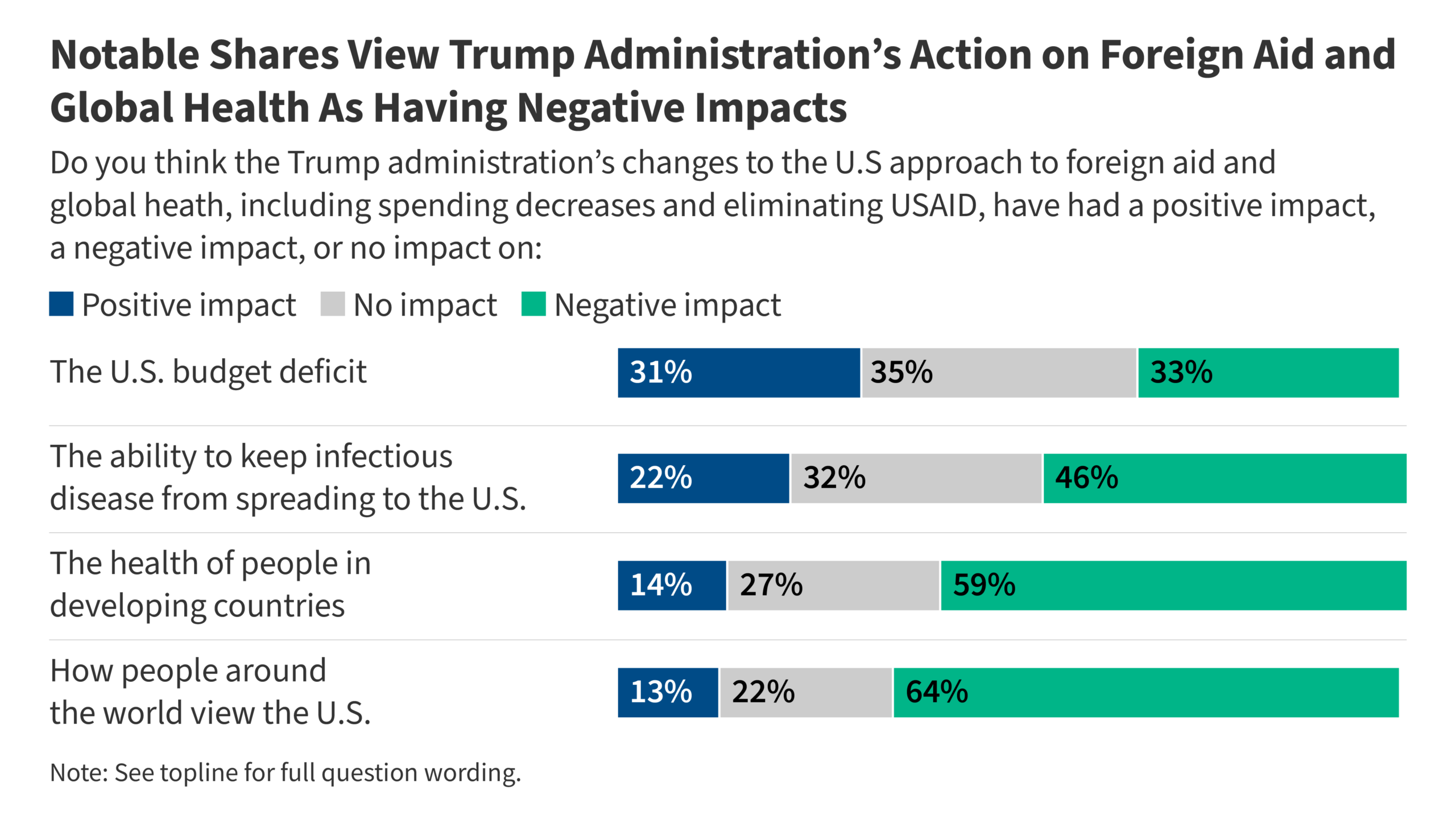
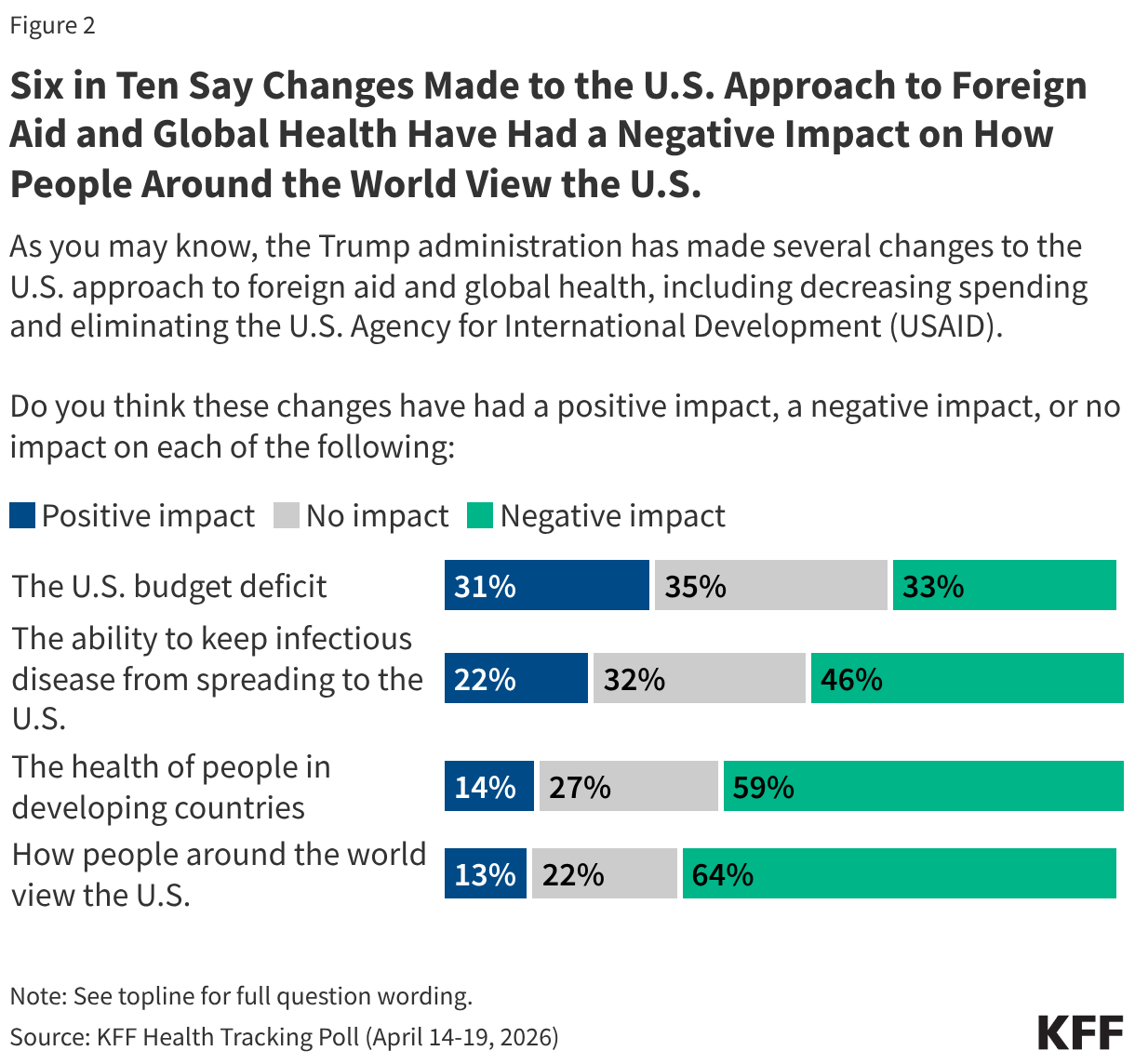
When it comes to assessing the impact of the changes the Trump administration has made to foreign aid and global health, majorities of the public say these changes have had a negative impact on “how people around the world view the U.S.” (64%) and on “the health of people in developing countries” (59%). Additionally, nearly half (46%) say “the ability to keep infectious disease from spreading to the U.S.” has been negatively impacted by the changes made by the Trump administration.
The public is more divided about the impact the Trump administration’s changes to foreign aid and global health have had on the U.S. budget deficit. Similar shares—about one-third—say the changes have had a positive impact (31%), a negative impact (33%), or no impact (35%) on the budget deficit. KFF polling from 2025 found a majority of the public overestimated the share of the federal budget allocated for foreign aid; on average, U.S. adults said foreign aid spending makes up one-quarter (26%) of the federal budget. In reality, about one percent of the federal budget has historically gone to foreign aid, with an even smaller fraction going toward global health efforts.
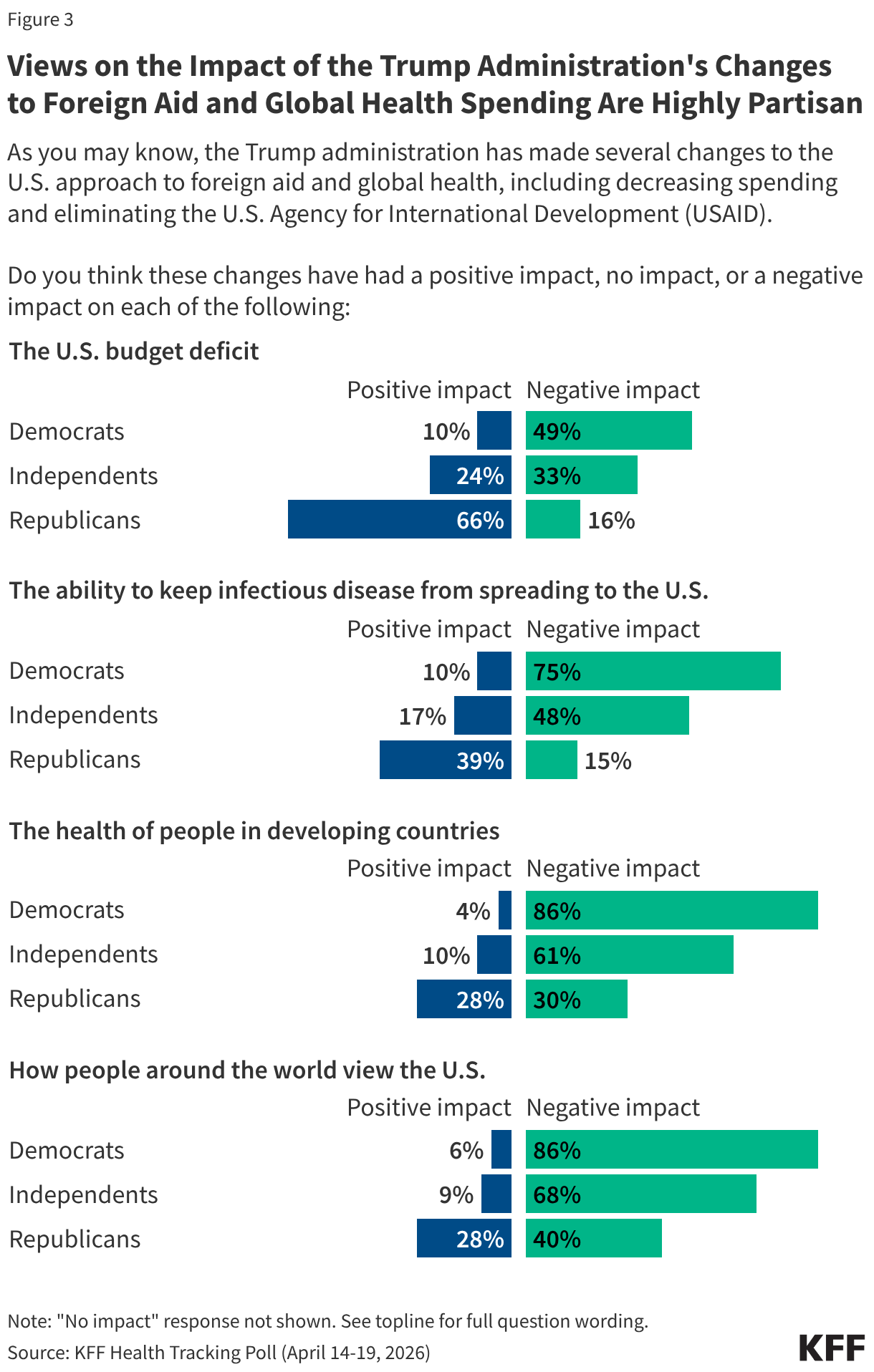
Unsurprisingly, public opinion on the impact of the Trump administration’s changes to U.S. foreign aid and global health efforts is highly partisan, but patterns differ somewhat depending on the impact being measured. Democrats and independents are overwhelmingly more likely to say these changes have had a negative rather than a positive impact on how people around the world view the U.S. (86% vs. 6% and 68% vs. 9%, respectively) and on the health of people in developing countries (86% vs. 4% and 61% vs. 10%). Both groups are also more likely to see a negative rather than a positive impact on the ability to keep infectious disease from spreading to the U.S. and on the U.S. budget deficit, though fewer than half of independents say there has been a negative impact on each of these areas.
In contrast, Republicans are more likely to say some of these areas have been positively rather than negatively impacted, such as the U.S. budget deficit (66% positive, 16% negative) and preventing the spread of infectious diseases to the U.S. (39% positive, 15% negative). Nearly half (46%) of Republicans say there has been no impact at all on preventing the spread of disease, and about one in five (18%) say this about the U.S. budget deficit.
Republicans are split when it comes to the impact of the administration’s changes to foreign aid and global health on the health of people in developing countries, with about three in ten saying these changes have had a positive impact (28%) and another three in ten saying the impact was negative (30%), while 42% say there has been “no impact.” And, when asked about international perceptions of the U.S., more Republicans say the administration’s changes to foreign aid and global health have had a negative impact (40%) than a positive one (28%), and 32% say it has had no impact.
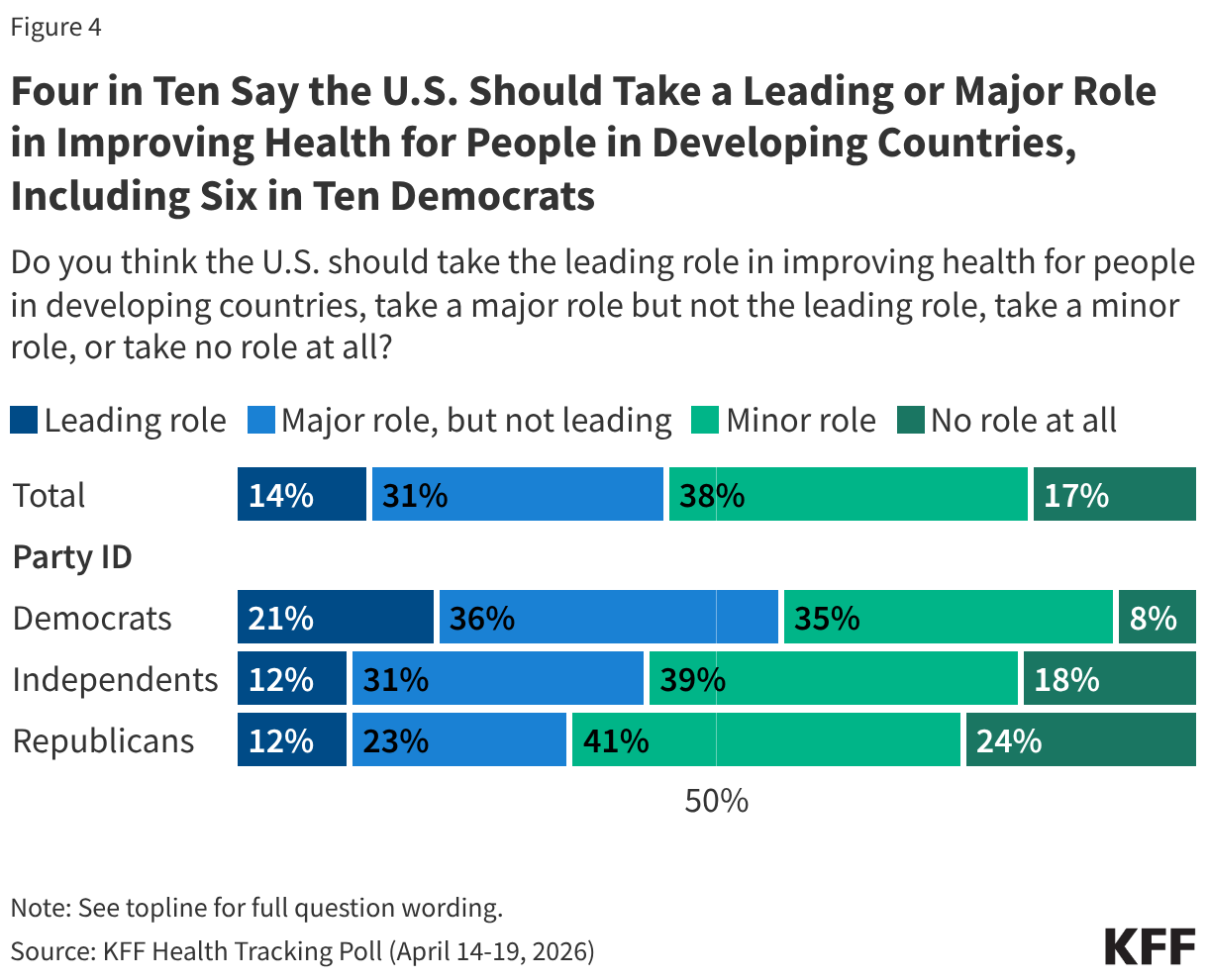
As the Trump administration continues its efforts to significantly reduce U.S. participation in global health efforts, nearly half (45%) of the public supports the U.S. playing a “leading” or a “major, but not a leading” role in improving health for people in developing countries. Nearly six in ten (58%) Democrats say the U.S. should play at least a major role compared to fewer independents (42%) and Republicans (35%) who say the same. Still, the share of Republicans who say the U.S.’s role should be major (35%) is larger than the share who say the U.S. should take “no role at all” (24%) in improving health for people in developing countries. About one in five (18%) independents also say the U.S. should play no role at all in improving health for people in developing countries, and even fewer Democrats say this (8%).
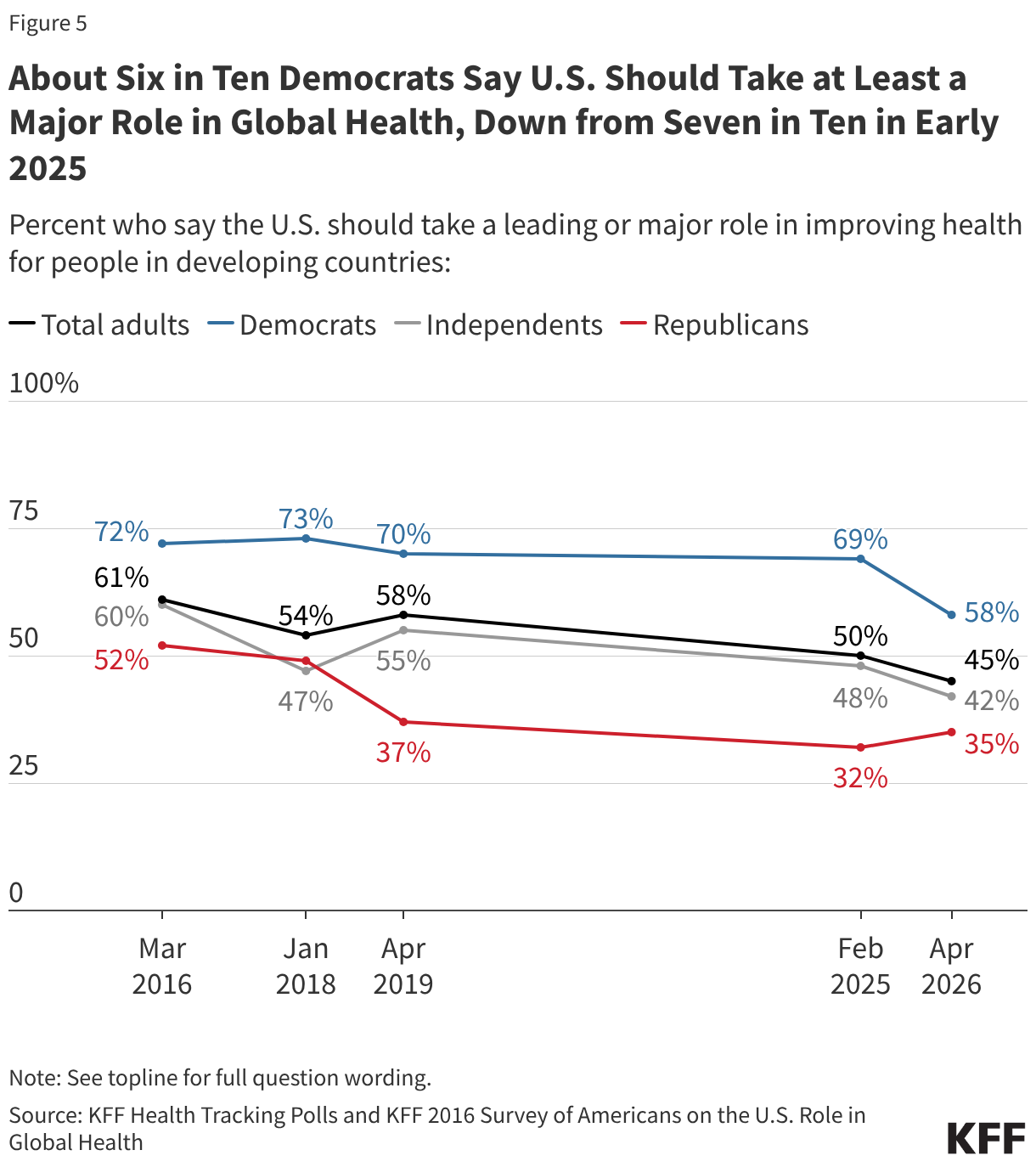
The share who say the U.S. should take a leading or major role in improving health for people in developing countries has declined somewhat since last year (45% now, down from 50% in February 2025), reaching a new low since KFF began asking this question in 2016. The most recent decline includes an 11-percentage point decrease in the share of Democrats who say the U.S. should play at least a major role in this area. The share of Republicans who say the U.S. should have at least a major role in improving global health declined during President Trump’s first term, though it has remained fairly steady since 2019.
About the Author