A British zoo has helped save entire species from extinction thanks to a daring “rescue mission”.
Chester Zoo and France’s ZooParc de Beauval were enlisted by Madeira’s Government to conserve four snail species found nowhere else but the Deserta Islands.
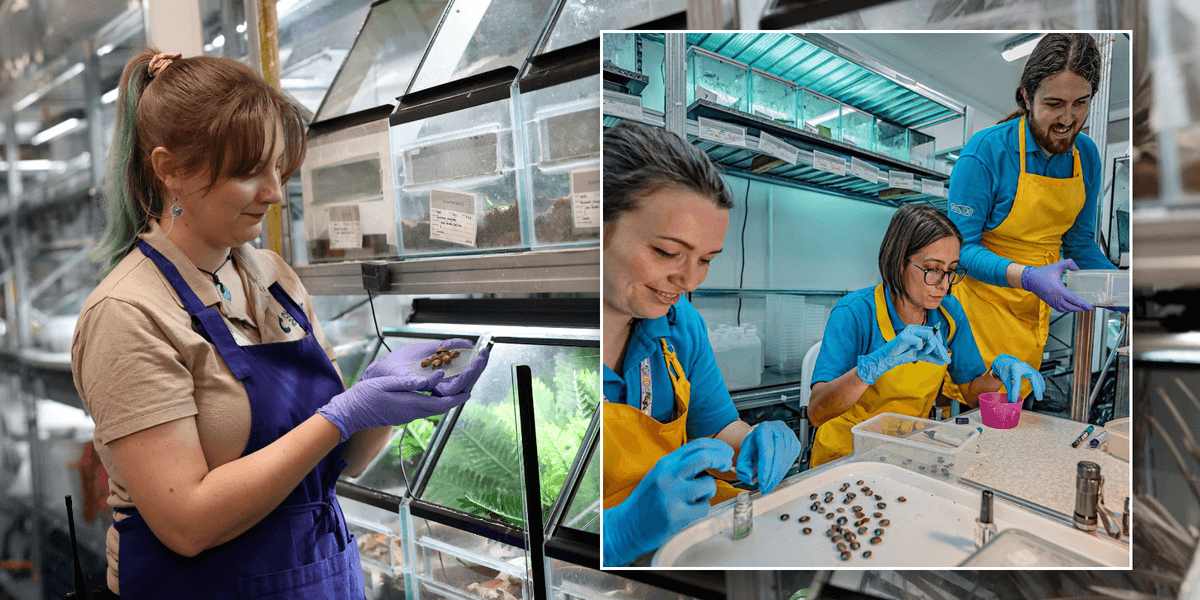
Their breeding programmes have now returned hundreds of pea-sized snails to their Atlantic home.
The molluscs were so critically endangered that the entire world population of one species could have been contained in a single petri dish.
Just 21 individuals of Geomitra coronula were discovered beneath one rock on Bugio Island – believed to be the last survivors.
More than 300 snails bred at Chester Zoo have now been released, along with 270 Discula lyelliana specimens reared in France.
Over the centuries, human activity destroyed the islands’ native woodland, while the rabbits and goats we introduced stopped vegetation from recovering.
Mice, which were brought to the arid islands accidentally, then preyed on the snails as a source of water, devastating their numbers.
Tamas Papp, assistant team manager for invertebrates at Chester Zoo, described the endeavour as a “rapid rescue mission for all four species of snail”.
Hundreds of pea-sized snails have been returned to their Atlantic home thanks to the zoo
|
CHESTER ZOO
Mr Papp added: “By the time the Madeira Government contacted us for help, one of the species, Geomitra coronula, was so close to extinction that its entire global population could fit inside a single petri dish.
“We knew we had one shot to save them.
“If we missed this chance, that was it they were gone.”
Madeira’s efforts to remove invasive species from the island paved the way for the snails’ return, but the release itself proved extremely difficult.
“It took us two hours to navigate less than two miles,” he said, as they searched for suitable crevices in the rock.
SCIENCE BREAKTHROUGHS IN BRITAIN – READ MORE:

The entire global population of the snaills could fit inside a single petri dish before the zoo intervened
|
CHESTER ZOO
Mr Papp said: “It might be the trickiest reintroduction we’ve ever done.
“We had a short window due to rough weather, and there’s no jetty on the island.
“We had to jump straight into the water, climb out, put helmets and harnesses on, and start scrambling up the cliff face.”
The team travelled in darkness, using red-spectrum torches to protect the island’s rare seabirds from disturbance.

Chester Zoo is also running a breeding programe for Bermuda snails to bring them back from the brink
|
GETTY
The snails measure no more than eight millimetres across but play a vital role in their ecosystem by consuming plant matter and enriching the soil.
Their return is expected to help restore the natural habitat of the Deserta Islands.
Chester Zoo is still keeping all four species – Atlantica calathoides, Geomitra grabhami, Geomitra coronula and Discula lyelliana – alive in biosecure breeding pods designed to replicate conditions in the wild.
Conservationists working for the Madeira Government have carried out extensive work to clear the islands of goats, rabbits and mice.
The reintroduced snails will now be monitored as they adjust to life back in their natural environment.
About the Author