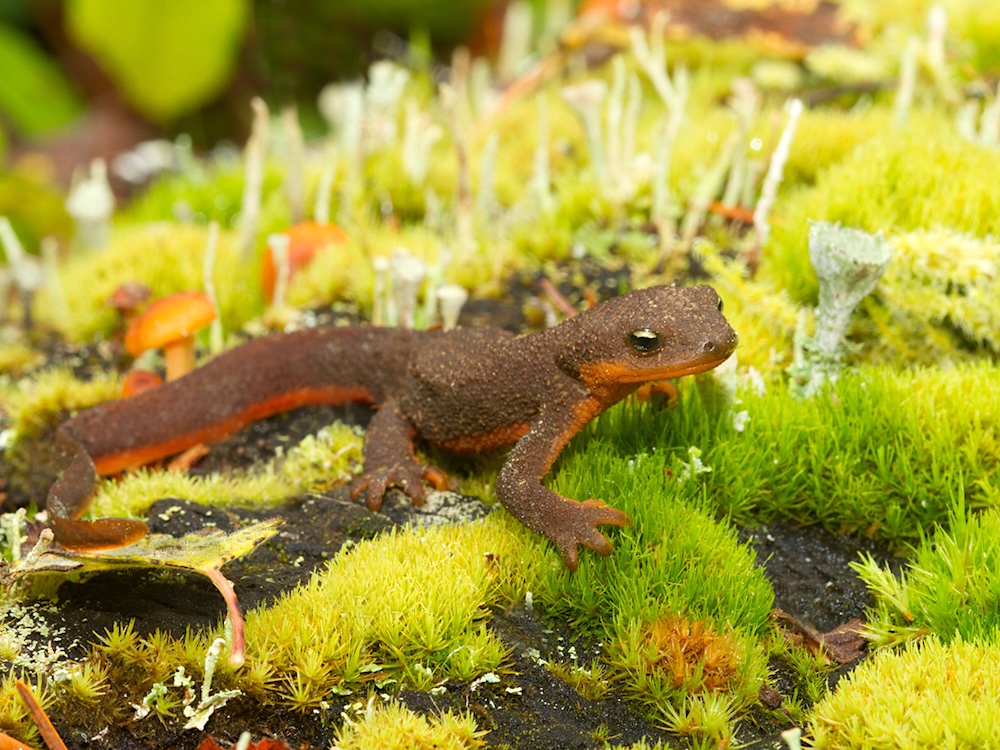
Budget cuts have left the Committee on the Status of Endangered Wildlife in Canada struggling to do its job even as the number of species at risk of extinction in the country steadily climbs.
The Tyee has learned that the committee of scientists is so strapped for funding that it was forced to cancel its biannual meeting last month to assess species as threatened or endangered — the first step for struggling wildlife to get help.
Dozens of imperilled species that the committee planned to examine in May — including pale evening primrose, a fragrant B.C. wildflower that feeds bees and butterflies — will now remain in a growing backlog of more than 1,000 at-risk species waiting for an assessment.
That backlog also includes more than 50 bird species that might become extinct or endangered before scientists can assess them, wildlife committee chair David Lee told a Senate committee in February.
Species can receive legal protection and a recovery plan only once they’ve been assessed and the federal cabinet approves.
The wildlife committee’s funding constraints have caught the attention of the Standing Senate Committee on Energy, the Environment and Natural Resources.
On May 25, the Senate committee wrote to federal Minister of the Environment, Climate Change and Nature Julie Dabrusin, expressing “serious concerns” about the “insufficient resources” the government has allocated for wildlife assessments, which are mandated by the Species at Risk Act.
Resources are ‘completely inadequate’
The letter follows testimony to the Senate committee from Jerry DeMarco, Canada’s commissioner of the environment and sustainable development, who told senators that resources for assessing species at risk of extinction don’t fit the scale of the problem.
“It is like providing a fire department with garden hoses for three-alarm fires; it is just completely inadequate,” DeMarco testified in late March.
He said it is “disappointing” that Canada would pass the Species at Risk Act and then fail to put in the necessary resources for the “crucial first step” in listing species under the act.
“It is cheaper in the long run to protect them and identify them before they get too endangered or their populations diminish,” he said.
The Senate committee was looking into a 2024 report from Canada’s auditor general that found the government is not meeting its obligations to provide adequate support to the endangered wildlife committee.
The report noted that at current rates it would take the wildlife committee more than a century to assess all the species on its list.
Testifying before the Senate committee in February, Lee, the chair of the endangered wildlife committee, told senators that the committee’s budget was cut from $1.8 million in 2023-24 to $1.6 million the following year, despite inflationary pressures.
The 50 members and more than 125 species specialist subcommittee experts associated with the wildlife committee are compensated for time for meetings and reviewing documents, but “almost all of us provide voluntary time,” Lee said. That in-kind support is estimated at between $10 million and $12 million annually, Lee added.
Lee said the committee has taken measures to reduce costs over the past three years, but those efforts remain insufficient to address the challenges highlighted in the auditor general’s report.
Doubling the budget would allow a 33 per cent increase in assessments each year, Lee said.
‘Only one species takes part in elections’
Endangered wildlife committee member Christina Davy, who also testified to the Senate committee, told The Tyee that while many meetings can be held virtually, the assessment meetings — which normally take a week — can’t be held online. Davy is a research scientist and associate professor in the biology department at Carleton University.
The committee did shift to online meetings in the early days of the COVID-19 pandemic, “but the speed of that work and the quality of the discussions was really affected,” Davy said.
“When the funding gets cut at the same time as travel costs are increasing, we’re no longer able to meet because there simply isn’t enough funding to get everybody into one place at the same time,” Davy added.
She also said several species subcommittees, which make recommendations to the broader committee, were unable to meet last year due to funding constraints.
Even though Canada is home to more than 5,000 wild species at some risk of extinction, Davy said some groups of species don’t receive assessments because there are no subcommittees to review them.
There’s no subcommittee for marine arthropods, for example, so crabs and lobsters aren’t assessed. There’s also no subcommittee to assess sea stars, which are known to be at risk of extinction due to sea star wasting disease. Nor is there a subcommittee for fungi, so they don’t get assessed either.
“There are lots of species that we are responsible for already that we can’t get to, but then there’s also these very large groups that are going to have some species of conservation concern that we’re not even able to look at.”
DeMarco told the Senate committee that it’s necessary to understand the scale of the problem if Canada is to meet a global commitment to halt and reverse biodiversity loss by 2030 — and that includes assessing species before 2030.
Asked by the senators if the government’s apparent lack of concern for at-risk species is because biodiversity loss is a less visible problem than global warming, DeMarco noted that “only one species takes part in elections.” There are 80,000 other species in Canada “that are not so lucky,” he said.
DeMarco also noted that a Government of Canada Policy Horizons report identified biodiversity loss and ecosystem collapse as one of the “most likely and high-impact events that could disrupt Canadian society in the next decade.”
Human society can’t exist without biodiversity, DeMarco said.
Senate committee chair Joan Kingston, who signed the letter to Dabrusin, told The Tyee that senators were struck by the amount of time scientists volunteer to assess species at risk of extinction.
“They know what they need in order to keep up with the work and meet the commitments that we have as a nation.”
Kingston and other senators told Dabrusin that lack of support for the wildlife committee will likely lead to fewer assessments and fewer timely reassessments for at-risk species, a growing backlog of species on the wait-list, and slower implementation of Canada’s biodiversity commitments.
Senators said the wildlife committee needs “sufficient, stable and long-term support,” including adequate support for an Indigenous Traditional Knowledge subcommittee.
Declining funding has limited the committee’s ability to work with Indigenous communities and adequately integrate their knowledge into the assessment process, senators noted.
Human health is tied to wildlife health
Keean Nembhard, Dabrusin’s press secretary, told The Tyee that the minister’s office has received the Senate committee’s letter and “will respond in due course.”
Nembhard said Canada is committed to meeting global conservation targets and to protecting and recovering at-risk species, adding that Ottawa works collaboratively with the provinces and territories to advance conservation and recovery actions, including through work undertaken by the endangered wildlife committee.
He pointed to the 2025 speech from the throne, which emphasized that the Mark Carney government sees nature as central to Canada’s identity and is committed to protecting more of the country’s nature than ever before.
The nature strategy recently announced by the government also committed $283 million over five years “to strengthen the protection and recovery of species at risk across Canada,” Nembhard noted.
Davy’s assessment of the Carney government’s wildlife conservation efforts was not as rosy. She told The Tyee that some of the recent policy changes proposed by the Carney government will further reduce protection for species at risk of extinction and, by extension, all wildlife in Canada.
Those changes would allow the federal cabinet to approve a project, such as a pipeline or new mine, even if it results in the extinction of a species, a proposition Davy called — speaking from her personal point of view — “horrific.”
She said she can’t think of a development project that is more important than maintaining a healthy environment for both wildlife and people, adding that “they’re not separate pieces.”
If the environment is too polluted for “some amazing snail” to survive in, it’s also not an environment with clean water for children, she said.
“So, in many ways, our endangered wildlife are a canary in a coal mine for us.” ![[Tyee]](https://thetyee.ca/design-article.thetyee.ca/ui/img/yellowblob.png)
About the Author