

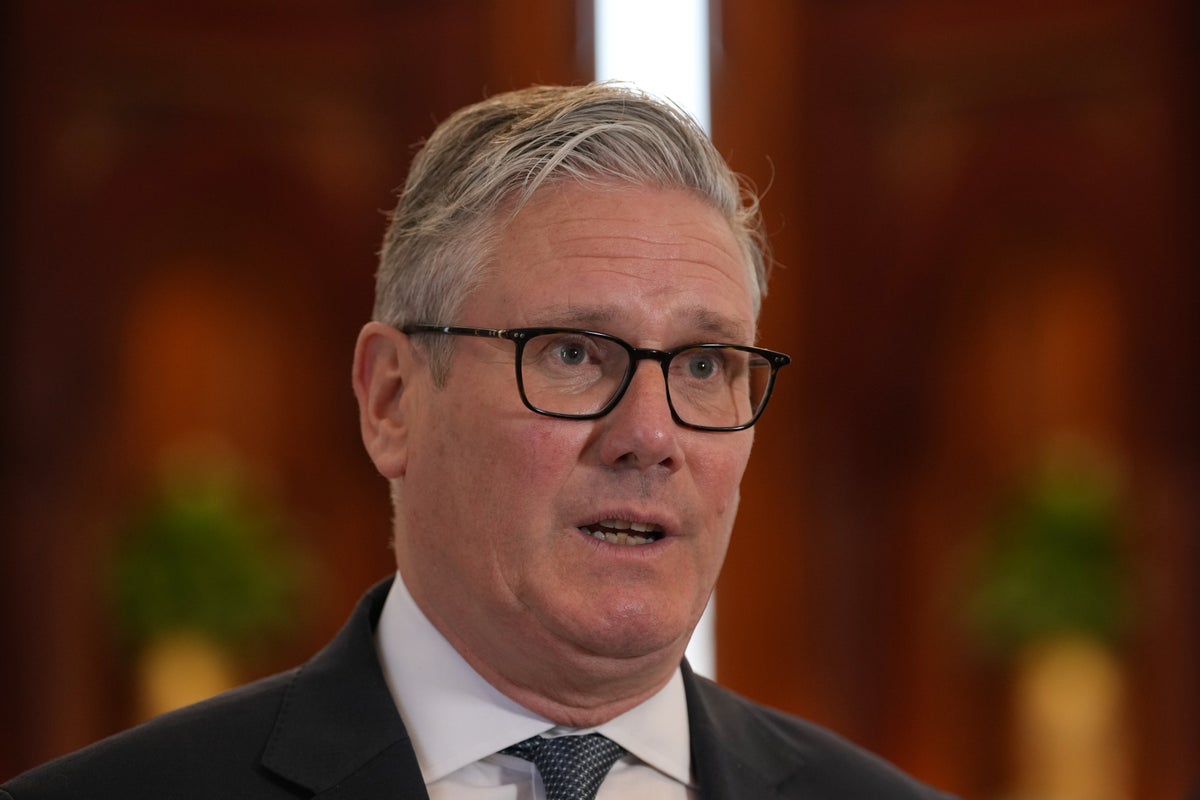
Keir Starmer has warned that the need to reverse parts of Brexit has been proven by the crisis caused by Donald Trump’s war on Iran.
It comes amid revelations that ministers are planning to introduce legislation that would allow them to sign the UK up to EU single market rules without full scrutiny – so-called Henry VIII powers – as Sir Keir Starmer insisted a stronger relationship with Europe is in the “UK’s best interest”.
A new bill, which will be brought forward this year as part of the government’s Brexit reset, would bring the UK in line with EU law in certain areas, such as food standards, animal welfare and pesticide use – a process known as dynamic alignment.
The bill will contain powers that mean once an agreement has been reached with the bloc, any further EU changes deemed in the national interest can be waved through without a full debate by MPs.
In his statement to the Commons on the Middle East crisis on Monday, the prime minister warned again about both Iran and Trump’s plans to blockade the Strait of Hormuz and confirmed that he would convene a meeting of 40 nations in a bid to get the vital waterway open.
But he underlined that the economic crisis unfolding because of the war has made the case for the UK to become economically tied to the EU again.
Promising “clear and hard leadership”, Sir Keir said: “We can’t stand here in this House and pretend that a global shock threatening to hit the living standards of British people is somehow a global experience.
“Britain has been buffeted by crises for decades now, with a 2008 financial crash through to austerity, Brexit, Covid, the war that still rages in Ukraine and the disastrous Liz Truss premiership.
“We cannot return to the status quo, a status quo that manifestly failed working people, who saw their living standards flatline and their public services decimated. So this time, Britain’s response must and will be different to reflect the changing world that we live in. That starts with our economic security.
“It means a closer economic relationship with our European allies, because Brexit did deep damage to the economy and the opportunities we now have to strengthen our security and cut the cost of living.”
The Labour government has been furiously attacked by both Reform and the Tories for planning to reverse parts of Brexit in its negotiations with Brussels.
The plans to ease “dynamic alignment” with EU rules would happen using secondary legislation.
Parliament would only be able to either approve or reject secondary legislation, but would not be able to amend it. This means MPs are likely to end up “rubber-stamping” new deals rather than debating and voting on every one.
.png)
Any blocking votes would be likely to cause issues with the EU, and could spark retaliatory action, government sources said. But they added: “We are clear parliament will have a role for new deals and on new EU laws applying under those deals.”
Sir Keir Starmer argued that the legislation would make trade easier, reducing “burdens” on businesses and lowering prices, but he insisted that changes would only come into force if parliament passes the legislation.
The prime minister told BBC Radio 5 Live: “We’re in a world where there’s massive conflict, great uncertainty, and I strongly believe that the UK’s best interests are in a stronger, closer relationship with Europe, whether that’s defence and security… energy, inevitably, and also, our economy.”
He added: “A stronger, closer relationship with Europe is in the UK’s best interest, particularly in a world that is as volatile as it is at the moment, and I know that worries a lot of people.”
The legislation is expected to be unveiled in the King’s Speech on 13 May, which sets the agenda for the next parliamentary session, The Guardian reported over the weekend. If the bill is passed, Brussels regulations could be adopted on everything from cars to farming by using secondary legislation.
Ministers argue that dynamic alignment would have little material impact as UK food manufacturers have already largely followed EU rules since Brexit, but it is hoped that it would reduce expensive and time-consuming paperwork for suppliers who want to export to the single market.
However, there are also concerns that it would see the UK surrender control over its own laws.
Sir Keir Starmer has been seeking closer ties with the bloc since he came into office in July 2024, as part of a post-Brexit “reset”, and clinched an initial deal last May with agreements that included giving UK tourists more access to e-gates at European airports.
Britain and the EU are aiming to finalise negotiations on a youth mobility scheme in time for another joint summit later this year.
They also want to secure a common sanitary and phytosanitary area – which would apply to the movement of plants and food – and agree on a way to link their emissions trading systems by that time.
The prime minister insisted earlier this month that Labour’s manifesto commitments remained not to re-join the single market or customs union, or establish freedom of movement.
The plans for the new legislation drew criticism from opposition parties.
Andrew Griffith, Tory shadow business secretary, said: “Parliament reduced to a spectator while Brussels sets the terms is exactly what the country rejected. Labour’s dire management of the economy has driven Starmer scurrying to Brussels to distract from his own failings.
“Labour are still fighting the referendum, because they fundamentally cannot accept the democratic decision the British people made. We should be seizing the opportunities of Brexit. However, Starmer’s weakness on the world stage has made this near-impossible.”
Meanwhile, Liberal Democrat MP Munira Wilson told the BBC’s Westminster Hour: “We need a closer relationship with Europe, but we also need parliamentary democracy. And to cut parliament out of the loop and not have a vote, I think is absurd and wrong and undemocratic.”
A government spokesperson said: “The bill will go through parliament in the normal way.
“Any new treaties or deals with the EU will also face parliamentary scrutiny, and parliament will have a role in approving new EU laws required under those deals via secondary legislation.
“This will allow us to deliver a food and drink trade deal worth £5.1bn a year, backing British jobs and slashing costly red tape for our farmers, producers and businesses.”
