


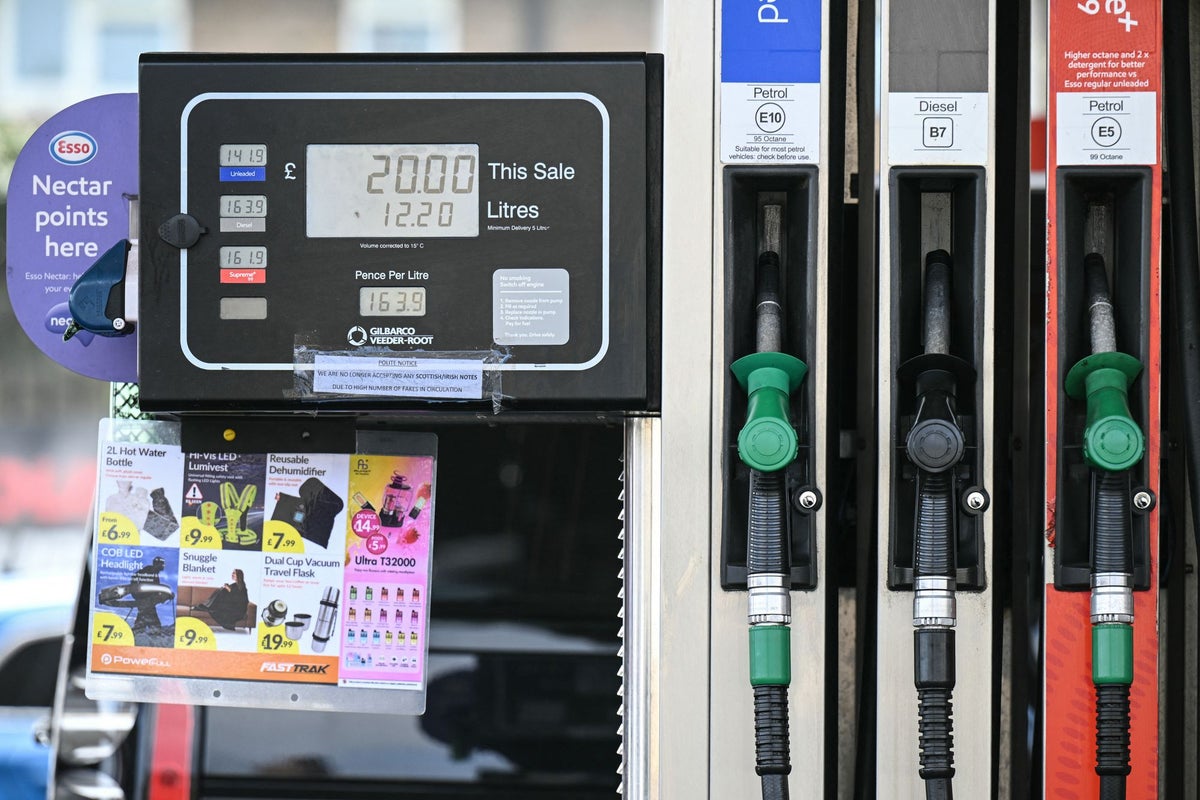
The Iran oil crisis has cost UK drivers over £300m in more expensive fuel, new analysis shows.
The RAC Foundation said that climbing prices since the US-Israeli war with Iran began on 28 February have cost motorists an additional £307 million for petrol and diesel.
Oil prices have soared to as much as $120 a barrel in response to Iran’s stranglehold on tankers passing through the Strait of Hormuz.
Tehran is blockading the Strait, stopping the flow of oil through the vital shipping route leaving the Middle East.
Tuesday’s figures from the Department for Energy Security and Net Zero showed prices at petrol pumps have risen again.
On 16 March, the average price of unleaded petrol at pumps in the UK was 140.28p per litre. For diesel, the average price stood at 158.78p per litre.
Today, the department announced the average price on 23 March was 144.16p for unleaded and 166.88p for diesel.
That is a weekly rise of 3.9p for unleaded and 8.1p for diesel.
According to the RAC Foundation, pump prices were even higher. The motoring research charity said the average price increased to 146.4p for petrol and 169.8p for diesel, as of Monday 23 March.
On Friday 27 February, the day before the conflict began, the price of a barrel of Brent crude oil was roughly $72 while pump prices in the UK averaged 132.9p per litre for petrol and 142.4p per litre for diesel, the foundation said.
It took into account average daily pump prices and fuel consumption rates to calculate that UK drivers have spent an estimated £4.574 billion on petrol and diesel since 28 February.
Its analysis found this figure would have been £4.267 billion if pump prices had remained broadly stable.
The charity described the £307 million difference as a “direct cost” of the war and warned the figure would continue to rise “even if the conflict was resolved tomorrow” because of the time lag between changes in the barrel price of oil and pump prices, as well as the time it will take to repair war damage to oil production, refining and distribution infrastructure.
Steve Gooding, director of the RAC Foundation, said: “This puts a financial price on the war not just for UK drivers but also the nation’s businesses.
“Whether you are running a household or a company, fuel prices make up a significant part of the budget.
“Even those who don’t drive will be impacted by higher transport costs as firms pass on their additional costs to their customers.
“All of which is adding to the cost-of-living crisis.
“In the short term, people have little option to change the way they live and so they are stuck with footing the refuelling bill despite the increase in cost.”
However, motorists should not drive slower nor buy fuel differently because of the oil crisis, an energy minister has said.
Michael Shanks said British drivers did not need to change their habits, despite suggestions from the International Energy Agency (IEA) aimed at conserving fuel.
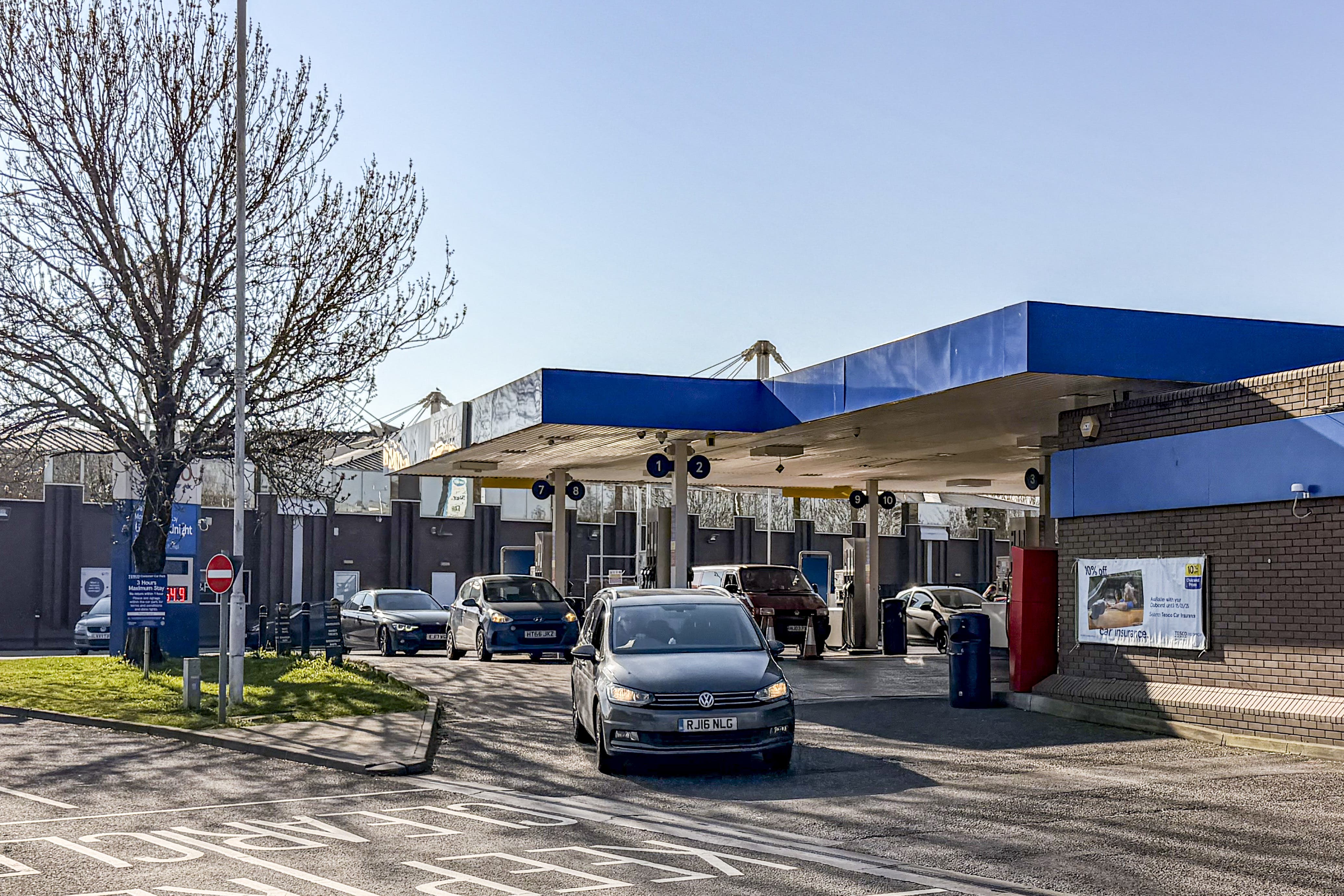
The IEA has advised motorists across the world to reduce their speed on highways, share rides and work from home when possible to reduce how much petrol or diesel they use.
Asked by Times Radio if British drivers should change their habits, Mr Shanks was a told the broadcaster: “They should do everything as absolutely normal because there is no shortage of fuel anywhere in the country at the moment.
“We monitor this every single day, I look at the numbers personally. There’s no issue at all with that.”
The minister added: “People should go about their business as normal. That’s what the RAC and the AA have said. It’s really important people do that.
“There’s no shortage of fuel and everything is working as normal.”
With fuel prices rising and pressure building on household budgets, you can put your questions directly to our personal finance expert. Join our live cost of living Q&A and get advice on everything from petrol costs to mortgages, bills and savings.
