


Published on
January 24, 2026
The Caribbean is no stranger to the fury of nature, but the 2025/2026 season brought a challenge unlike any other. Hurricane Melissa, a monstrous Category 5 storm with sustained winds of 185 mph and gusts exceeding 250 mph, tested the very fabric of the region. Yet, standing in the aftermath, Jamaica’s Minister of Tourism, Edmund Bartlett, didn’t just announce a reopening—he announced a rebirth.
“As we chart the course forward, we are not simply seeking to return to where we were,” Minister Bartlett declared on January 23, 2026. “We are reimagining what our industry can be.”
Building Back Better: Infrastructure Resilience
The “bold vision” for 2026 centers on Infrastructure Resilience. Bartlett’s plan moves away from the “patch-and-repair” philosophy of the past. Instead, Jamaica is leaning into “building back better” in vulnerable coastal areas.
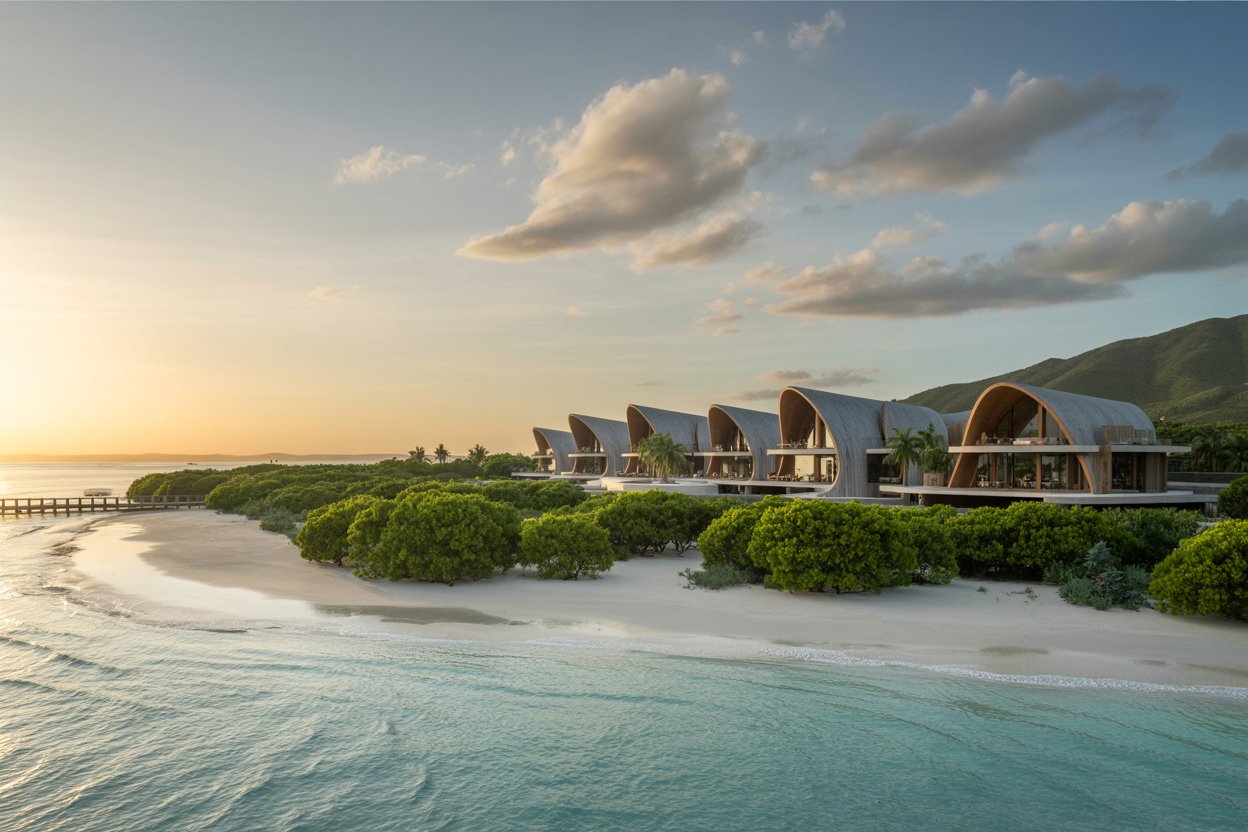
A key highlight of this strategy is the development of new townships and dynamic resort experiences in previously underserved areas like Black River. By creating new tourism hubs that are designed with modern, storm-resistant engineering, Jamaica is expanding its “geographical footprint,” ensuring that the economic benefits of tourism are spread more evenly across the island while protecting the industry from future climate shocks.
Advertisement
Advertisement
Advertisement
Advertisement
The “Human DNA” of Hospitality
In a world increasingly dominated by AI and automated check-ins, Bartlett is doubling down on what he calls Jamaica’s “unique competitive advantage”: its people. The 2026 recovery framework places the workforce at its very center. Through relief initiatives and specialized training, the government is supporting the thousands of workers whose lives were disrupted by Hurricane Melissa. “Our workers are the forefront of our storytelling,” Bartlett noted. In the “new” Jamaica, hospitality isn’t just a service; it is a “high-touch” experience delivered by people who have “hospitality in their DNA.”
Sustainability as a Survival Strategy
Environmental sustainability is no longer a “nice-to-have” in 2026; it is a core pillar of Jamaica’s survival. The new vision recognizes that the tourism sector must adapt to the physical impacts of climate change while meeting the ethical demands of a new generation of “conscious travelers.”
Advertisement
Advertisement
This includes:
- Coastal Reimagining: Integrating natural barriers, such as mangroves and coral reef restoration, into resort designs.
- Renewable Energy: Incentivizing hotels to shift toward solar and wind power to ensure operational continuity during grid failures.
- Water Security: Implementing island-wide desalination and recycling systems specifically for the tourism corridor.
Global Diversification: Beyond Traditional Borders
While the UK, US, and Canada remain vital partners, Bartlett’s 2026 strategy aggressively targets Emerging Markets. There is a massive strategic push into Latin America and the GCC (Gulf Cooperation Council) countries.
By diversifying its visitor base, Jamaica is insulating its economy against regional downturns in the West. This global approach is paired with the fact that, as of late January 2026, over 70% of Jamaica’s hotels are already open, and all airports and cruise ports are fully operational. The island isn’t just “ready” for visitors; it is actively inviting the entire world to participate in its recovery.
The “Seamless Experience” Promise
Despite the magnitude of Hurricane Melissa, the Minister’s message to the global traveler is one of safety and security. “The world recognizes that Jamaica is somewhere to visit, that Jamaica is a safe destination,” Bartlett said. The goal for 2026 is to provide a “seamless experience” where the transition from the airport to the beach feels as effortless as it did before the storm, backed by a more robust and reliable infrastructure.
Conclusion: A Legacy of Resilience
Edmund Bartlett’s vision for 2026 is a testament to the fact that Jamaica refuses to be a victim of its environment. Instead, it is using a “mega-disruption” as a catalyst for a “mega-evolution.”
By prioritizing people, embracing the “Blue Economy,” and diversifying its global reach, Jamaica is setting a standard for the rest of the world. The “Lion” of the Caribbean hasn’t just survived the storm; it has learned how to use the wind to fly higher.

