A recent court challenge that centres on concerns about a dock use plan on B.C.’s Sunshine Coast has become a flashpoint for larger legal questions, as a residents association tries to use the dispute to get rid of the province’s DRIPA legislation.
The attorney general of British Columbia has applied to strike parts of a civil claim filed by the Pender Harbour and Area Residents Association in one of the most recent updates in the ongoing case.
The civil claim seeks to challenge B.C.’s Declaration on the Rights of Indigenous Peoples Act, or DRIPA, a law that requires more land-use and other provincial government decisions to involve Indigenous governments. Legal expert James Hickling and former MLA Adam Olsen say the claim speaks not only to misunderstandings of DRIPA, but to the presence of far-right ideologies in British Columbia, as well as anti-Indigenous racism.
Through their legal counsel Joan Young, the Pender Harbour and Area Residents Association, or PHARA, told The Tyee: “We are marching this case ahead and are very hopeful the Court will rule the DRIPA is unconstitutional. If we succeed it will be a complete reset — the DRIPA will no longer exist and no amendments, suspensions or repeals will be required. Then we can return to focusing on true reconciliation rather than the divisiveness DRIPA has been causing.”
The shíshálh Nation, whose participation in the dock use management plan PHARA objects to, did not respond to a request for comment for this story.
PHARA has received support in its lawsuit from a major provincial ranching organization, the BC Cattlemen’s Association, or BCCA. On May 6 the BCCA announced its intention to apply for intervener status in PHARA’s civil claim.
According to BCCA president Werner Stump, the association is still waiting for the court to announce the schedule for PHARA’s civil claim. Stump spoke with The Tyee about why his organization is preparing “evidence of why the court should consider BCCA as an intervener to the case.”
“It’s the purpose of UNDRIP [the United Nations Declaration on the Rights of Indigenous Peoples] to protect Aboriginal rights and titles, but it doesn’t extend into how other values are protected,” Stump said. “What the cattlemen might be concerned about are private property rights, which have been brought into question with the Cowichan case. That’s not entirely based on DRIPA, but DRIPA was a factor.”
Hickling, an adjunct professor who teaches natural resources law at the University of British Columbia, said the civil claim is not clear and implies that the prospect of the government working with First Nations is something to be feared.
“The Pender Harbour claim is, in my view, pretty long and convoluted,” said Hickling. He told the Tyee that the Pender Harbour and Area Residents Association seemed to want to argue that joint decision-making by government and First Nations is contrary to democratic principles.
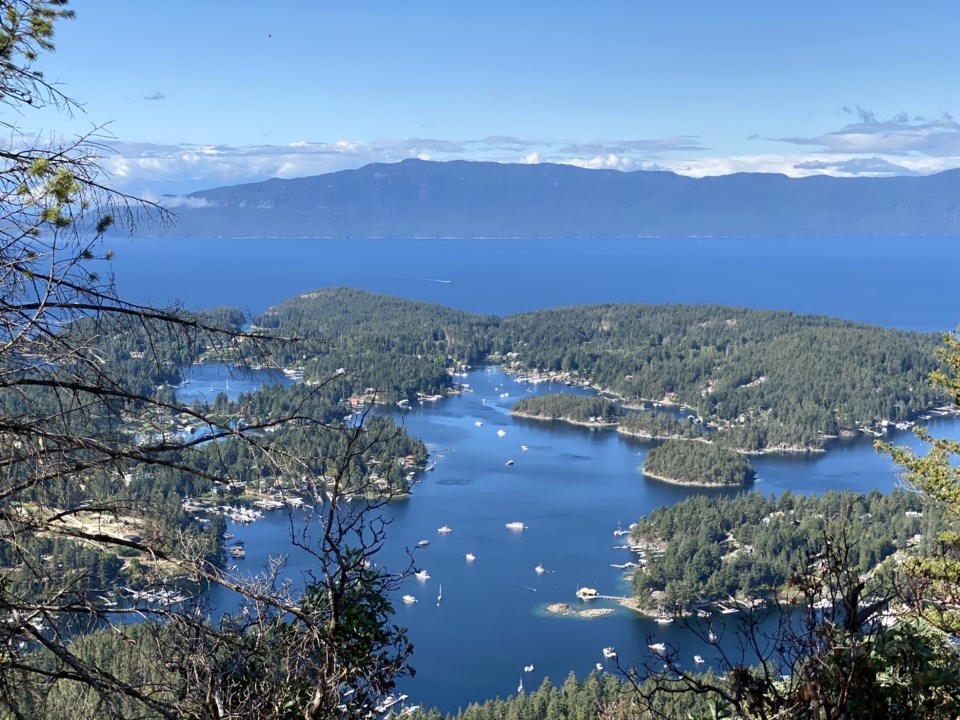
The Pender Harbour and Area Residents Association is a non-profit volunteer organization supporting residents and visitors in Pender Harbour and Egmont, an area located between the towns of Powell River and Sechelt. It is represented in its civil claim by Young and Robin Junger of McMillan LLP, a Vancouver-based law firm.
PHARA’s lawsuit, filed Feb. 9, claims that people “who own property, operate businesses, and reside in the Pender Harbour area” are affected by “uncertainty” over the use of “marine infrastructure” such as docks. The lawsuit claims that some members of the association have been “denied dock tenures or subjected to indeterminate waiting periods, access impairment, and negative impacts on property values.” The statement of claim seeks a declaration that DRIPA is unconstitutional.
The attorney general of British Columbia filed an application to strike portions of PHARA’s civil claim on April 2. The application to strike was made partially on the basis that the claim does not comply with the B.C. Supreme Court’s civil rules.
The attorney general’s notice of application in response to PHARA’s notice of civil claim states that portions of PHARA’s civil claim do not conform to rules 3-1 and 3-7 of the Supreme Court civil rules. The notice of application says that Rule 3-1 states a civil claim must contain “a concise statement of the material facts giving rise to the claim” and that Rule 3-7 states that pleadings must not contain evidence.
In the attorney general’s legal basis for applying to strike the court case, they state that the notice of civil claim discloses no reasonable claim and that “PHARA’s pleadings are unnecessary, scandalous, frivolous, or vexatious, and may prejudice, embarrass, or delay the fair trial or hearing of this proceeding.”
Young told The Tyee that they are hoping to schedule a hearing for September to deal “with some preliminary issues.”
“PHARA is applying to strike the province’s extremely brief (less than 2 page) response,” Young wrote. “And the province is applying to strike some parts of the PHARA notice of civil claim.”
“To put it bluntly,” said Hickling of the government’s argument, “it is not a credible claim that is anchored in the facts or the law.”
PHARA has a history of seeking legal intervention into DRIPA. On Sept. 11, 2024, it started a court petition seeking judicial review of a 2022 order-in-council. That document sets out a negotiating mandate for a decision-making agreement between British Columbia and the shíshálh Nation about Crown land. That petition also asked to declare the province’s DRIPA legislation to be of no force and effect.
Court case comes as DRIPA is under political attack
PHARA’s court case is proceeding as B.C.’s DRIPA legislation has come under intense political attack.
“I scratch my head as to why the Opposition and opponents of the [DRIPA] think that by getting rid of it, they’re creating an easier world for themselves,” said Adam Olsen, a former Green MLA and a member of the Tsartlip First Nation. “From my perspective, we’re creating a less certain world. It’s eroding rights, eroding confidence, eroding relationships, and eroding community.”
At the same time, Olsen said, he thinks Canada is experiencing a wave of anti-Indigenous racism unlike anything he has seen in the last couple of decades.
“There appears to be very little that our elected officials are doing to respond to it,” said Olsen.
The Conservative Party of BC has focused much of its energy in recent months on condemning DRIPA and raising concerns about Indigenous rights. The Conservatives have been calling for a full repeal of DRIPA since December 2025.
In February, the former leader of the Conservative Party of BC, John Rustad, said private property rights and Aboriginal title “cannot coexist.” Meanwhile, the new leader of the party, Kerry-Lynne Findlay, made opposing Indigenous rights a central part of her platform.
In a news release published on May 28, the Conservatives called for the NDP to release a full list of court cases tied to DRIPA.
Olsen said the B.C. Conservatives have been “fearmongering” on the issue.
“They have the right to ask questions of government, but their questions have been very anti-Indigenous in nature,” he said. “Borderline suggesting that any partnership or working with First Nations people is not something the government should be doing.”
In the midst of the Conservatives criticizing and demanding a full repeal of the act, Premier David Eby has also gone back and forth on his intentions to amend or suspend DRIPA.
“All of these characters have been seeking attention by stoking fear in uninformed voters as a way to gain some leverage for their own political agendas,” said Hickling. “I include both Conservatives and NDP in this. It’s the shortcoming of the government that has resulted in these court cases.”
Several high-profile court cases have heightened criticism of DRIPA.
The Cowichan decision in 2025 recognized the Cowichan Tribes’ claim to a 780-acre tract of land on Sea Island in Richmond, B.C. (Today, Sea Island is home to the Vancouver International Airport, numerous shipping warehouses and residential homes.) It was the first time in Canada’s history that a court decision recognized Aboriginal title over private land and land underwater — and the ruling sparked concern in Richmond and across B.C. that the court decision could threaten private property ownership in the province.
Several months after the Cowichan decision, another court ruling found that B.C.’s Mineral Tenure Act, which prioritizes the stakes of mining companies over other land rights, was “inconsistent” with DRIPA. The cases set off a political backlash to DRIPA and to Indigenous rights in general.
In his case comment about the Cowichan decision, published Feb. 17, Hickling wrote: “The Cowichan decision is narrowly limited to the particular historical facts in the case. It is not the ‘tip of the iceberg.’ It does not put private property rights at risk across British Columbia.”
“Politicians and pundits are amplifying the controversy in order to gain attention for themselves, and it’s distracting. It’s irresponsible. We have bigger problems to solve,” said Hickling.
The shíshálh Nation’s concerns about dock management
Negotiations on dock tenures between the shíshálh Nation and the Pender Harbour and Area Residents Association go back years before PHARA’s 2026 notice of civil claim.
In August 2003, the shíshálh Nation sent a letter to Land and Water BC Inc., the organization that previously issued private moorage authorizations, to express concerns about the process of issuing dock tenures in the Pender Harbour area. The nation cited environmental concerns and the presence of 60 archeological sites recorded in the harbour. Beginning in 2003, authorizations for over 300 docks already in the Pender Harbour area were no longer routinely issued or renewed by the B.C. government.
By June 2007, the shíshálh Nation had published their land-use plan, titled “lil xemit tems swiya nelh mes stutula” (“A Strategic Land Use Plan for the shíshálh Nation”), in response to the potential ecological impact of the docks. The plan also focused on development pressures on their territory, such as large-scale mining projects and waterfront developments.
In April 2015, a draft of the dock management plan developed by the Ministry of Forests, Lands, Natural Resource Operations and Rural Development, the Ministry of Indigenous Relations and Reconciliation and the shíshálh Nation was released for public comment.
The draft was developed over 24 months in a collaboration between the two ministries and the shíshálh Nation. Several public information sessions about the dock management plan were held by the B.C. government, including a final meeting in June 2015 attended by approximately 400 people.
At that meeting, according to an independent report published by Barry Penner in November 2015, some attendees “reportedly reacted loudly and negatively to a prayer given by a shíshálh Nation elder and to introductory comments by a Ministry official acknowledging the meeting was being held on the traditional territory of the shíshálh Nation.” Penner had been contracted by the Ministry of Forests, Lands and Natural Resource Operations to independently review the draft dock management plan.
In his report, Penner wrote that many property owners objected to the dock management plan based on the misconception that they would have to pay $500 in fees to the shíshálh Nation to apply for a dock tenure, and that the shíshálh Nation would have “the final say” in approving their tenure applications. Penner noted that no fee requirement was mentioned in the dock management plan draft and that there was no clause giving the shíshálh Nation decision-making authority over Pender Harbour tenures.
In 2023, the Pender Harbour and Area Residents Association was invited to join the dock management plan advisory group, but the group declined, saying the process had not been transparent.
In an interview with Global News in February 2024, Sean McAllister, a member of PHARA, said of the revised dock management plan: “It’s going to cause havoc to any of the waterfront businesses that are in existence here now.”
McMillan, the law firm that is representing PHARA in its current Supreme Court civil case, published a newsletter in January 2024 that said under new amendments to the Land Act, Indigenous groups “will be provided a veto power over decision-making about Crown land tenures.” Hickling said this claim is not accurate. McMillan declined to respond to Hickling’s characterization.
In the virtual slides providing information about the proposed amendments, presented by B.C.’s Ministry of Water, Land and Resource Stewardship, the ministry states: “Agreements do not provide a ‘veto’ and require due process. Any person affected by decisions made under joint or consent-based agreements will continue to be able to seek review of the decision by the courts.”
A few months later, in June 2024, PHARA announced its intention to take legal action with representation by McMillan to challenge B.C.’s DRIPA legislation. By Sept. 11, they had filed a 42-page petition against the province in the B.C. Supreme Court.
According to Hickling, the petition is inconsistent in several ways. He said it included an incomplete history of the UN Declaration on the Rights of Indigenous Peoples, and claims that “PHARA has been left with no other realistic option” than to begin litigation. It doesn’t acknowledge that PHARA declined to participate in the dock management plan advisory group. The petition also mixes up events in 2015 and 2018, claiming that the foundation agreement was signed in October 2018, “approximately one month before the release of the Penner Report” in November 2015.
“In the absence of a time machine, these statements of ‘fact’ are clearly wrong as the Foundation Agreement was signed three years after the Penner Report,” Hickling told The Tyee. “This misinformation presented as ‘fact’ tends to cast doubt on the rest of the Petition.”
PHARA’s legal counsel Joan Young declined to respond to Hickling’s comments, stating, “Our filed court materials and published bulletins speak for themselves.” PHARA did not respond to requests for comment in time for publication. ![[Tyee]](https://thetyee.ca/design-article.thetyee.ca/ui/img/yellowblob.png)
About the Author