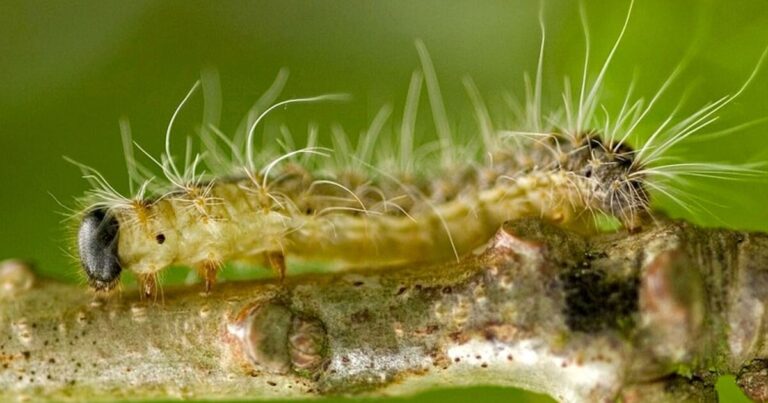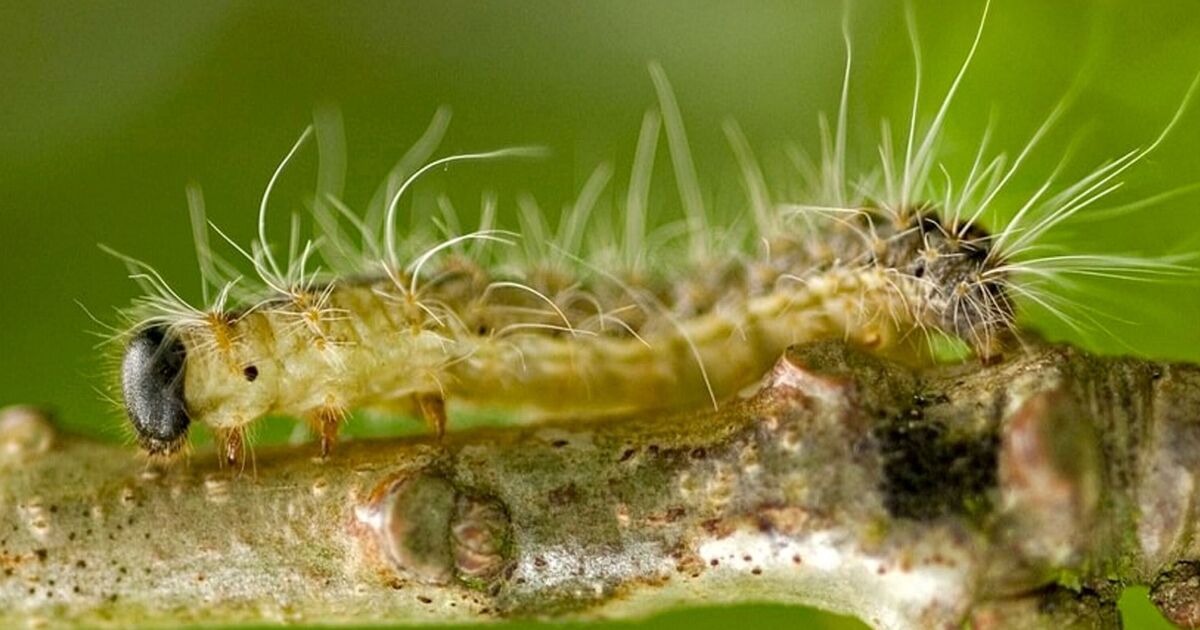
Toxic caterpillars whose hairs can trigger breathing problems and painful skin irritation have sparked an urgent public warning after being spotted in Surrey. Woking Borough Council has urged residents to avoid contact with oak processionary moth (OPM) caterpillars and their nests, warning that the insects can pose risks to both people and pets.
The caterpillars, which are active between late spring and early summer, are most commonly found on oak trees. While small in size, they are covered in thousands of tiny hairs containing toxins that can cause health problems if touched or inhaled.
According to the council, symptoms can include itchy skin rashes, sore throats, eye irritation and breathing difficulties.
Residents are being advised not to touch the caterpillars or their nests, to keep children and animals away from affected trees and to avoid attempting to remove nests themselves.
The insects can be identified by their distinctive habit of moving in nose-to-tail processions, often travelling in long lines along tree trunks and branches. They also build silky white web-like nests on oak trees.
The warning comes as OPM caterpillars enter the peak period of their annual lifecycle. The species has been the focus of ongoing monitoring and management efforts in parts of southern England for several years because of the health risks associated with its toxic hairs.
Repeated infestations can also weaken oak trees by stripping them of their leaves, making them more vulnerable to disease and environmental stress.
Cllr Ellen Nicholson, Woking Borough Council’s Portfolio Holder for Green Spaces, said: “We understand that sightings of the oak processionary moth can be concerning for residents.
“Whilst the risks are generally low if you keep your distance, it’s important that people know how to recognise the caterpillars and what to do if they see them.
“If you do spot them, please avoid contact and report the sighting so their nests can be removed safely.
“By reporting sightings and keeping a safe distance, residents can play an important part in helping the relevant authority manage the issue.”
Officials are asking anyone who discovers an OPM nest to report it to the appropriate authority, providing the precise location and, if possible, a photograph.
The council stressed that specialist contractors should be left to deal with any infestations, as disturbing the nests could release more of the toxic hairs into the surrounding area.
Residents spending time outdoors near oak trees in the coming weeks are being encouraged to remain vigilant and familiarise themselves with the signs of an infestation.
Anyone who spots the caterpillars is advised to keep well clear and ensure children and pets do the same until the insects can be dealt with safely.
About the Author