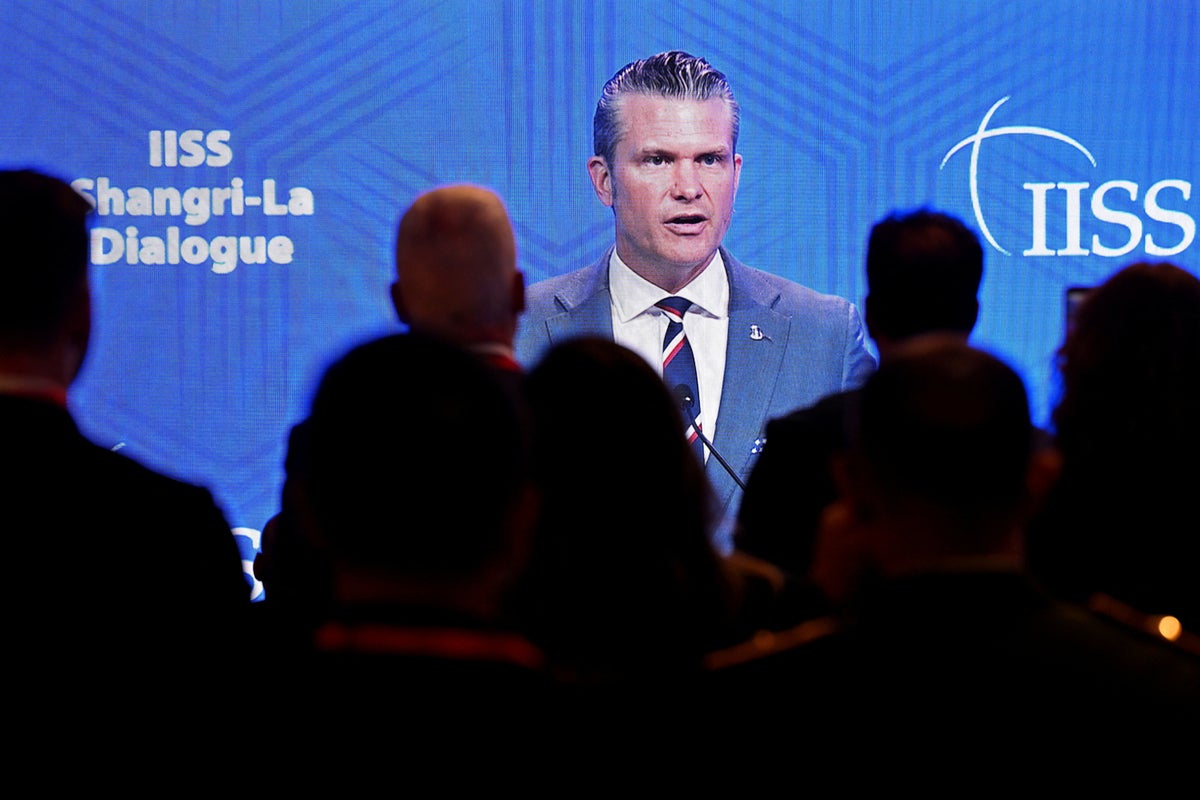
Britain’s special relationship with the United States is “meaningless” unless it “locks arms and shields” with America and matches its military capabilities, Donald Trump’s war secretary has warned.
Giving a speech in Singapore, Pete Hegseth said that “model allies” who comply with US demands will benefit from arms sales and access to intelligence, while those seen to be “freeloading” on US capabilities will be penalised.
Referring to conversations with the UK defence secretary, the politician said: “As my friends, Mr [Richard] Marles [the Australian defence minister] and John Healey know, I’m probably the most blunt with our closest friends about what our capabilities are and where they need to be to ensure that we’re locking arms and shields, considering the threats of the world.”
He continued: “You can’t just say, ‘Oh, we’ve been friends for a long time, so let’s work together.’ It’s: ‘We’ve been friends for a long time, so you better have the same capabilities we do, because if we don’t, our alliance is meaningless.’”
Mr Hegseth also vowed to move allies who step up their military capabilities to “the front of the line” when it comes to closer ties, praising countries such as South Korea, Japan and Vietnam.
Addressing the Shangri-La Dialogue conference, organised by London think tank, the International Institute for Strategic Studies (IISS), he said: “We will prioritise working with model allies. We are moving them to the front of the line. Expedited arms sales, deep industrial base collaboration, expanded intelligence sharing, the list goes on, the benefits [are] many.
“But for those who believe they can continue to free ride on the generosity of the American taxpayer, hear us now: the era of the United States subsidising the defence of wealthy nations is over.”
He added: “Allies who refuse to step up and carry their own weight for our collective defence will face a clear shift in how we do business.”
The audience at the conference included a number of defence ministers from across the world, including Mr Healey.
There has been an increasing breakdown in relations between the UK and the US as Mr Trump has repeatedly accused the UK and other European allies of not spending enough on defence. He has also accused Sir Keir Starmer of not standing by America in its war in Iran.
Earlier this month, Mr Hegseth used a written statement to Congress to insist that the failure of allies to support the US military offensive against Iran was “unconscionable”, warning: “We will remember.”
It comes amid growing questions over the government’s commitment to increasing defence spending because of long delays to the defence investment plan.
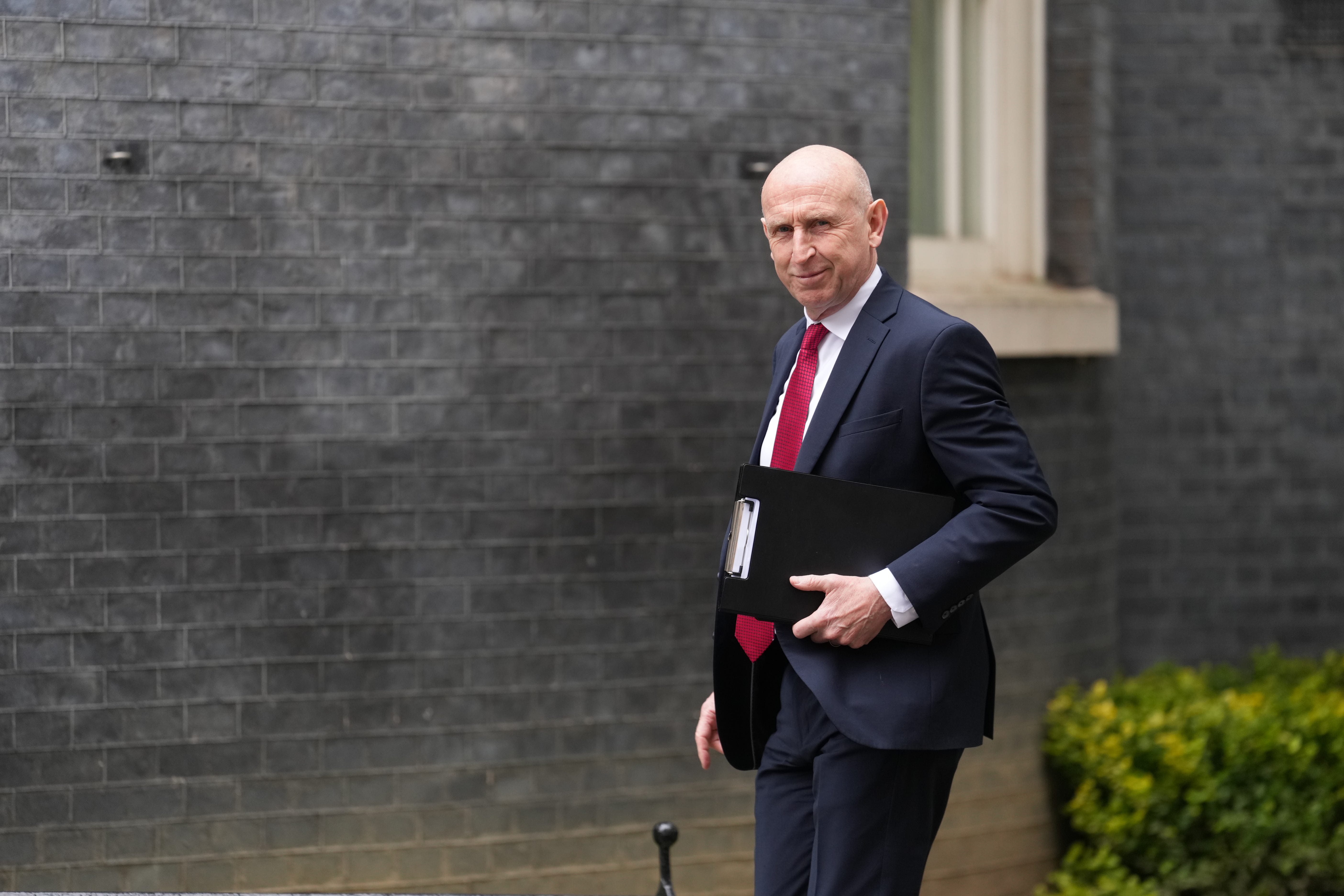
While Sir Keir has promised to spend 5 per cent of GDP on “national security” by 2035, including 3.5 per cent on “core defence”, the plan – due to be published in autumn – has not yet been published.
Meanwhile, the exact details of the funding uplift have not yet been agreed by the Treasury, and reports have suggested there is a funding gap of around £28bn in the existing plans.
On Friday, pensions minister Torsten Bell said the plan will be set out “when it’s ready”, amid reports of Cabinet splits over the plan, while the Tories are seeking to force a deadline for the government to publish the review.
The party will push for a vote on its amendment to the Armed Forces Bill that would require Mr Healey to lay the defence investment plan before the Commons and Lords within a month of the legislation getting Royal Assent into law.
Lord George Robertson, a former Labour defence secretary and one of the authors of the Strategic Defence Review, used a lecture last month to hit out at the government’s “corrosive complacency” on defence spending and accused the prime minister of being unwilling to “make the necessary investment”.
About the Author