Listen to this article
Estimated 4 minutes
The audio version of this article is generated by AI-based technology. Mispronunciations can occur. We are working with our partners to continually review and improve the results.
Hundreds of people prosecuted for crimes related to the Jan. 6 assault on the U.S. Capitol in 2021 plan to seek compensation from the U.S. government once a new taxpayer-funded anti-weaponization program is up and running.
An advocacy group representing Jan. 6 defendants is working with more than 450 people who are readying claims on the basis they were unfairly prosecuted.
“It’s going to be justice on this matter, one way or another,” said Treniss Evans, founder of Condemned USA and himself a pardoned Jan. 6 defendant.
“This ripped apart families. People were destroyed because the false narrative of insurrection played out.”
Merrick Garland, who was attorney general for the Biden administration, has repeatedly denied allegations of politicization and has said his decisions followed the facts and the law.
In an interview with CBC News, Evans, who says he is a former government contractor and a paralegal, suggested the total number of claimants could be much higher. He also predicted significant payouts for some claimants.
“I’m sure some of those will be eight-figure settlements that people are seeking in these matters.”

New $2B US fund
Earlier this week, the U.S. Department of Justice unveiled plans to create a $1.7-billion US Anti-Weaponization Fund, through which Americans who feel they were unfairly prosecuted during the previous Biden administration can apply for taxpayer-funded settlements.
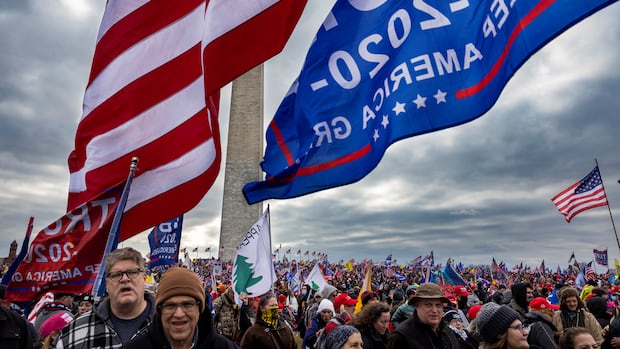
U.S. President Donald Trump has long complained about how Jan. 6 criminal cases were pursued. When he returned to office in 2025, Trump pardoned more than 1,500 people for crimes connected to the violent attack, where thousands of Trump supporters stormed the Capitol in support of his false claims that the Democrats had stolen the 2020 presidential election. They vandalized and looted offices, while some rioters assaulted law enforcement.
“I am helping others, who were so badly abused by an evil, corrupt, and weaponized Biden Administration, receive, at long last, JUSTICE!” Trump wrote on social media.
The fund is viewed as widely controversial, and has sparked bipartisan backlash on Capitol Hill.
The Senate minority leader, Democrat Chuck Schumer, has described it as a “MAGA slush fund,” calling it “the most blatant act of corruption in American history.”
Republican Senator Thom Tillis of North Carolina described it as “stupid on stilts.”
There is also backlash among some in the law enforcement community.
Michael Fanone, a former Washington, D.C., police officer who was severely beaten during the riot, says he was outraged after learning about the fund.
However, he says this kind of move by the Trump administration is predictable.

“Anyone in America … who is shocked or surprised by this hasn’t been paying attention,” he told CBC News.
“This is what Trump supporters voted for, and so my anger has since turned … to the American people for betraying me and my colleagues who fought to defend democracy,” he said.
“What did we do it for? What was this sacrifice for?”
Few details public
The U.S. Department of Justice says a five-person committee will be selected to adjudicate claims, with the Department leading the selection process. Lawmakers in Congress are expected to have input on the selection of one of the five members.
At this time, there are no parameters around who may qualify for compensation.
Evans expects all Jan. 6 defendants to be eligible, including people convicted of, and later pardoned for, violent crimes.

CBC’s chief political correspondent Rosemary Barton speaks with convicted U.S. Capitol rioter Pamela Hemphill about why she is rejecting a pardon from President Donald Trump.
He argues they should be included because he believes they did not get fair trials. He blames the media for tainting jury pools, and says the government presented a false narrative to the public about Jan. 6.
“Nobody was accurately convicted as our laws require,” he said.
“You can never take away what the media said by calling people insurrectionists.”
Evans was at the Capitol during the riot, and pleaded guilty to misdemeanour charges for unlawfully entering the building. His case gained significant attention, after he admitted to drinking whiskey in then-Speaker Nancy Pelosi’s office.
About the Author