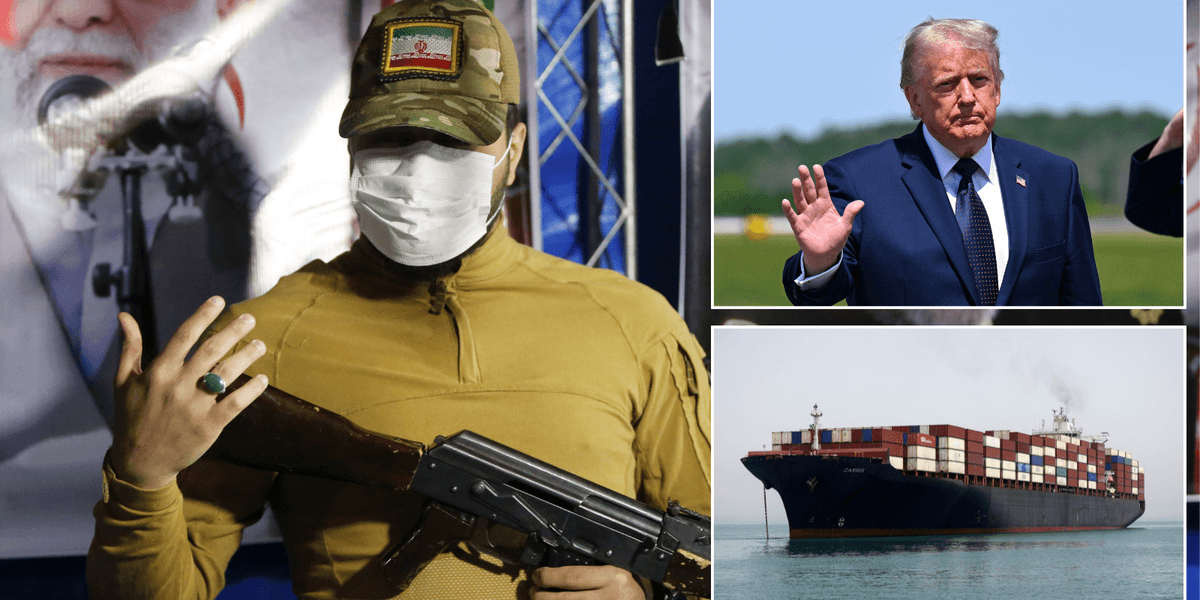
Iran is “months away” from restoring its drone stockpile as the Islamic Republic rebuilds its arsenal, according to US intelligence.
Intelligence insiders in the US said Iran has been reconstituting its forces far more quickly than American officials had anticipated.
The Islamic Republic is said to be rebuilding covering missile sites, launchers and production facilities for key weapons systems destroyed during Operation Epic Fury.
Some officials estimate the regime could have its drone force fully replenished within six months, one source said to CNN.
The speed of the recovery has raised questions about the true extent of the damage inflicted by the initial wave of US and Israeli strikes.
With its missile stockpiles severely depleted, analysts believe Iran may increasingly pivot towards drone strikes against targets within realistic range – a development that has heightened concern among Western allies in the region.
Iran has been able to accelerate its recovery with assistance from Russia and China, according to one source, with two further sources confirming Beijing continued to ship components to Iran to help rebuild weapons systems during the conflict.
Israeli Prime Minister Benjamin Netanyahu told CBS last week China was providing Iran with “components of missile manufacturing”, though he did not elaborate further on the claim.
Iran is quickly rebuilding its military capabilities as a fragile ceasefire holds between Tehran and Washington
|
GETTY
Chinese Foreign Ministry spokesman Guo Jiakun denied the allegation at a press conference, describing it as “not based on facts”.
It is thought that President Donald Trump’s blockade of the Strait of Hormuz has since curtailed some of that supply.
Despite the damage sustained throughout the conflict, Iran has maintained ballistic missile, drone attack and anti-air capabilities, according to sources familiar with the assessments.
Chief Pentagon spokesman Sean Parnell said in a statement: “America’s military is the most powerful in the world and has everything it needs to execute at the time and place of the President’s choosing.
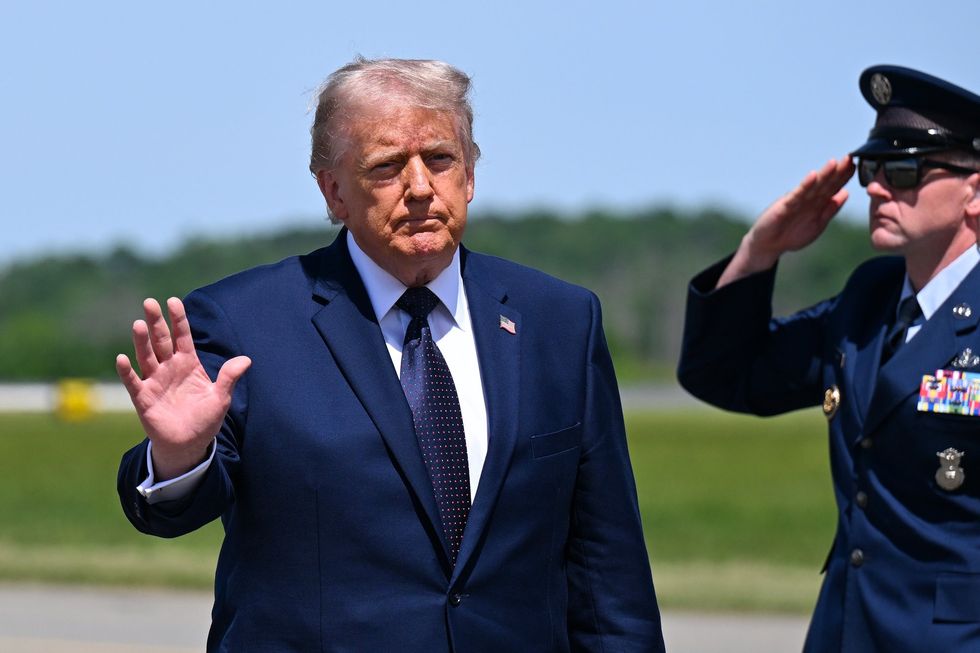
Donald Trump threatened if a deal is not struck between the US and Iran then it might get a ‘little bit nasty’
|
GETTY
“We have executed multiple successful operations across combatant commands while ensuring the US military possesses a deep arsenal of capabilities to protect our people and our interests.”
Peace talks between Washington and Tehran have stalled in recent weeks as the fragile temporary ceasefire is stretched to its limits around the Strait of Hormuz.
Mr Trump said on Tuesday he had been within an hour of relaunching attacks and warned he could get “a little bit nasty” if negotiations collapse.
He said: “We’ll see what happens. Either have a deal or we’re going to do some things that are a little bit nasty, but hopefully that won’t happen.
“We’re going to give this one shot. I’m in no hurry.”
The US President said any agreement would under no circumstances allow Iran to acquire a nuclear weapon, adding “we may have to hit them even harder” if Tehran refuses to cooperate.
He also said he would like to see “a few people killed as opposed to a lot”, before adding, “we can do it either way”.
On Monday, Iran said it had responded to the latest US peace proposal and that exchanges between the two sides were continuing.
However, Tehran has simultaneously hit back at Mr Trump’s threats, accusing Washington of plotting to restart the war.
Iran’s Revolutionary Guards said in a statement: “If aggression against Iran is repeated, the promised regional war will extend beyond the region this time.”
Iran’s top nuclear negotiator Mohammad Baqer also posted an audio message on social media accusing the United States of making “obvious and hidden moves” in preparation for new attacks.
The hardening of rhetoric on both sides comes as Mr Trump insisted yesterday that negotiations are in their final stages, though the gap between the two sides’ positions remains significant.
A key sticking point is understood to be the length of any halt to Iranian uranium enrichment, with the US pushing for a 20-year freeze while Iran has proposed a far shorter timeframe.
About the Author