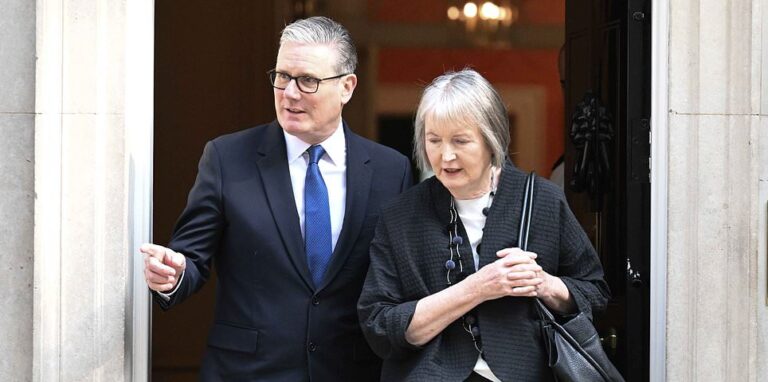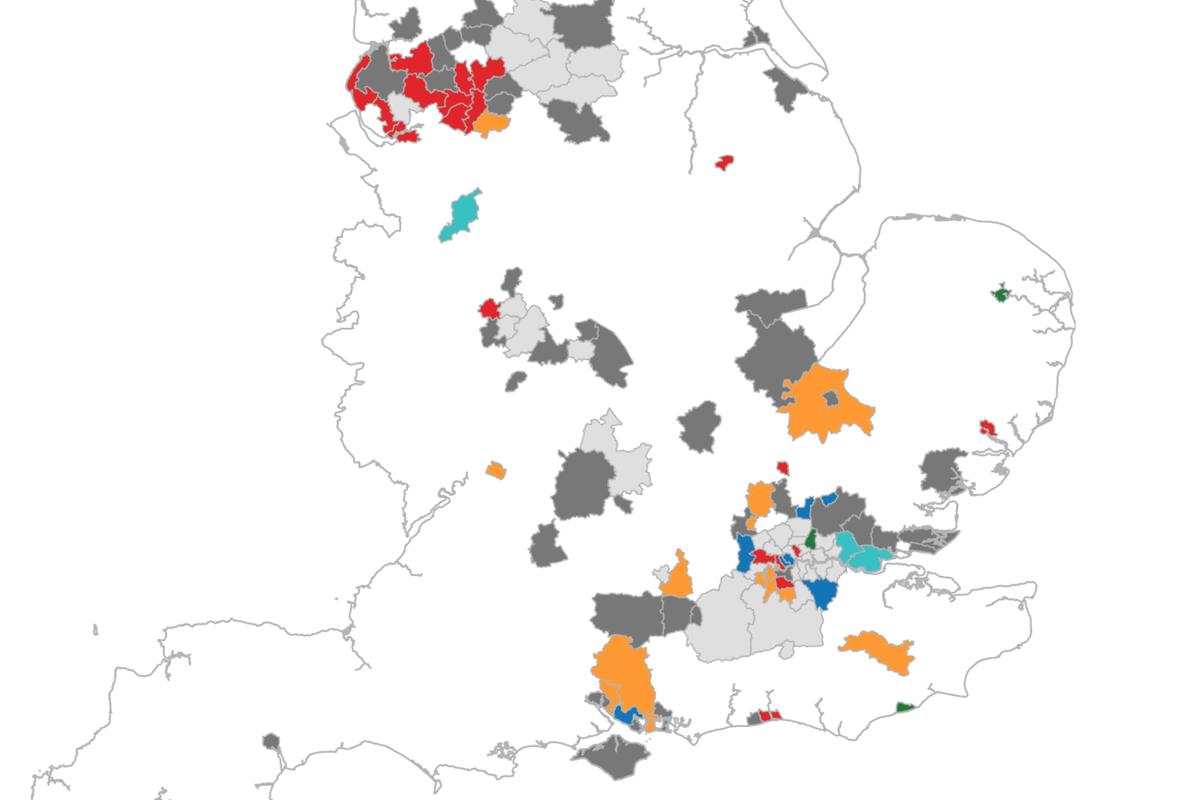
Sir Keir Starmer has insisted he will carry on as prime minister despite a disastrous set of local election results for Labour, while Nigel Farage has hailed a “big historic night” after Reform UK made major gains across the country.
Reform UK has gained over 1,200 councillors across the country, as well as taking hold of 12 councils so far, while Labour has lost control of 30 councils and has seen the mayoralty in Hackney go to the Green Party.
Sir Keir Starmer’s party has also lost in Wales after 27 years in power and first minister Eluned Morgan lost her seat.
Contests have taken place in 136 local authorities across England, including some of the largest cities and the whole of London. A mix of urban authorities and rural districts also held elections, along with several county councils.
The constituency results in the Scottish Parliament election have been declared, with the SNP winning 57 of the 73 seats.
Check back here or refresh the page for live updates as results are announced
Mr Farage’s party has won control of Havering, giving the party its first London council.
Meanwhile, the Conservatives have gained Westminster City Council from Labour and made gains in Wandsworth, taking the council to no overall control.
The Tories have also become the biggest party in Wandsworth, which has moved to no overall control.
But Labour’s grip on the city has held firm in other places. Sir Keir Starmer’s party has held on to Hammersmith and Fulham, Ealing, Hounslow, Barking and Dagenham, Camden, Islington, Greenwich, and pulled off a narrow win in Merton, which pollsters had suggested could go Liberal Democrat.
The Liberal Democrats so far appear on course to record an eighth consecutive year of council gains, gaining more than 150 councillors, and taking control of Stockport and Portsmouth, and becoming the only party on Richmond upon Thames Council, but they lost their slender majority in Hull.
The Green Party has won the mayoralties in Hackney, Lewisham and Waltham forest, and has won four councils so far.
It is the largest set of local elections in the country for three years, and marks a key test for all political parties, especially Labour, as Sir Keir Starmer faces growing questions over his leadership of the party. But the prime minister insisted he would not “walk away and plunge the country into chaos”.
Elections have also been held in Scotland for the Scottish parliament and in Wales for members of the Senedd.
Most of these seats were last up for election in 2022, at a time when the then-Conservative government, led by former prime minister Boris Johnson, was trailing Labour in the opinion polls and was losing support in the wake of the Partygate scandal.
This was reflected in the results of the 2022 local elections, which saw Labour, the Liberal Democrats and Greens all make gains at the Tories’ expense.
Reform UK contested only a small number of council seats in 2022 and won just two.
It was a very different picture at last year’s local elections, when Mr Farage’s party picked up 677 seats to bring its total councillor count at the time to 804. The Conservatives were the biggest losers of the night, dropping 674 seats, while Labour lost 187.
Mr Farage will be hoping for similar success at this year’s contests, as polling suggest that both the ‘big two’ parties are set to suffer massive losses once again.
More than half of the seats up for grabs this year are being defended by Labour, reflecting the party’s current strength in London and in Metropolitan boroughs, while just over a quarter are Conservative defences.
This marks a change from the 2025 elections, when the Tories were defending the greatest number of council seats with most of those contests being for county councils where the party was dominant.
Of the 5,013 English council seats being contested this year, Labour is defending 2,557, the Conservatives 1,362, the Liberal Democrats 684 and other parties 410 (including independents).
John Swinney has said he is “certain” his SNP will emerge as the largest party in Holyrood as his Scottish Labour rival Anas Sarwar effectively conceded defeat, saying his party was “hurting” after it “didn’t win the argument”.
With the SNP having been in power since 2007 in Scotland, the party now seems set to win a record fifth consecutive term in government in Edinburgh.
It comes after the party made gains from other parties in early results in the Holyrood election, winning the Shetland seat which has been held by the Liberal Democrats since the start of devolution.
The SNP also won the Eastwood constituency outside of Glasgow from the Scottish Tories – although here perhaps Mr Swinney’s party were helped by the rise of Reform.The Conservative vote was down by more than 10%, with Reform picking up 9% of the vote, resulting in former SNP MP Kirsten Oswald being elected to Holyrood.
About the Author