Whenever the walkie on set pings for someone from the locations department, it’s never for anything good. In fact, in Paula González-Nasser’s experience it’s usually because an owner or tenant is upset with something the production is doing, or because something truly unhinged has happened that the locations team needs to deal with — like being trapped with an apartment owner who wants to share 9/11 conspiracy theories, or the owner of a location being used on “The Last OG” wanting to find Tracy Morgan to give him a piece of their mind.
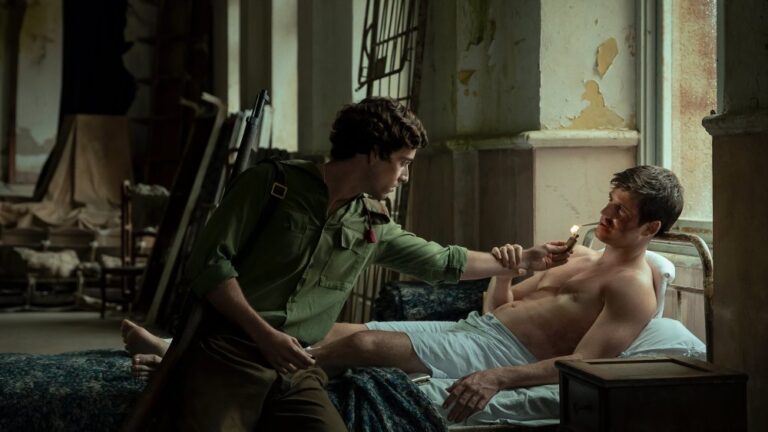
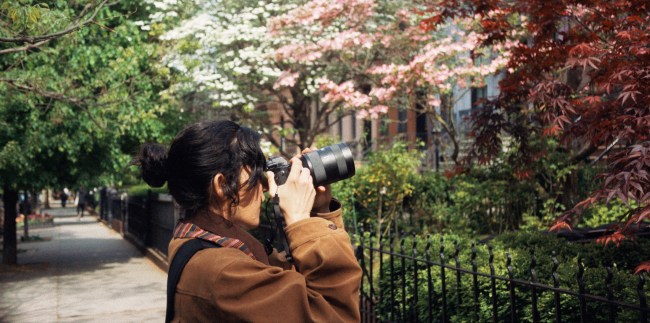
González-Nasser has stepped up the call sheet from a unit PA, locations scout, and locations coordinator all the way to a writer and director of her first feature, “The Scout.” But the job’s strange trials, odd hours, endless parking tickets, and unscriptable personal interactions have stayed with her and shaped her creative process. “The Scout” follows a young location scout, Sofia (Mimi Davila), as she tries to find apartments suitable for a network TV pilot while keeping her own life in some sort of order, too.

“Scouting is the first seed for me. How I look at a space and what’s there kicks the ideas off in my head,” González-Nasser told IndieWire. “If anything,I have more appreciation for locations after directing this movie because we were so in it from the beginning, scouting spaces, but also seeing this character go through her day, you’re reminded of how much work it is but also how special of a job it is.”

Part of what makes the job special is the community of filmmakers in New York that González-Nasser is part of. In addition to the film’s producing team, González-Nasser has worked with some stalwart NYC-based locations managers and assistant locations managers, Julie Sage and Hayden Dunham, who’ve worked on the full gamut of New York City-based shows and films from “High Maintenance” and “Search Party,” to “…And Just Like That” and “Billions,” from “One Night Only” to “Transformers.”
Talking to the three of them together is a master class in the fine art (and sometimes crushing logistics) of doing locations work, and doing it well. And so in honor of “The Scout,” IndieWire asked Dunham, González-Nasser, and Sage about the challenges of scouting and managing locations in New York City and its surroundings, whether a project wants to stay true to the integrity of particular Brooklyn neighborhoods (“High Maintenance”) or wants to make New England look like Ohio (“The Chair Company”).
“New York really has a huge spectrum of high-end places and then much lower-end places,” Sage told IndieWire. “You can be in a junkyard one day, and the next day you’re scouting suites at The Plaza. So I think that’s a really cool part of the job is seeing so much that New York has to offer on locations. You also get to see New York when no one’s watching. Like I filmed on Ellis Island, and you can only film overnight, so you’re there overnight, and you just get to see this private tour of the city when no one else is watching.”

But there are some standbys in the city that most locations teams know are film-friendly, too. “Any courthouse scene filmed in New York, it’s the Bronx Courthouse pretty much every time. It’s the same courtroom for every single show or movie that’s ever shot here,” Dunham told IndieWire. “It comes down to places that will let you film during the week, during the day. For jails, it’s the same two jails. The same hospital — Metropolitan Hospital.”
“They have a wing they don’t use, and it looks contemporary. They’ll let you shoot there all the time,” Sage added.
Certain event spaces in and around the city — La Capitale on Bowery, Castle Gould at the Sands Point Preserve — are well known among locations teams for being film-friendly and versatile enough that they can stand in for anything and everything from a posh ballroom to a UFC area, once a production team is done with them. The logistics of bringing 100 to 200 crew into a place for a day are daunting enough to eliminate many options before the art of finding the right spaces can even begin.
But finding those spaces — learning the ropes from scout to coordinator to manager — is an art that enables all the other artmaking on a film or TV project. “A cinematographer can’t do their job if they don’t have a great location. A production designer can’t do anything without a great location. It’s such a pillar of the script coming to life,” González-Nasser said.
“The Scout” is screening in select theaters.
About the Author