KFF Women’s Health Survey Explores Trusted Sources of Information and Exposure to Contraceptive Misinformation
Health care providers remain the most trusted source for reliable health information among reproductive-age women ages 18 to 49. According to the 2026 KFF Women’s Health Survey, more than eight in ten (86%) reproductive-age women said they trust health care providers “a great deal” or “a fair amount” for reliable information, compared with a quarter (25%) who said the same about AI tools and chatbots and fewer (15%) about social media and social media influencers. These findings largely mirror KFF polling among the general public, which has found similarly high trust in doctors and relatively lower trust in AI chatbots for health information.
Still, use of online sources for health information is widespread despite this limited trust. A majority (87%) report looking for health information or advice online through internet search engines, social media, or AI tools. Many reproductive-age women report seeing information about contraception on social media, regardless of whether they were looking for it. About a third (35%) say they’d seen or heard something about contraception on social media in the past year, rising to four in ten (42%) among younger women ages 18 to 25.
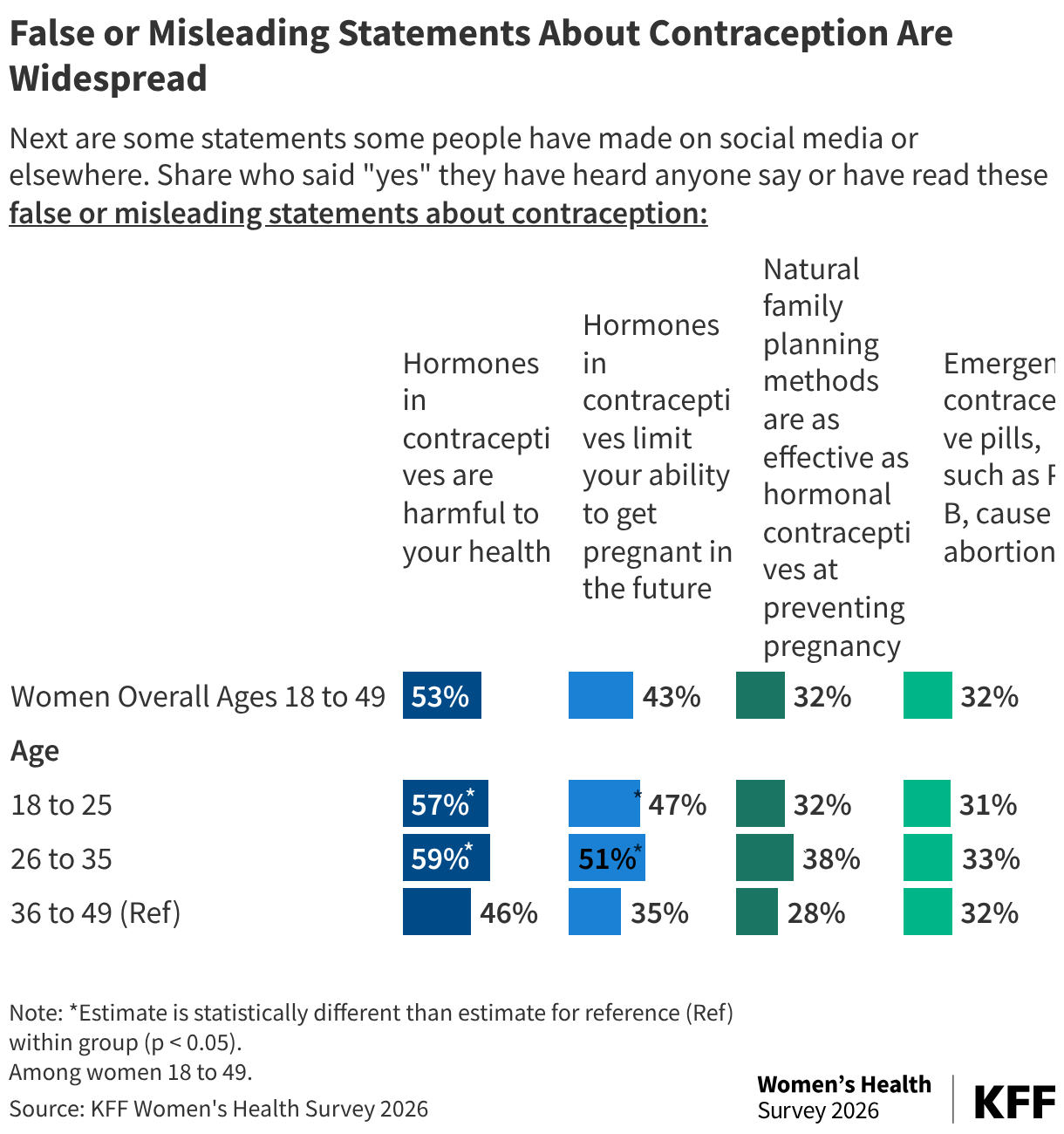
Many reproductive-age women also report being exposed to false and misleading statements about contraception on social media and elsewhere. About half (53%) of reproductive-age women say they’ve heard the false claim that hormonal contraceptives are harmful to your health, and four in ten (43%) have encountered the incorrect claim that they limit your ability to get pregnant in the future. Both of these claims are contradicted by current evidence. Roughly a third (32%) have seen false claims that natural family planning is as effective as hormonal contraception at preventing pregnancy and that emergency contraceptive pills, such as Plan B, cause abortions, neither of which is accurate.
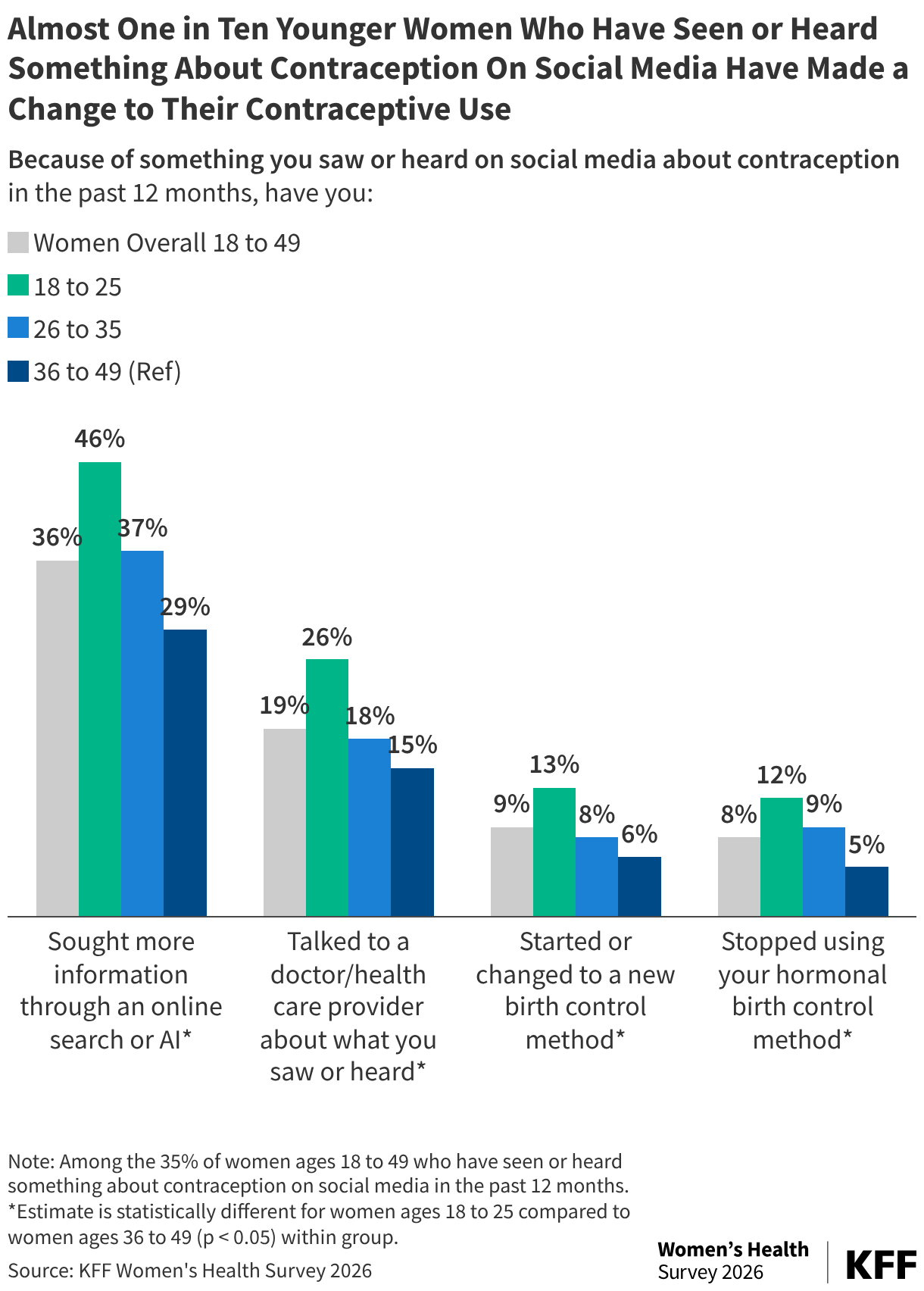
Among women who saw contraception-related content on social media, more than a third (36%) went on to search for more information online, one in five (19%) talked to a doctor about what they’d seen, and about one in ten either started or changed to a new birth control method (9%) or stopped using their hormonal birth control (8%) because of what they’d seen, with higher shares of young women ages 18 to 25 doing each of these.
About the Author